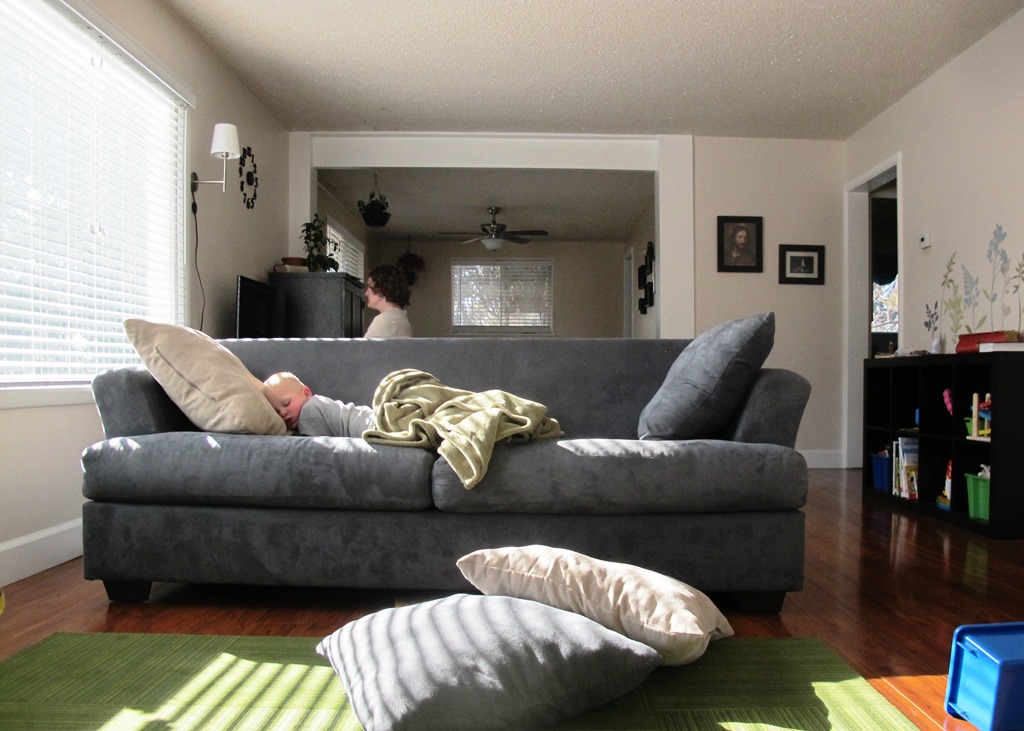
 Photo by PB
This is what my house looks like when I do things like post blog entries. And it is how our lives have been lately: pretty low key.
Photo by PB
This is what my house looks like when I do things like post blog entries. And it is how our lives have been lately: pretty low key.
We believe in absolute truth, including the existence of God and the right and wrong established by His commandments. We know that the existence of God and the existence of absolute truth are fundamental to life on this earth, whether they are believed in or not. We also know that evil exists and that some things are simply, seriously, and everlastingly wrong…
The philosophy of moral relativism, which holds that each person is free to choose for him or herself what is right and wrong, is becoming the unofficial creed for many in the United States and other Western nations. —Dallin H. Oaks, from this talk.
Morality should not change with the times. The way I think about this, some things have always been good. Telling the truth, being kind, raising children with both a father and a mother. Just because I might think differently, doesn’t make things less wrong or right. There is an absolute truth, a defining of right and wrong that never changes.
In my life, I have tried to live to achieve absolute goodness. I’m not even close to achieving it, but I try. Can you really be too good? I never want to give up my pursuit, or even worse change my thoughts about what is right and wrong.
There have been times in my life when I wanted to give up and run away from the stupidly hard perfect life I was trying to live. I wanted to go away from what I knew was good and right, because it wasn’t exactly what I expected. I didn’t, and I am so glad. I wanted to run from my family, and that is the very thing that has brought me the most joy.
There is an absolute truth of family–and I firmly believe that every child has a right to a mother and father and a good home.
There is absolute truths of goodness, decency, truthfulness, kindness.
It doesn’t matter if I feel differently, it doesn’t change the fact that right is right and wrong is wrong.
If I am creating individuality, defining myself, it will only work if I also hold true to the principles of goodness, truth, and right. To lack a moral compass is like lacking a compass. You don’t get anywhere. I look at many celebrities lives, even the lives of the people around me. If they pull away from right and decent behavior, they start being defined for the inappropriate behavior, instead of being defined for who they are.
This is a short series outlying the fundamental beliefs I have. For more see:
Conscience
Redeemed
I love to prune. This year had the added benefit of sharp pruning tools. I didn’t buy new tools, just sharpened the ones I had. The wet stone I bought years ago finally got some use. And I attempted grafting the first time outside of a class. We’ll see if the grafts take. I could put in some how-to, but if you want to prune go to a pruning demonstration. It will be far more beneficial than anything I could write. As for the sharping and grafting, I watched online videos. Even thought I do remember learning it in school, I don’t actually remember the details.

The only downside is all the pruning and grafting was none of it was on my own property.
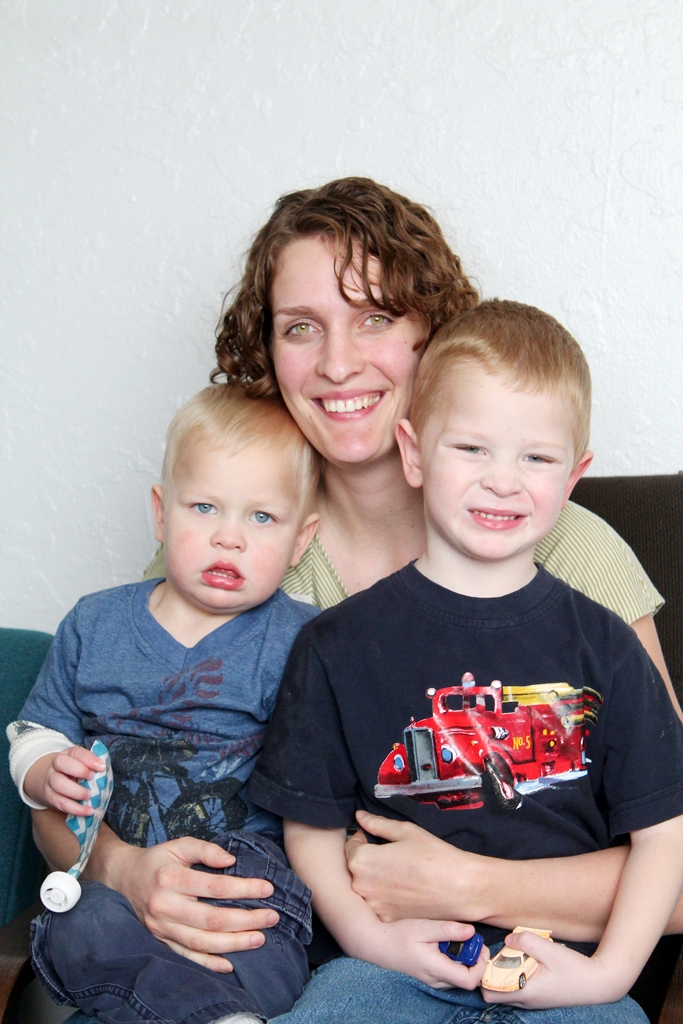
Apparently my Family is not photogenic. I wanted a new family picture for my wall so I had my sister take some pictures…We didn’t spend a whole lot of time trying, because all of us were done pretty quickly. Observe.
This one is just a little awkward.
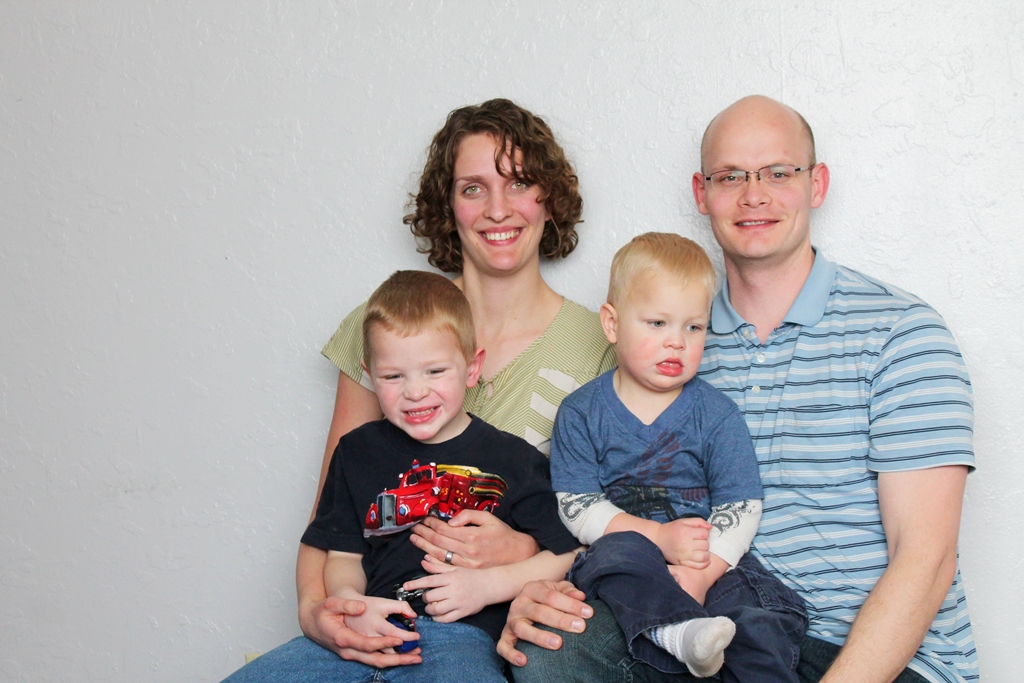
It’s not getting any better.
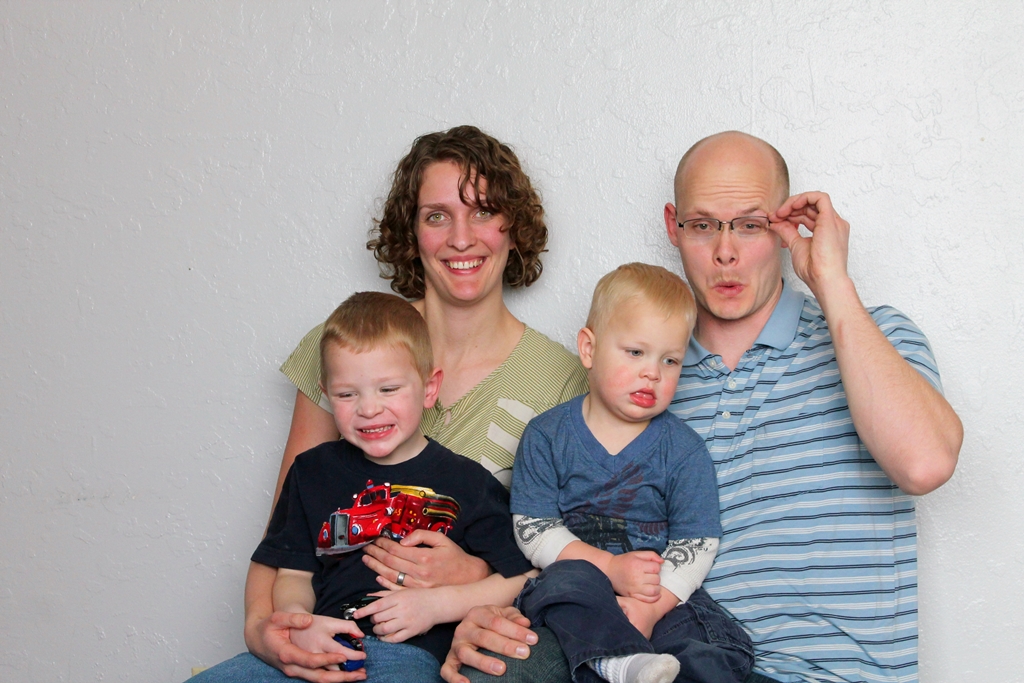
Some were just a bit painful.
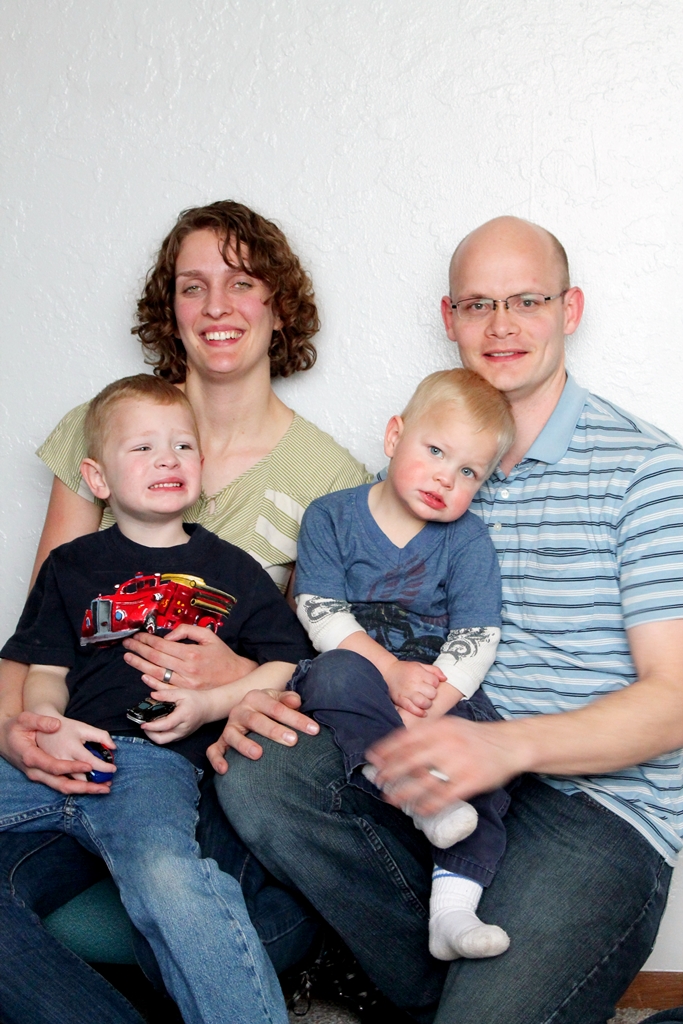
Or devoid of real happiness.
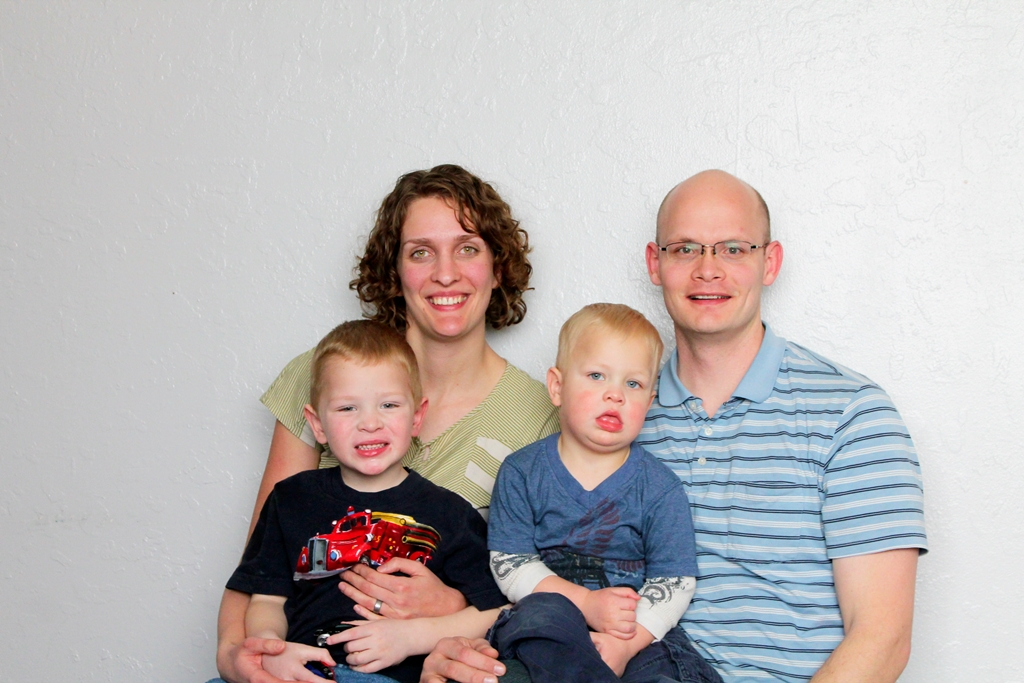
Say cheese!
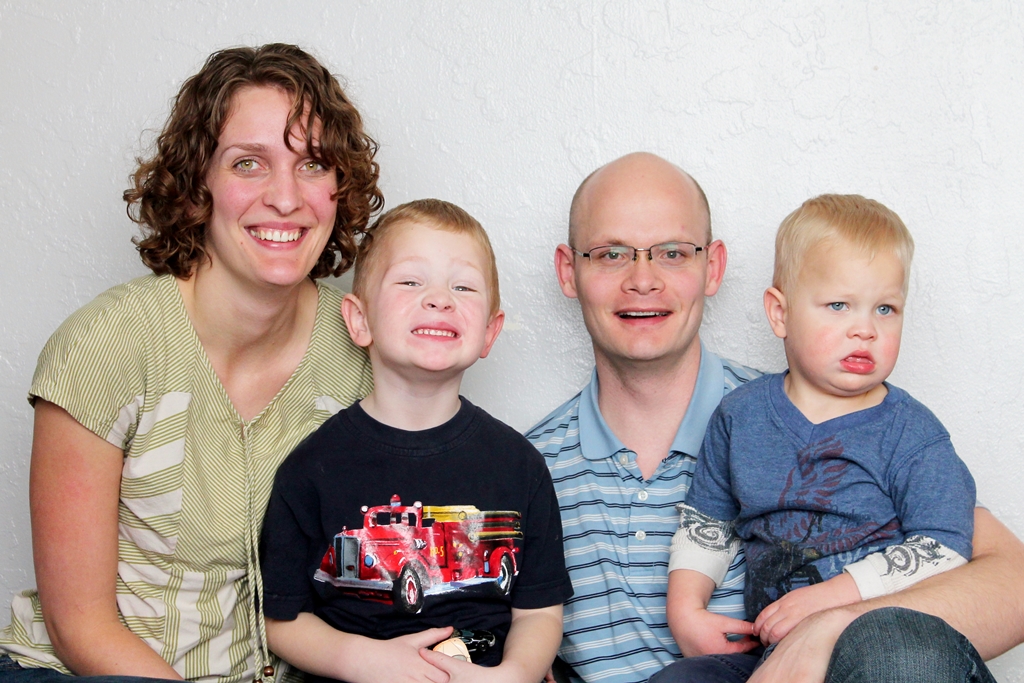
Someone likes funny faces


Hey, this one actually looks great!

Come on, a teeny smile?

Okay, that’s not really what I want.

And that isn’t a smile PB

You guys just want to stop don’t you.

I still love my boys even if we can’t get a decent picture.

I found C outside sitting at the top of the hill on a sled. There hasn’t been snow there for quite some time.

Although an early spring is nice, I also wouldn’t mind some more time to sled. The kids have been riding tricycles down the hill instead.
We were looking at the calender, and I told PB it was President’s Day. He then tried to correct me, “Present’s Day was yesterday.” We had a birthday party for Grandma the day before.
We were watching a Piano Guys video. PB ask, “Who sang the song.”
I said, “The Piano Guys.”
PB said, “No, who sings the song with the words.” He meant the original song the Piano Guys were remixing. I didn’t know. He said, “It’s One Republic.” He was right. My kid knows music better than me.
I am a member of The Church of Jesus Christ of Latter Day Saints, more simply known as Mormons. I was born into this church, and I’ve remained active in the church my entire life. I do not remember a week where I have skipped church.
I believe that this Church teaches the full gospel of Jesus. But it wasn’t until I got into adulthood that I started to wonder what exactly that meant. What made my church different and more desirable than any other Christen church out there? I’m actually still trying to answer that question. There are many in my church who have answered it. (You can look at this talk, and this summary for examples.)
But words are very different than actual feelings and experience.
What will follow is a three part series on why I remain a Mormon, and why I think people should become Mormons.
But before I get there, here is my simple answer:

I am a Mormon because it brings me joy.
In the spirit of this blog, remember this what I do in my own life. If it doesn’t ring true and right to you, than disregard it. It is more important to find your own truth than what adhere to what other people say are true. (Although what people maintain are absolute truths are certainly worth looking into.)

I took this picture a few days ago. I took it in Sacramento, but it almost feels like I should be able to find blooming flowers here as well. I got an order from Johnny’s, the lights for my seed shelf are installed, and no snow on the ground. I think the gardening season is starting. I’m not sure if I’m excited or overwhelmed…
Current gardening tasks:
After a year of work, my husband finally got a vacation. We took a short trip out west to visit our twin siblings. (We are both twins: my twin sister is in Nevada, Joe’s twin brother recently moved near Sacramento.) It was a short and fun vacation.
But not without mishaps. We ran out of gas 25 miles east of Wendover. It was a combined effort of stupidity. After a short, tense wait, we found a tow guy and payed $20 per gallon of gas. I was hope that would be all, but it was not to be. Our tire went flat on the way to Sacramento. Luckily it didn’t happen until after the snowstorm, and our spare made it the rest of the way. We did have to buy a new tire to replace a two week old tire. Turns out the hazard insurance was well worth it, though at the time it didn’t seem like we would be keeping the car long enough.
I’m still not done. At Denny’s, I was enjoying my meal, but the food apparently hated me and prevented me from inhaling. After a few moments, I realized that I would rather breathe normally, and Joe successfully rescued me. I was fine, although a bit embarrassed.
Because sitting around talking, playing games and shooting Nerf guns gets a little old, we also went adventuring. First stop was the Discovery Museum in Reno. It was one of my favorite museums I’ve been to, there was lots to keep everyone entertained including brain puzzles that had me stumped. In Sacramento we went to the Zoo and Fairytale land, which were both fun.
We had a great time. The warm weather in Sacramento made me realize how nice spring is. We had left our home in a snowstorm: but when we got back there was next to no snow. It feels like spring. And I realized I’m not quite ready for spring. I still want to sled and snowshoe and peruse seed catalogs.
Cleanliness is next to godliness.
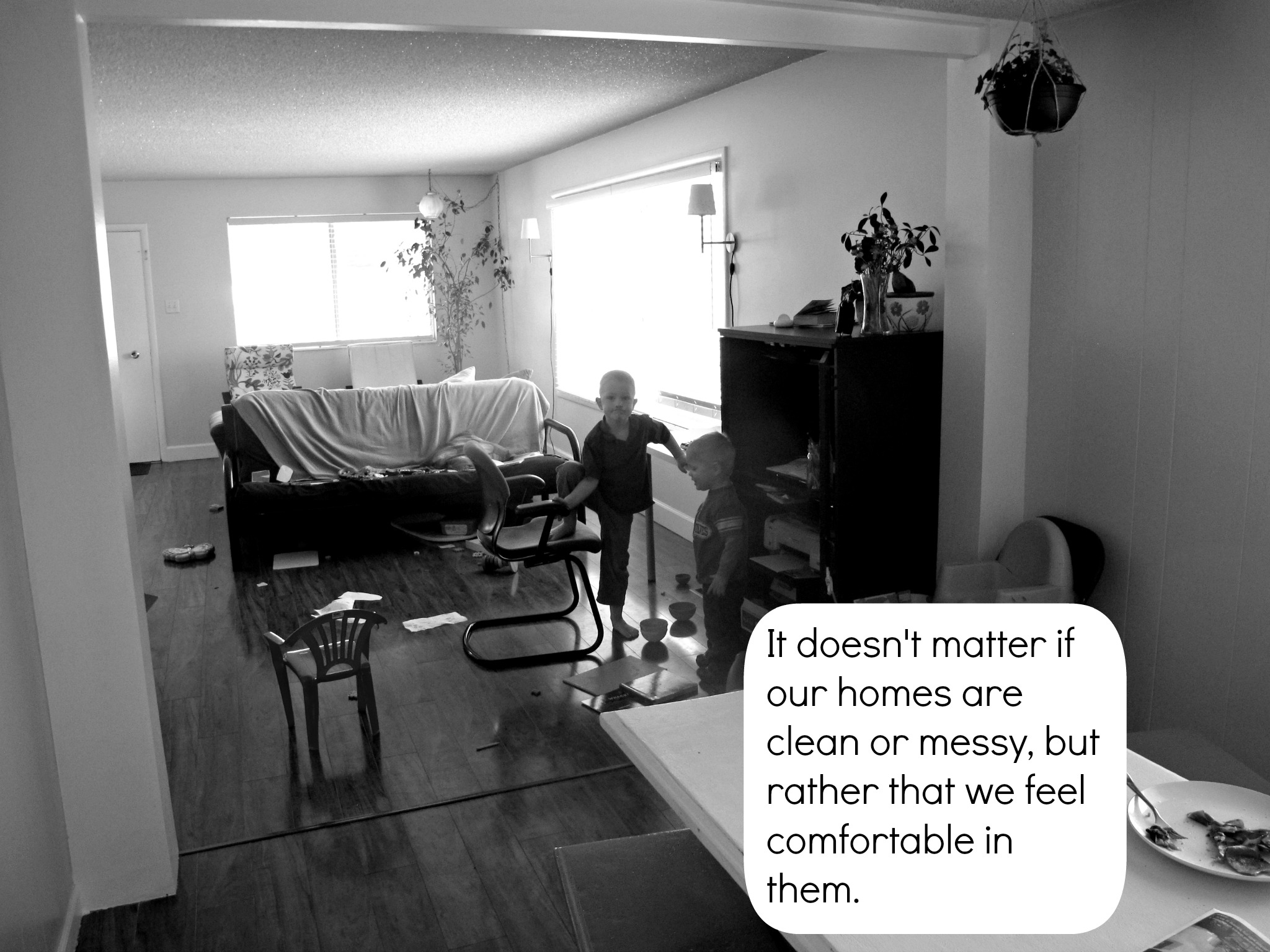
I think cleanliness is inherently good. Houses that are filled with mice, stickly spills, and neck high clutter are unhealthy and depressing. My own house is pretty tidy. I have a regular schedule to clean bathrooms, floors and such, we do dishes after a meal, and we pick up a lot. The toys and almost all our belongings are organized and put away regularly. Sometimes with two boys, the floor can get covered with toys, the dishes take a bit longer to do, and there can be paint on the floors and fingerprints on the windows that never quite gets cleaned up all the way. But I feel like my home is comfortable, I never feel too bogged down with housework, and I’m nearly always welcome to spur of the moment company.
I was at a friends house. She is not as tidy as me, with toys scattered in all the rooms. Where I like to have all my books in one place, there are books nearly everywhere in her house. It is not a disaster: there aren’t mounds of dust bunnies or foot high piles of clutter. While I was there and our kids were playing, the clutter of toys put me a little on edge. I wasn’t quite sure how to engage in play with my children, what toys to go for. But then I thought that maybe my neatness, and having toys organized into neat bins might be a little uncomfortable for her.
I have been to houses where I felt a little bad for touching anything, where it all looks a little too nice, shiny and perfect. I think we each have our own level of cleanliness we are comfortable with and that is what we should strive for in our own homes. For me, it means kitchen drawers in disarray, toys organized into bins, and ignoring most little messes until I get to them in my cleaning schedule. What matters most, is I feel comfortable in my home, and I am comfortable with the amount of housework I do.
I am a devout member of The Church of Jesus Christ of Latter-Day Saints, or to put it more simply, I am a Mormon. Recently I have found an increase of people around me leaving the church. This often causes a lot of concern and worry for those who remain in the church. Our church promises a lot of blessings to the faithful and no-one wants to see those blessings taken from those they love.
When I had one old friend mention on social media that he had left the church, this Mormon scripture came to mind: Article of Faith #11: We claim the privilege of worshiping Almighty God according to the dictates of our own conscience, and allow all men the same privilege, let them worship how, where, or what they may.
Our church teaches agency. Part of our journey here is to discover what we will choose, in our actions and beliefs. I know many whose thoughts and feelings take them away from the church: they are not able to believe in it, live up to the teachings, or feel comfortable with regular activity. If it isn’t working in their life, I cannot fault them from stepping away.
In our church, we often expect and encourage people to leave behind their original church and traditions and come join in our worship and culture. I think it has to go the other way sometimes as well: sometimes we have to let people leave our church. Ultimately, it is more important to follow our own conscience then the conscience of others around us.
For me, I believe that The Church of Jesus Christ of Latter-Day Saints is true, that it is a church literally guided by Christ, and provides the fullness of His gospel. My belief comes from the simple knowledge that following its teachings has brought me great joy. I would like all to experience the same joy, blessings and promises I have received through the church: but I also believe it just isn’t going to happen for some people. And I can respect that, and hope they find their own truth and joy.

