Monocultures

I remember back in college, a fellow student complaining about the tall fescue infesting bluegrass turf, ruining the solid green color and texture.

When did we start desiring moncultures?

A monoculture is growing one  plant, and only one plant. They are unnatural, unhealthy, and boring.

Here is my idea of a healthy lawn:

spring sprouts7

This is at my grandma’s. She hated it. There were violets, clover, dandelions, all growing up together. She saw a weed patch. I saw wonderful beneficial relationships. Clover providing nitrogen, leaves overlapping to maximize sunlight use. Not only that, but there were purple flowers in the spring, yellow in the summer. And it was actually producing edible crops in the form of the violets and dandelion greens.

There aren’t any monocultures in nature. There is a reason for that. Moncultures invite pests, require fertilizers, more water, more work.

I hate the smell of 2,4-d on lawns. It’s nasty, even worse when it is somewhere where my kids are. There are some weeds out there that might need eradication. But common lawn weeds are often edible, and beautiful. Dandelions have yellow flowers, edible greens, they provide nectar to bees. Clover fixes nitrogen: more clover, less fertilizer. Wood sorrel is edible and medicinal. Why would we get rid of free flowers and food?

I’m going against the grain of traditional landscaping. One of the main goals we have developed for our landscapes are perfect green lawns. Why, and at what cost? We dump chemicals on them, so we can look at them out our windows. I like lawns. They are fun to play on, and hold up for tons of outside activities in a way no other replacement can. But I’m never going to spray 2,4-d on my lawn to get rid of clover. Actually, I’ve considered seeding in clover, violets and other “weeds.” It is simply healthier, maintains that durable play surface, and simply means less work for me.

If your main landscaping goal is a green boring lawn, just ask the question why? I’m not saying rip out all the lawn (although I have plans to scale back a lot of mine), just find a different vision. Instead of  trying for a monoculture, hold off on spraying that clover, let the lawn grow a little longer. Stop looking for all the problems, and instead find out what a dandelion green salad taste like.

How to Buy a Home the Wrong Way

Our home buying process was very atypical. I thought I might share some of what I learned. If you aren’t buying a home, feel free to skip this post. If you are at all interested (and I think some people out there might be which is why I’m writing), read on. I spend many hours researching real estate transactions. It paid off, because we were able to buy our home without a real estate agent.

Reasons why not to use a real-estate agent:

  • Cost: Although the seller usually pays the real-estate agent, it is still money they have to pay and without it, the buyer can have more bargaining power and reduce the overall cost of the home.
  • Avoiding the middleman: A real-estate agent is a middle man. We were able to deal directly with the seller, and it simplified the process.
  • Pointlessness: We found the house before we were even really looking for a home. Trying to then find a real-estate after we found a home didn’t make sense.

Reasons why you probably do want an agent:

  • Less work: Searching for a home, figuring out all the paperwork, and all the business behind a real estate transaction is a lot of work. Real-estate agents know the market, the process, and will make an already daunting task much easier
  • Legal worries: Real-estate agents will reduce the chance of law suits and other legal problems, since they actually know what they are doing.
  • Add an middleman: Working directly with the seller or seller’s agent isn’t always desirable. Having a third person bargain for you can make a lot of sense.
  • That’s my list at least, you could probably Google a lot more.

Going on…

Desiring a Home

We wanted to buy a house. Joe had a good job, we knew the market was pretty good. We wanted to have somewhere where we didn’t have to answer to a landlord and could work on the projects we wanted to. Our family is going to get bigger (hopefully), not smaller, so we also needed more space. We decided to buy a home when our lease ran out. We talked about what we wanted, occasionally glance at signs and listings, but still had a couple of months before we really wanted to buy a home.

Finding a Home

A family from our ward (church group not hospital) was selling their home after moving far away. It was only three blocks from where we were living. It was still in the fix-up-to-get-ready-to-sell-stage, and my husband stopped by and looked around. Then we both went and saw it. It looked like a construction zone. We looked at it a few more times, and decided to buy it. We didn’t go through another home. The timing was sooner than we wanted, but the house was exactly what we were after.

Making an Offer

We talked to the seller (it was a FSBO), he told us the baseline he wanted for the house (around $7,000 under his initial listing). So we offered that amount. He accepted. No counter-offers, or any extended negotiation. It took 15 minutes. That is a horribly simple, but effective, way to negotiate. While making an offer, we used this purchase contract, and this addendum if you have a government loan. It has all the legal garbage in it, and it is the form used by real-estate agents.

Getting a Loan

I found my loan guy from an online ad. He responded to me the quickly, and we did all the paperwork over e-mail (there are secure ways to do so). I never met him. I contacted him initially before making an offer. I wasn’t pre-approved, more pre-qualified, but the home was far under what we were quoted as what we could afford. After making an offer, I sent him the purchase contract and got to work on all the paperwork he sent me. They sent an appraiser up as well, who appraised the home over our purchase price. In a little over a week, the loan was sent off the the USDA, for a rural-housing loan. Then the government shutdown, and we had to wait even longer than expected. Then meant filling out an addendum to the purchase contract, lengthening the deadlines. We finally had complete approval two months after beginning the process, which luckily fell right at the end of the month.

Seller Property Disclosure/Earnest Money

A disclosure is need according the purchase contract above, and if your seller isn’t on top of things, I recommend printing a form out and giving it to them, as soon as possible. We never paid earnest money, though not every seller is certainly not going to agree to that.

Due-Diligence

We talked to a friend, found an inspector, and got the place inspected. Told the seller what was wrong, gave him a list, and he fixed it. He was also doing a lot of improvements when we made the offer, so we spend a lot of time following up and seeing how everything was coming. It went rather slowly. And I also recommend bringing up anything you want done, even things like the neighbors cats. Go through the house a lot, and ask for everything to get fixed. They aren’t obligated to fix everything, but it never hurts to ask. I did, and although every tiny thing I found didn’t get done, I was a lot better off than not asking. (The cat concern sparked the process resulting in their eventual eviction.)

Moving

We were tired of waiting on the loan, tired of seeing little progress on the house, and needed to know what to do with our current apartment, so we decided we were moving on a specific date. We moved before our loan went through, and before the seller was completely done with moving out/fixing things up. (He did only have a shed in the back to clean out.) In some ways, this was nice. If we found any problems, we could talk to the seller who was still the owner. The work did finally get done as soon as there was a deadline as well.

Closing

The loan went through two days after we moved in. (Happy surprise) The next day, we were at the title company signing papers, and the day after that, we officially owned a home.

Our process wasn’t by the books. To re-cap, here are the thing you probably shouldn’t or won’t be able to do:

  • Not get a real-estate agent
  • Only look at one home
  • Make an offer while the house looks like a construction zone
  • Not pay earnest money
  • Buy earlier than planned (before our apartment lease ran out)
  • Never meet the loan officer, and send the majority of paperwork by e-mail
  • Sit through a government shut down
  • Move in before closing

But for us, it all worked. Any questions or suggestions, please comment away.

*This site is where I got most forms listed above, more are available.

Snow

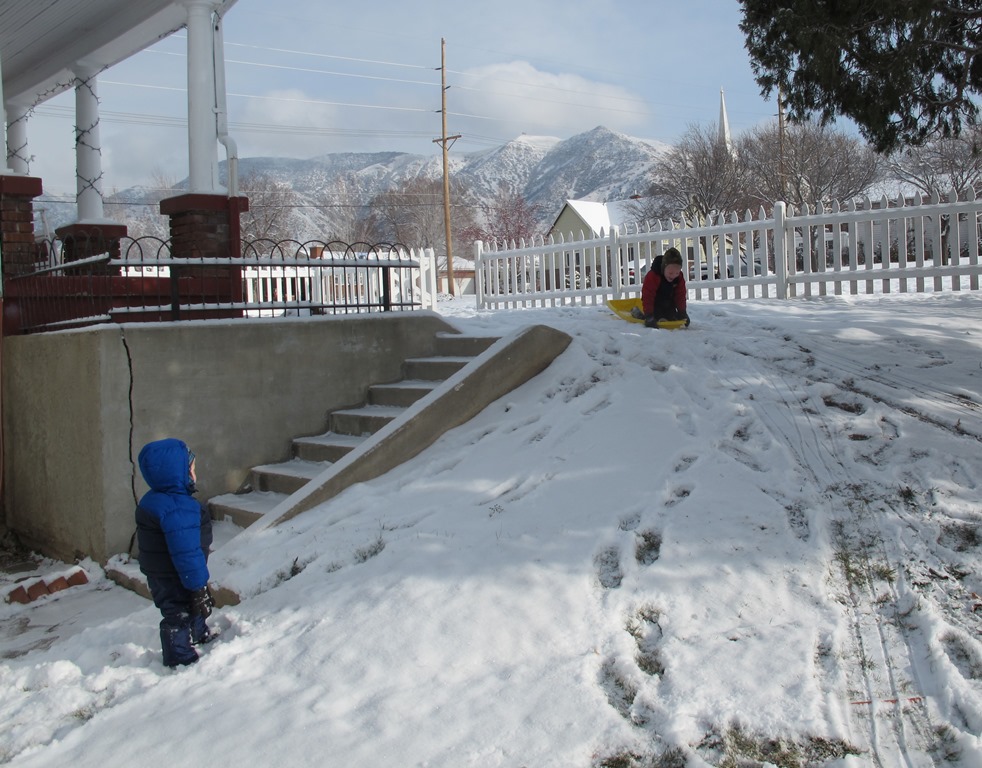
I mostly like the snow. Growing up we went sledding all the time on the hill in our backyard, so I love that now my house has a small hill, perfect for little kids to sled on.

sled

crash

PB crashed once, and then preferred shoveling snow and making snow angels to sledding. I kinda do too. (I actually love to shovel snow, just being outside working is awesome and in the winter there aren’t as many opportunities, so I’ll shovel nearly every chance I get.)

We went to the art museum after getting cold outside. This is PB making a pie. It was actually a pretty cool museum for how small it was, lots for the kids to do.

pie

Christmas

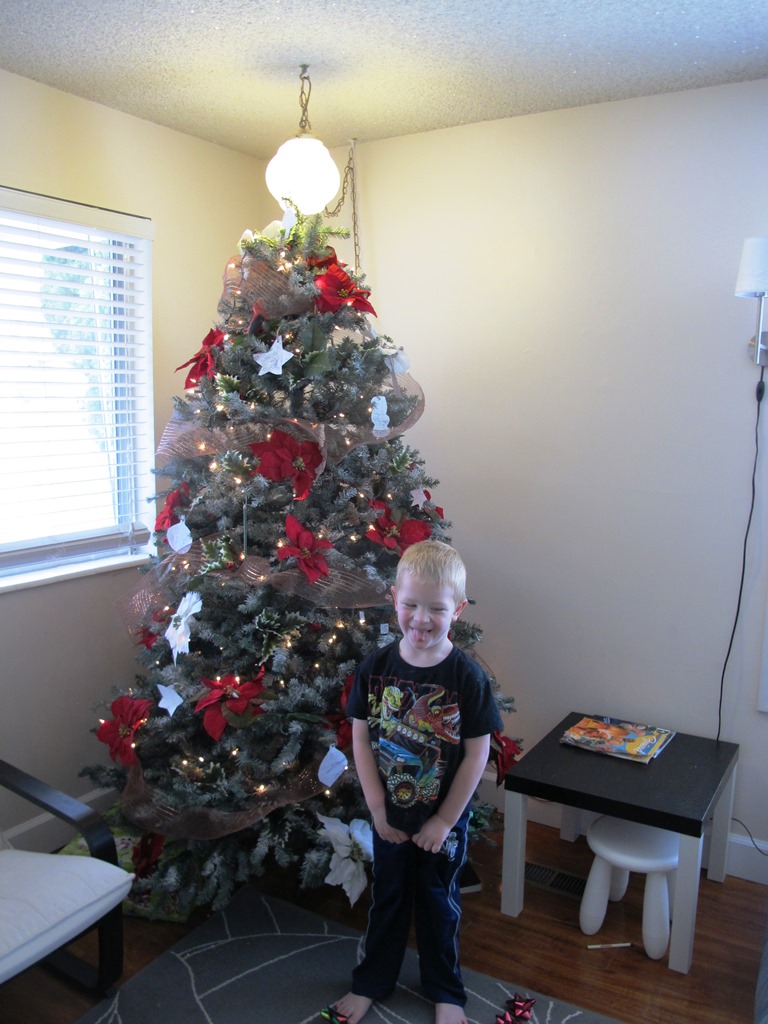
It’s snowing! I opened my blog and found the wonderful WordPress surprise of falling snow. I like Christmas time, especially when it follows a mild fall. We got the tree up, and with modifications over a few days it looks beautiful.

peterchrismas

The fake poinsettias are turning out to be a toddler-friendly choice for ornaments.When I started to put the tree up, our hanging light was in the way…or maybe it was just in the perfect spot to top the tree. No need to buy a star.  Now I just need to get all my presents under the tree. We are having a simple Christmas, unless you decide to count the house as a Christmas present. One afternoon on Amazon and $100 later, I finished most of my Christmas shopping–just one present a piece, and a big fun gift from Santa.

Be Gone Shrubs

We’ve been working on the inside of the house a lot, and I haven’t been worried about much gardening related, except for one essential task:

house 2

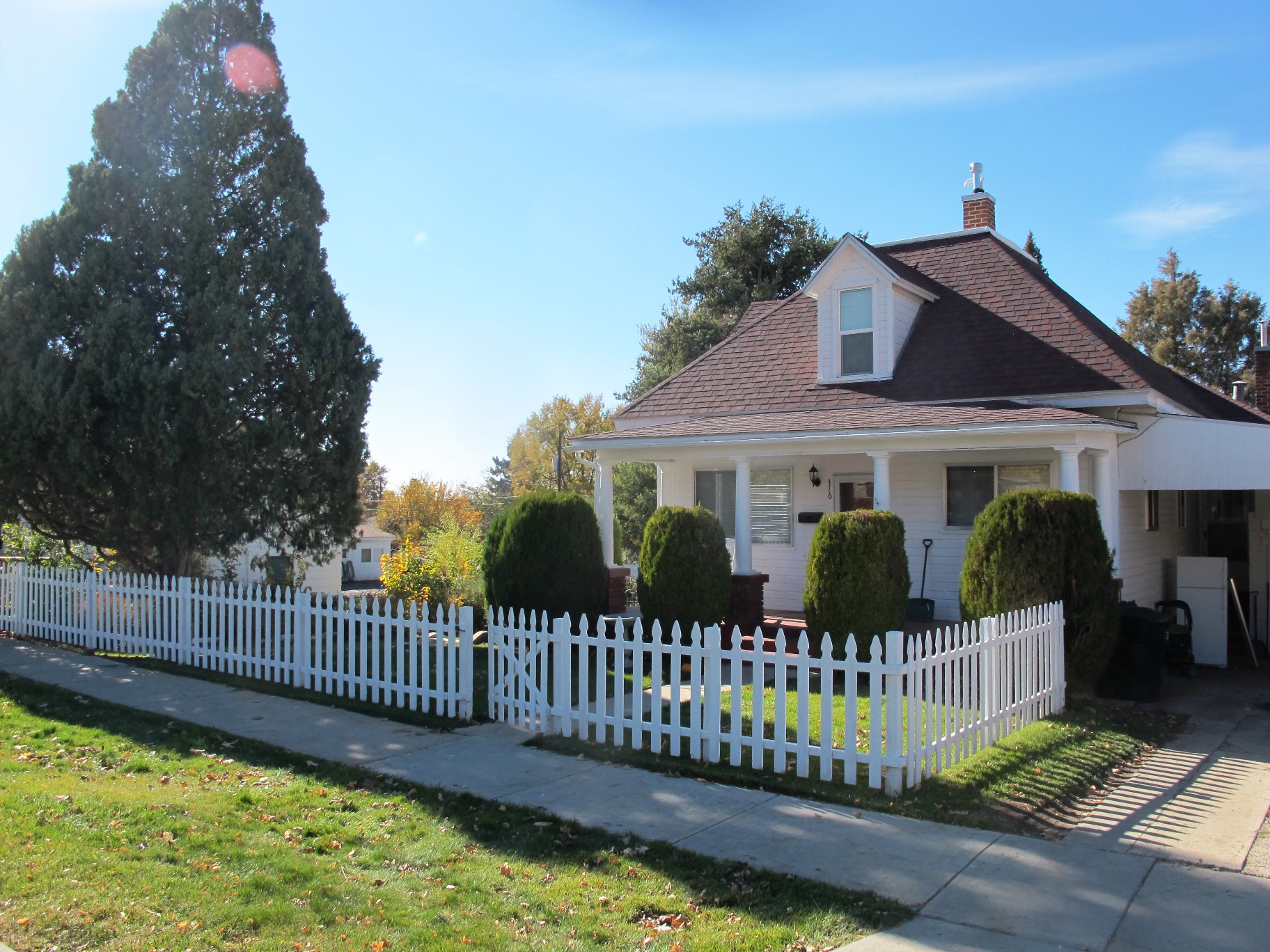
No more green meatballs!

To recap, here it is when we first bought the house:

home

And now:

house

With a small chainsaw, and a persistent husband all the horrible hedged evergreens are gone.

I’ve also planted some strawberries, that were slated for demolition at a friend’s house, on the hill. Otherwise, I’ve just been waiting, thinking and observing. And now it is cold and getting colder, so the garden will wait until spring.

Thanksgiving

I invited all of my family over for Thanksgiving. It was wonderful–all four of my grandparents came, along with all of siblings, spouses and their children. We had a full, happy house.

My brothers organized a Walker Family Decathlon. Joe won. (He is very athletic and doesn’t really try that much. Lucky.) I didn’t do too bad, at least beat out my sisters. We did a flexibility test and I was happy to see that years of yoga are paying off. I’m still not flexible, but I can touch a bit past my toes, which is far better than most of my life. We also did a limbo contest–the only one that the little kids won out.

family

food

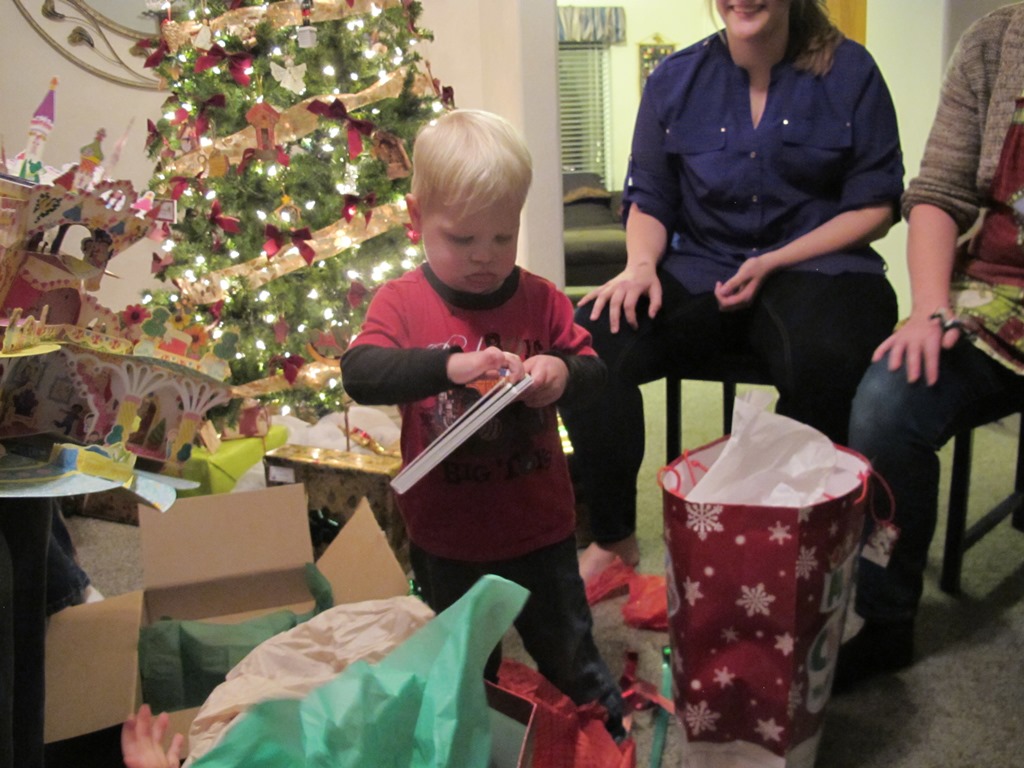
dinner

food

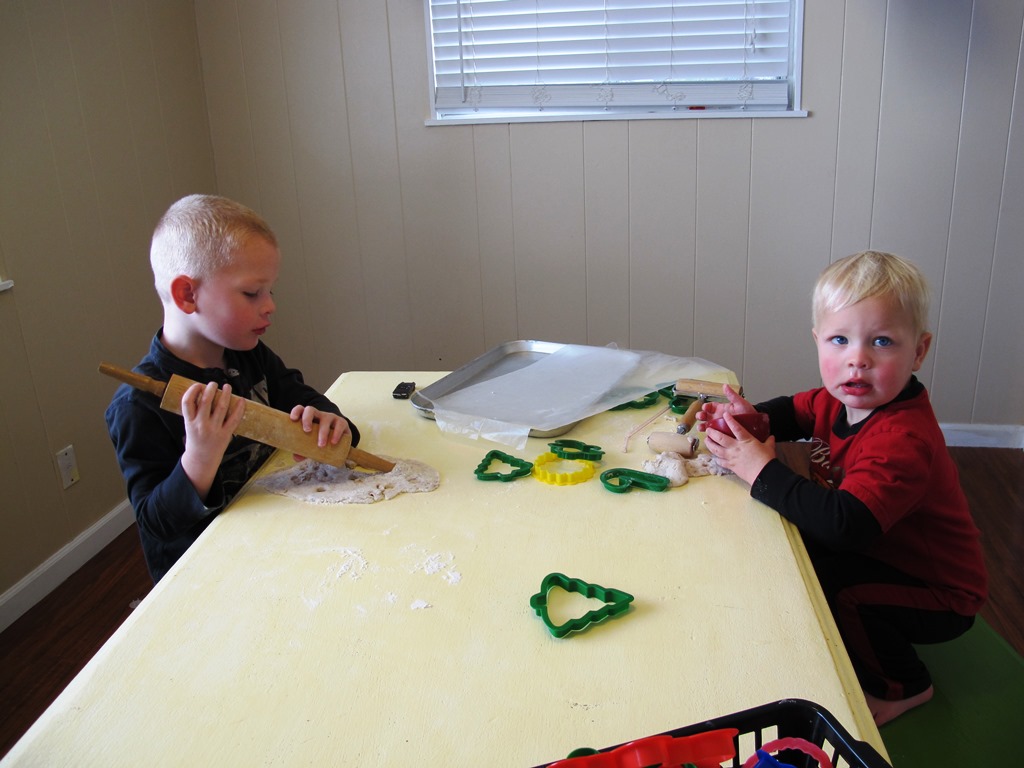
Bread Dough

???????????????????????????????

Basic Breadcraft
MATERIALS
4 cups (1 L) flour
11⁄2 cups (360 ml) warm water
1 cup (250 ml) salt
bowl
baking sheet
board
plastic wrap
foil
wax paper
PROCESS
1. combine flour and salt in bowl
2. make well in center
3. pour in 1 cup (250 ml) water, mixing with hands
4. add more water and continue mixing
note: not crumbly or sticky, but should form a ball
5. knead 5 minutes on floured board, until smooth
6. work with small portion of dough at a time
7. wrap remainder in plastic and put in refrigerator
hint: if dough dries out, add a few drops of water and knead
8. work on foil or wax paper (or just on the counter if you don’t mind a mess)
9. bake 1 hour or until hard at 325°F (160°C)
hint: dough should not “give” when tapped with knife

From Mudworks