Tilling

Here’s the question today: When should I till in my garden? I was talking to my dad about tilling. I’ve read in various places that tilling can be detrimental…but in a home garden it is a common practice to prepare sites for planting and get rid of weeds.

The short answer is you don’t need to till at all. If you want to, you can use tilling to incorporate organic matter during the initial site preparation, and to break up soils that are already compacted. Past that, I think it causes more harm than good. I’m going to ramble a bit and get into more specifics: feel free to stop reading if you aren’t into detailed explanations.

Tilling is thought to make the soil easier to work with (it doesn’t), control weeds, and incorporate organic matter. But there are also detrimental effects of tilling. These include propagating perennial weeds, bringing annual weed seed to the surface, decreasing earthworms and beneficial microorganism, deteriorating organic matter, destroying soil structure, injuring plant roots, and it also takes a lot of labor and effort.

Some of the perceived benefits aren’t as beneficial as they seem. The first misconception is that tilling will loosen the soil. Tilling actually destroys the soil structure. In farms that are frequently tilled, soil compaction actually increases.

The second misconception is that tilling gets rid of weeds. For some weeds, it does. But it can also increase the populations of other weeds. For instance, tilling quackgrass does a good job of chopping up the rhizomes and propagating the plant. After tilling, the quackgrass will come back more aggressively.

The last benefit of tilling is to incorporate organic matter. For initial bed preparation, tilling in organic matter can help it move down in the soil profile and improve soil health. But continued tilling will lessen the effects, as the organic matter deteriorates.

You don’t have to get very deep in the literature to realize that adopting no-till methods can be very beneficial. No-till systems have better aeration and drainage, more earthworms, and less soil erosion. Most of the research has been done in large-scale crops, but the same principles apply in the home garden.

Home gardeners have the added advantage that everything is small-scale. One issue in till vs no-till is that tilling can be a good weed control method. The other option in no-till systems is often herbicides. But with small-scale home garden, mulch and hand weeding work well.

The alternatives to tilling include:

  • Mulching: Includes organic mulch or plastic sheeting. Mulching will reduce weeds and help regulate water. Organic mulch also add organic matter to the soil. Plastic mulch raises soil temperature for earlier planting.
  • Smother: Use plastic sheeting, layers of corrugated cardboard or newspaper and organic mulch. I’ve used cardboard topped with a couple of inches of compost to kill off lawn. It takes some time, but does a great job of killing off whatever is underneath.
  • Top dressing: Instead of incorporating fertilizer or compost, just apply it to the top and let the earthworms and rainfall do the work. Plant roots are most concentrated in the top of the soil profile anyway.

Tilling can still be useful during the initial site preparation and to help break up soils that are already compacted. Whenever you till, make sure and apply a good layer of compost at the same time. Don’t be afraid to just ditch the tiller altogether: the soil will probably thank you.

*The picture has nothing to do with the post. I was just enjoying the flowers in my tiny garden. 
Random Ideas

Image

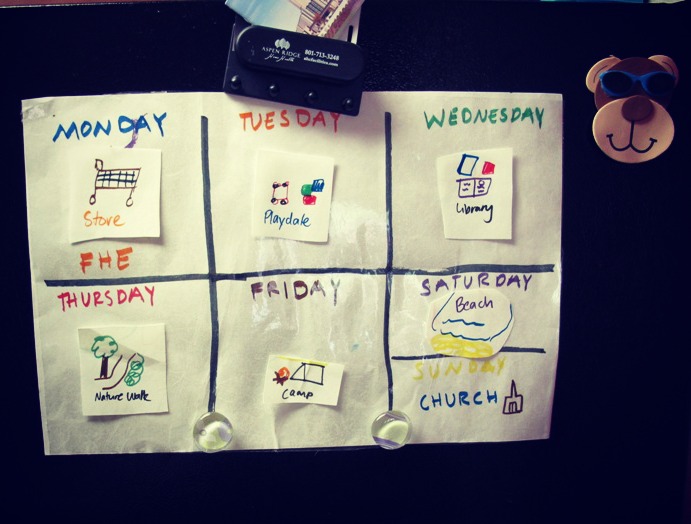
I made this poster to try to teach Peter the days of the week and to look forward to activities without the expectation that we are doing them in the next hour.Image

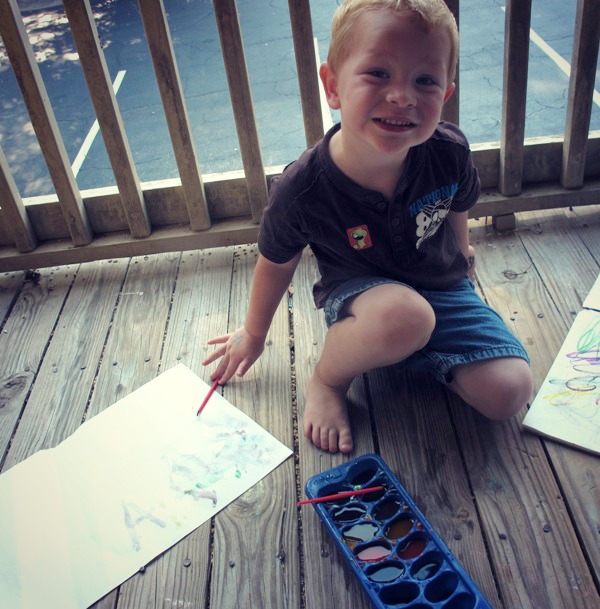
Don’t buy water colors. Just use food coloring and an ice cube tray. It was much easier for PB to work with.

Image

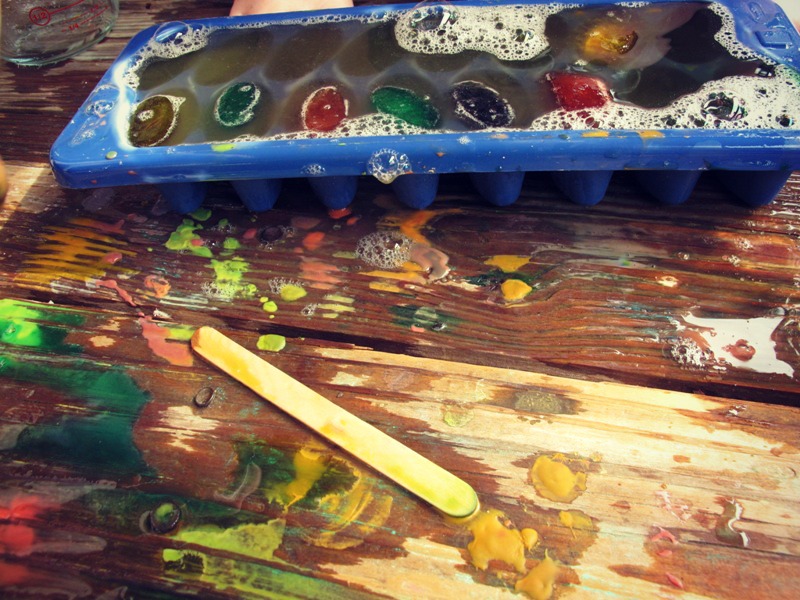
We froze the water colors and did a science day. I love gathering random household ingredients and mixing. This day we had oil, water, food coloring, colored ice and soap.

ImageImage

Most things are more fun with food coloring.

Image

This is Samuel the Laminate preaching at the city of Zarahemla.

The Kids Smile

I love going through photos. Sorting and editing the best pictures is almost like editing my life. I get to focus on the smiles and good things. Times that are not great are trashed.

Life is normal. But normal is awesome when you have two cute kids. The weather isn’t as hot, so we’ve been playing outside. There are still plenty of mosquitoes, and we have the bites to prove it.

Some of the pictures are from Stone Mountain: we visited with friends on Saturday.

And just a hint to make this post prettier. Come to my actual site and click on a picture to enter the gallery setting on WordPress. The photos will be large and beautiful, as is intended.

Random Ideas

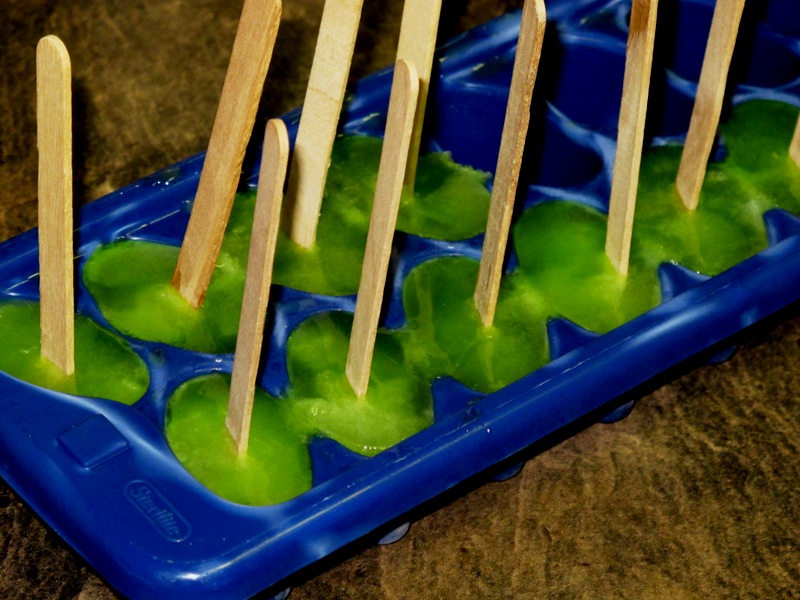
These homemade popsicles are the result of discovering a dislike to massive amounts of sweet frozen food.  We had coupons for free shushes at Sonic. A few sips into my green apple slush and I had enough sugar to last me the next few days. I still had a container of frozen sugar, so instead of tossing it, I re-froze it in an ice cube tray. On slush made the whole ice cube tray. Eighteen small popsicles is much better than one huge sugar rush. My dad might disagree (he can down massive amounts of anything that is sweet and frozen).

I saw this on another blog, and made it to try and get PB to eat new foods. (He is very picky.) In that regard, this banana hot dog was a failure. But I loved it. New favorite what-is-there-to-eat item.

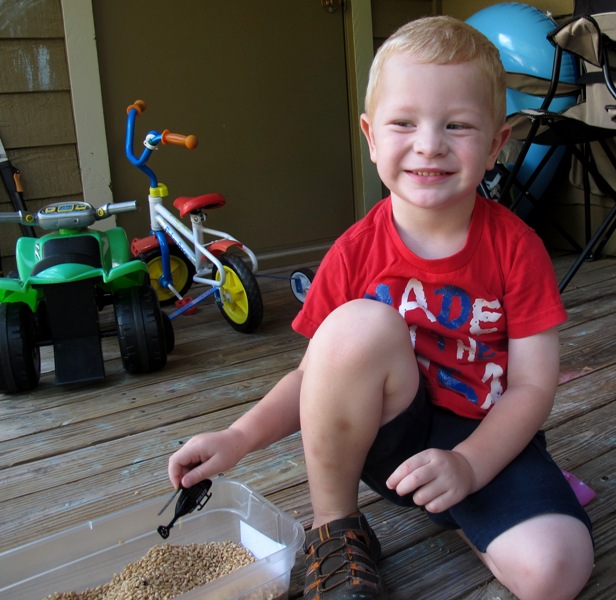
Who knew that a container with wheat could be so much fun? We made dioramas with a wheat, oatmeal and pasta background.


Inexperienced Trimming

I cut my own hair. My hair was annoying me and I had no desire to take the time to go get it cut. So I pony-tailed my hair and went at it.  My method was simple, unoriginal. I made one ponytail at the nape of my neck and cut, and cut off layers in a separate ponytail stretched over the top of my head. Trimmed it up and here it is:

I like it just fine. My hair is naturally curly, and hides mistakes pretty well.  I might have hairstylists or others cringing. But I cringe over this:

If people prune shrubs with nothing but hedging shears, I can cut my own hair with kitchen scissors. Some things are better left to people who know what they are doing, like haircutting and pruning. But a lot of times it doesn’t matter: it will grow.

Messy Story, Happy Kids

At bath time, I was doing dinner dishes while Joe was bathing the kids. Not too long after they headed out on their pursuit of cleanliness, I hear a commotion…and soon after my husband appeared holding a naked, crying baby. Joe had undressed baby CD and PB ripped off his diaper and climbed in. Normal procedure, but PB had neglected to tell Daddy until after he had climbed in that he was poppy. The bathtub was filled with poop. At the same time CD, who was luckily not in the bath yet, peed all over my dear husband. Joe yelled to me for help, which made CD upset and he started crying.

We transfer the kids to the second bathtub and during the process CD peed on Joe again. I was laughing my head off after all that. I got the kids clean, Joe changed, and the original shower cleaned up easily. This story provides a good example of why potty training is good. But PB wants nothing to do with it.

Tuition was paid for the last time! Excitement! One more semester and we will finally be done with school! On the same note, I just bought tickets for the flight home for the kids and me. Just a few more months out here.

The Curious Garden

It’s fun when you find hidden gems among piles of normal stuff.  The Curious Garden, by Peter Brown was my gem in the large stack of picture books from the library. My kid preferred car/things-that-go books, but this is one of my favorite picture books I’ve ever read. It depicts the transformation of an industrialized city to a city filled with green living things.  Two large pictures depict the city. My kid preferred the first one with smokestacks and steel, but I loved the final one filled with green. It reminded me of projects like The High Line, and green roofs. Like the book depicted, life is better with gardens.

More Than Motherhood

One day I was done with my kids. Every little thing that they did annoyed me. My husband was around, so I called him over and took a little break before things got ugly. After ten minutes alone to think, I felt much better. One oft repeated piece of advice for mothers is to get some alone time. Taking breaks can enable a better perspective on being a mommy. But I can’t think of a scripture or advice from church that says we need breaks from motherhood. Instead, I hear thoughts such as, “Lose yourself in the service of others,” and “Be more diligent and concerned at home.” There is a call to return to home, not one to get enough “me” time.

I wanted to gain a better understanding of the situation, so I set to work studying and listening. The first thing I wrote down was “More than Motherhood.” In that small phrase I found my answer to the conflicting advice. I don’t need a set amount of me time. But in my life, I do need to do more than just be mommy. By doing more I fulfill my potential. Simply being a mom, even a good one, and idling away other good opportunities to use my talents and time leads to annoyance and a less fulfilling life. I need to engage in good activities beyond housework and mothering.

Check it out: My sister-in-law posted pictures of us after visiting. She takes amazing photos.

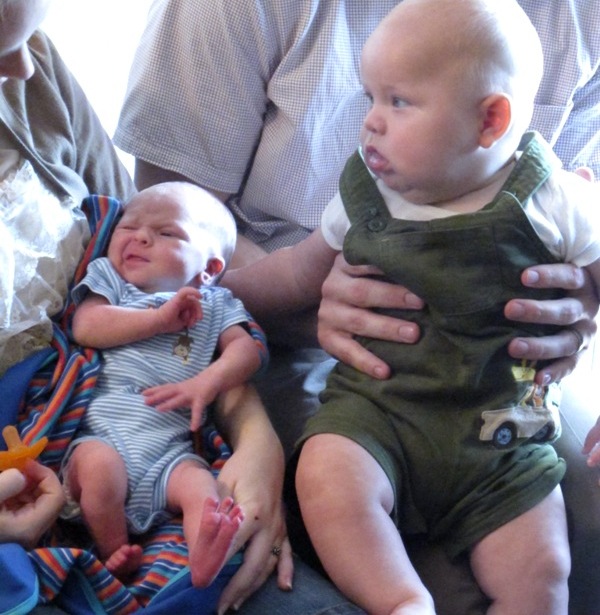
Our friends had their baby. They grow a lot in 5 months!

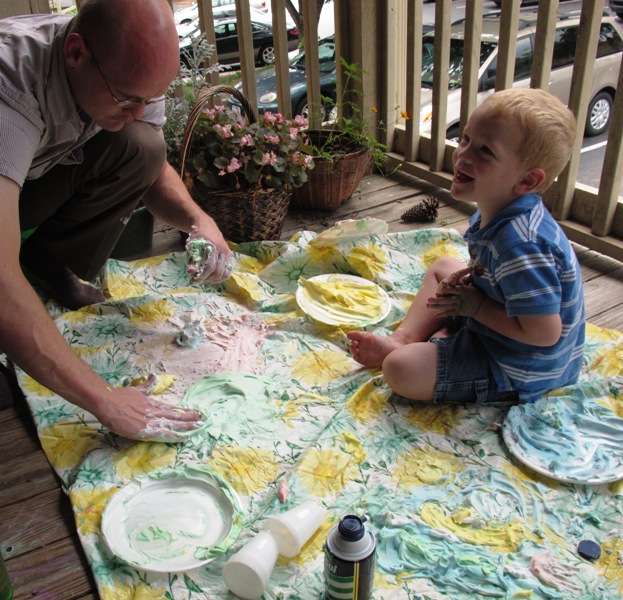
Another messy, fun activity. The parents liked this one better than PB. He thought it was a bit too icky. 

Manual on Children

When people have babies for the first time you often hear about feelings of fear and not knowing what to do. I’ve heard people say jokingly, “Wouldn’t it be nice if children came with instruction manuals?” My Lamaze teacher had a better view about it. She said that there’s no reason to not know what you are doing and feel helpless, there are plenty of books out there. She suggested Penelope Leach. I bought the book Your Baby and Child.

It’s divided into chapter based on age. I read each section right before PB entered that age group. It helped me understand my kids and how to handle them. Sometimes I have a parenting issue, read a section (re-read now, I’ve read the book cover to cover) and feel much better. There aren’t  magical solutions, but it’s good to know that first; your child’s erratic behavior is perfectly normal and second; there are good ways to deal with the erratic behavior. I don’t follow everything in the book, but I get a good place to start from instead of starting from nothing.

I also read and loved (again I think I made it through this book cover to cover), The Nursing Mother’s Companion. I ended up nursing Peter past a year, nearly exclusively. Curtis is on the same track.

In one of Bill Cosby’s albums he says, “Intellectuals go to study things that people do naturally.” Reading up on child-rearing can be like that. But I believe that all my book reading has helped me be a better parent. What books do you like to read about parenting?

Horticulture Curriculum

My son is growing from a toddler to preschooler, and I am suddenly confronted with the task of education. As I was thinking about school my mind turned to my own schooling.

I loved biology in high school, and felt a strong push to go into a science related field. I choose horticulture. Plenty of my peers had no love of science, but loved the art of designing and showing gardens. My peers complained over the science classes we had to take–chemistry, biology, genetics. They would rather take flower arranging, advanced landscape design. A professor told me that horticulture was a science degree. He did not look highly on the artsy design classes.

Both my professor and my peers lost the beauty of horticulture. Horticulture is a wonderful combination of both art and science. Nowhere is this more evident for me than in pruning trees. My favorite class in college was a graduate level class on environmental plant physiology. It involved a lot of hard-science and math calculations to determine exactly how plants grew. It also gave me the best education on pruning. As I understood how plants grew, I knew what I was trying to achieve in pruning.

When I’m in front of the tree, I’m not running calculations through my head. I use the science I know and turn it into an art. I envision how that tree can best get light and grow healthy and strong. With the skillful stroke of my pruners, I shape it into my vision. Pruning is my favorite art from. But if I had no understanding of the science behind it, it would not be beloved art, but a misunderstood chore.

I went  into horticulture as a scientist. But horticulture taught me to be an artist too.