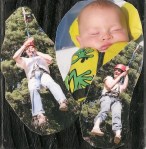
Summer

Sleds make good free baby pools.

Peter loves to splash about anywhere.

Random picnics with grandparents are awesome.

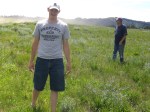
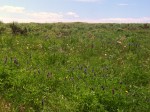
Wildflowers are out and said grandparents know where to find them.

It’s so hot. $3 swamp cooler is temperamental.

At least I have something to stave off the heat.

Meadow

For this week’s garden visit, I am taking you to the site of a beautiful God made meadow. Meadows seem to be a bit of a garden experiment nowadays, but an artificial one just can’t compare to this one I came across at around 9,000 feet above sea level. I was visiting my grandparents in Heber Valley UT, when my grandpa suggested we go on a picnic. So we drove and drove so more, and just when I was wondering what was worth driving so far for, I started to see acres of wildflowers in bloom. Apparently, according to my grandparents, this wasn’t even the flower’s peak. After lunch, my camera was heavily used trying to capture all the flowers in bloom. The photos don’t do the meadow justice, but I’ll share what I have.

To clarify–a meadow is a large expanse of mixed flowers and grasses. A meadow is a wonderful thing to want to do with a large area of land, but think twice before you do. This one is at a very high elevation, which makes a very different climate than is commonly found in a man-made garden. It’s also not prey to all the disturbance we give the land that we use. Tilling up the soil and trying to start a meadow can be just the right recipe for weeds to come in. I’ve had a bit of experience with trying to recreate this, and it resulted in weeks (I mean two hours a day, five days a week for over two weeks) of weed-whacking, heavily used treflan, and less than wonderful results. In the end it turned out alright, but not the beauty this meadow was.

Sometimes in nature there are gardens that we just cannot recreate. Instead, we need to go out and find and enjoy them.

Chemicals

I was over at Ink and Penstemon, and in a post it was mentioned that she was wary of round-up. I commented, ” I can’t imagine being scared of herbicides. To me, I would rather use a herbicide than to spend hours weeding. And I guess resistance is an issue, but maybe rotating chemicals? At least that’s insect IPM. There is more then round-up…” That kind-of makes me sound like a spray-happy farmer with no regard to the environment.  Alas, one of my faults, especially on comment forums, is being a little too blunt and lacking tact. So I come across not as I want to. For the record–I haven’t used any type of pesticides in over a year. I got pregnant, and then had a kid crawling around and it made me think a little more about using chemicals.

And now I come to my dilemma right now in my horticultural and regular mind. Are chemicals (specifically pesticides) good or bad? There seems to be two sides, and I’m a fence sitter. On one side is wary of pesticides and avoiding them at almost all costs, instead focusing on organic gardening. (Which to me is a way to garden, not necessarily just avoiding pesticides. Now I’m sidetracked–another day maybe.) The other side sees pesticides as a means to get rid of all pests, with no worries about ill effects.

I firmly believe pesticides, if used according to label directions, will generally not cause ill effects. I’ve learned a little about what goes into the testing, and the toxicity level of pesticides, and they don’t scare me that much. Homeowner chemicals are usually quite safe. And pesticides are many time more effective than any other option. In school, I knew many (some of whom came from farms) who where a little flabbergasted at the movement to reduce pesticides. Pesticides do their job economically and effectively and without any direct risk.   So on one hand, they seem to be a useful means to an end.

But that doesn’t mean there aren’t any risks. Now with a kid, I feel a little more aware of them. Certainly exposure to high levels and amounts of artificial chemicals will result in ill effects. Chemicals are everywhere, and it isn’t a big deal to get them out of our gardens, where we grow food to consume and roll around in the grass. I also cringe sometimes thinking about the amount of agricultural pesticides used to get rid of blemishes on crops. The spray happy era of DDT is certainly not something desirable.

In my mind, I’m torn between knowing that pesticides probably won’t hurt me but aware they aren’t the most friendly answer. So in practice, I use them as a last result. I am not a couple I knew who put sevin on all their vegetables to prevent bugs of unknown type and origin. But I will use a bottle of round-up to tackle the acre of bindweed (And I have faced an acre of bindweed. We did till, but that really does squat against bindweed. Actually, round-up was only half effective too.) Sometimes, I admit, I look to pesticides too early. Oh well. I’ll figure it out one day.

I believe chemicals are not huge ugly demons. Just annoying cousins. I don’t want them around if I can prevent it, but if there’s not other option, I’ll deal with it.


Birthday

I had a birthday and instead of feeling old, I felt young. I’ve packed a lot of life into the last few years. Those I associate with are almost always older than me. I never though I would be graduated from college, starting my own business, with a husband and kid at this time in my life. I thought I’d be in grad school…but grad school right now if for my husband not me. (I do want to go back someday).

For my birthday my husband (and myself) got me a bike seat for Peter. I love being able to go bike riding again. We are able to do more too when Joe’s out with the car. He also arranged a wonderful night of all you can eat sushi–oh so delicious. Favorite food ever. There’s just nothing like putting that first bite of beauty in your mouth. Expensive though. We spent a little under fifty dollars for all-you-can-eat, and I thought it was a way good deal.

Peter just went to the doctors, and at nine months he’s over 26 lbs and 32 inches tall. Right above everyone else on the growth chart. So cute and happy. He’s started crawling now. I posted a video on facebook of him.

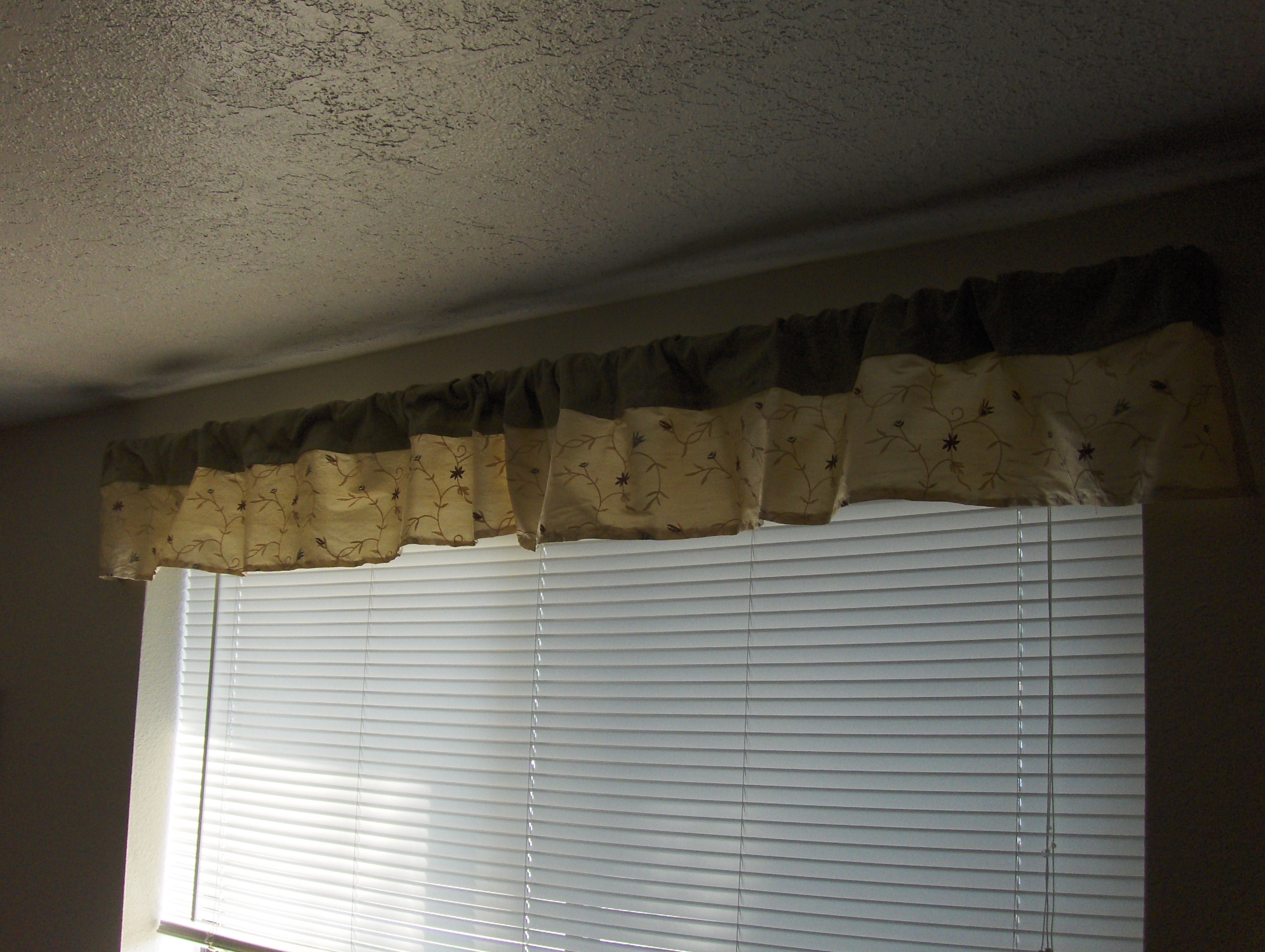
And I finished my curtains! Finally. Here’s how they look. I’m not a sewer, so please do not analyze my seams.

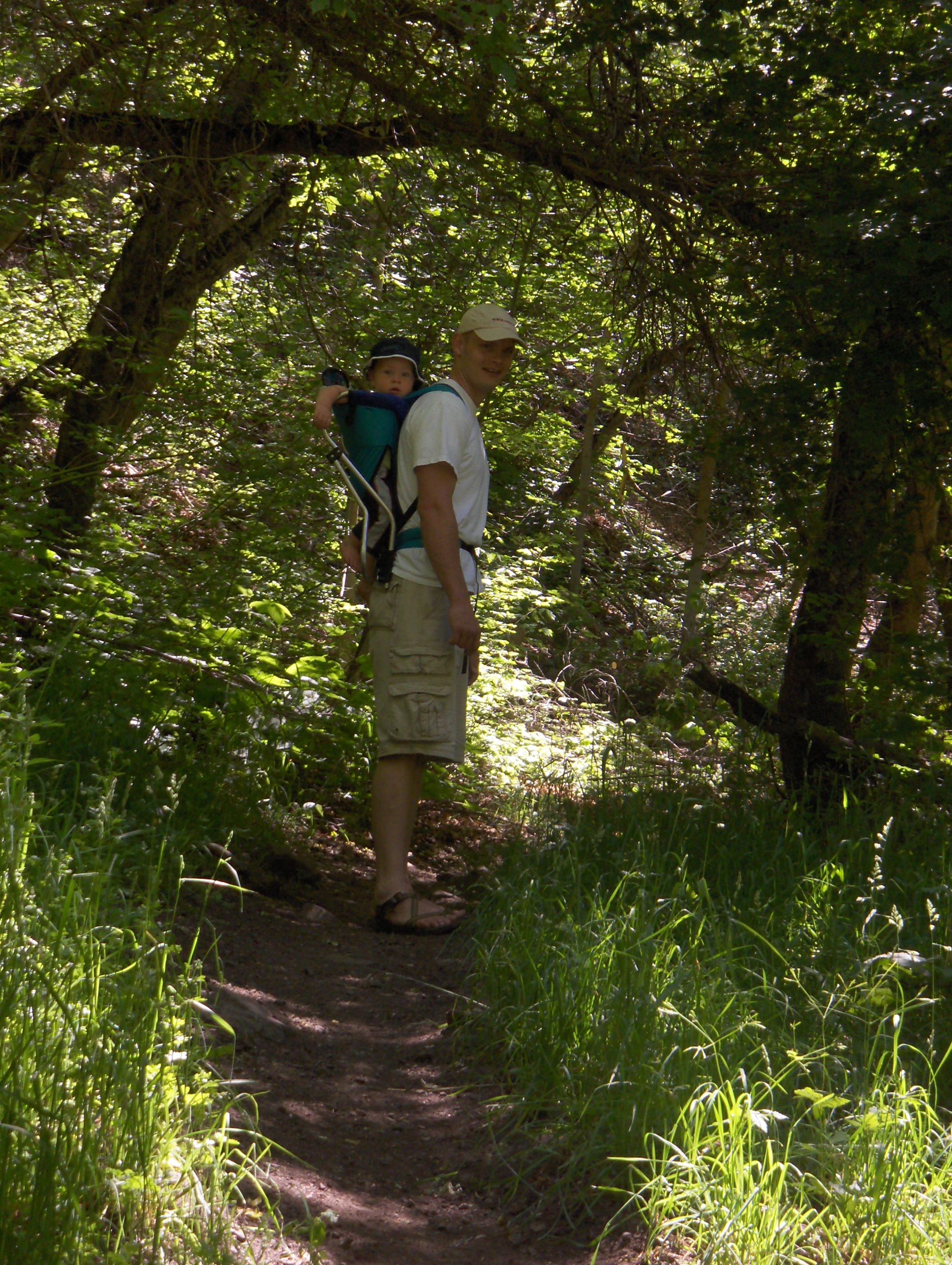
Joe and I went hiking up Maple Canyon, same place I went with Clarissa but different fork. No idea where the trail led–someone asked us if we went to the top, so I’m asumming some mountain. Great, shady trail, with lots of benches too. Nothing better than hiking with my two boys.

Garden Update

I’ve come to a sort-of “complete” in my garden. Not that I think it ever really happens: gardens are changing so often. There’s always something to be done. But for now, I’ve finished planting and added the final touch of bark mulch. The final plant was native sticky geraniums (Geranium viscosissimum) that I was happy to find at McCoard’s Garden Center in Provo. Went there to check them out, and they had exactly what I wanted. Really a good selection, including a lot of native plants.

After planting those, and waiting a couple weeks I was thinking something was missing. Than I realized it: bark mulch. So happy I didn’t forget. Bark mulch has the benefit of making it look pretty, along with keeping it evenly moist, preventing weeds, and adding organic matter. I’ve also found it useful because I water by hand with a bucket (the sprinklers don’t reach most of it: glad I went with water-wise plants) and the mulch helps the water from gorging my soil. Here’s the final (for now) flower bed:

My vegetables are also doing really well. I staked the tomatoes up with two tomato stakes and sting in between. I needed to do something, and that’s what I had on hand. It’s worked out pretty well. The only downside right now is my Roma is getting out competed by the other varieties (one’s brandywine and I have no idea what the third is). I love romas. But it does have the most fruit on it right now. I’ve had a few radishes and greens (beets and swiss chard) so far–another month and I’ll be picking everything else.

Conservation Garden Park

With a holiday this week, I took my little family and went and visited the Conservation Garden Park at Jordan Valley. (That’s the name. A little long). I’ve been here before, but they’ve expanded recently and I hadn’t yet seen the expansion. They are sponsored by the Jordan Valley Water Conservancy District, similar to the Central Utah Gardens. They are one of the first garden of that kind, and are the biggest and probably best too. They also have a great website with a good plant list, and detailed information about the gardens.

The focus is on water conservation and water-wise landscaping and they really do a good job. They have a “neighborhood” of demonstration residential landscapes, and a whole new section of educational exhibits. If you are a homeowner and need ideas, or get a good idea of what water-wise landscaping really is (and it isn’t rocks) go here. I saw some new plants and got some new ideas. The style, especially the new part, is a new formal type that I found very interesting. Different in a good way.

Just a couple more things–the succulents were amazing. Really beautiful, mostly grown in containers. I also found the use of glass mulch unique and pretty. I would’t do it in any large scale situation, but here it is reminiscent of a fountain without the water. It’s not a perfect garden, the most prevalent flaw is plants in the wrong aspect (purple coral bells in full sun, buffalo grass in shade). Definitely worth a visit.

Family Reunion

This weekend was the my dad’s parents family reunion. I got to see all of my cousins, some of whom I have not seen for ages. We went up to the Heber Valley girl’s camp. The first day, we went canoeing on a small lake and Joe and I shared a canoe. We out paddles all my other siblings we raced against.  Little Peter went with his grandparents on a paddleboat. Lots of fun, except Peter was pretty tired. He cried for a while, and finally went to sleep.

After an okay night’s sleep in the cabin (Pete was up a few times, but did go right back to sleep after nursing), we did some ropes courses. My family was pretty good–nice long arms and athleticism helped us out, although I cannot swing on a rope for whatever reason. Then I climbed a hanging log and went down a zip line. I’ve never been that good at that type of thing, but I did it.

Most all the rest of the weekend was spent eating and talking. Then Monday, Joe and I went to a garden and Ikea. Peter was so tired after all of that. Today we are spending a day at home with good naps so he’ll hopefully be back to his cheery self. Oh–he’s also started to figure out crawling. He can go forward a bit, and isn’t so frustrated.

Clarifying my view on lawns

I’ve spent some time thinking about my opinion on lawns. I like water-wise landscaping and being environmentally conscious, so that means I don’t like lawns, right? Well, not really. I was going over some old school notes, and saw the good points of lawns. Here they are:

  • Tolerate traffic, and lots of it
  • Protect soil and adds organic matter
  • Prevent erosion
  • Sequester carbon (Getting rid of the growing CO2 and greenhouse gases)
  • Keeps down the heat
  • Prevent weeds
  • Productive

In many situations, the replacement for lawn would be pavement. No other plant can take the abuse that we give to our lawns. What other surface is as playable, usable, and as pretty as lawn? It is better to have a living, purposeful thing than weeds or pavement. And lawn itself is not bad for the environment: as a plant it is very GOOD.

So what’s the big deal about getting rid of our lawns. Well, here’s the bad about lawns.

  • Chemical use, including pesticides and fertilizers
  • Water use, especially culinary water
  • Mono-cultures: nothing but lawn
  • Emissions from lawn mowers, weed whackers

In this list, I think a lot of it goes back to management. Chemical use can be reduced to virtually nothing, and water use decreased. We don’t have to get rid of the lawn to get rid of the bad effects of our lawn. I think more education is warranted on better, sustainable management of a lawn.

But that doesn’t mean I like to see large fields of useless lawn. Although it is better than weeds or pavement, lawn is better used incorporated with other plantings. Trees, shrubs, and perennials should all be incorporated in every landscape. Lawn is not a filler plant. Give it more credit. It is the solution for large traffic areas, and the only one that involves plants. Large areas that seem to have no functional use would be better adapted to solutions like shrub and perennial beds. My last post is a great example.

Sum up: Lawn is good. Just don’t use it everywhere.

Corner Garden

So I wanted to start a new idea on my blog. My own garden is small and not always that interesting to write about. So each week I will feature a garden/landscape that I find interesting. I think I’ll try to keep it on Wednesday, but if it doesn’t show up until later don’t feel too sad. To start this off, I would like to share a garden created on an awkward corner in Springville. I saw this earlier in the year and thought it was a big patch of weeds. Look at it now:

Not at all what I thought it was. The “weeds” I saw earlier were actually a bunch of wonderful perennials. Now that they’ve started to bloom, this garden is a unique, inviting place. I’m not actually quite sure who owns it, so have very little information on the care and creation. The perennials have been allowed to naturalize, along with the trees and shrubs. I’m guessing the largest maintenance task is weeds, but not a lot else. And with the more casual look, a weed here and there (and there are few weeds) don’t look that bad. There are some annuals planted, a step I think is unnecessary due to the beauty of the perennials. The ground is covered in back mulch (which I need to do in my own garden). Mulch is GOOD and helps keep other maintenance tasks (like weeding) down.

They’ve used aspen, and several of the trees are dead. I kind of like the aspen in a situation like this. They can be allowed to sucker, and old dead ones are easily removed. There are also several native Rocky Mountain Junipers. The woody material provides a great backbone for the rest of the plants.

This is a great way to use extra garden space–naturalized perennials, with a woody plant backbone. Much better than lawn, and you might be surprised with how little maintenance you can get away with. Be sure to pick vigours perennials. Here they have Jupiter’s Beard (Centranthus ruber), Golden Marguerite (Anthemis tinctoria), Lavender (Lavandula angustifolia), Yarrow (Achillea), Lamb’s Ear (Stachys byzantina), Blue Fescue (Festuca glauca), and Feather Reed Grass (Calamagrostis acutiflora). There are some others that aren’t blooming that and I haven’t bothered to identify. (I had a tricky time with golden marguerite. I was thinking “marguerite” looked up marguerite daisy, and it wasn’t it. Took me a while to get it right).

What’s wrong with this tree?

I was walking through the neighborhood, and passed by some pretty horrid looking sycamore trees. They looked very dead. I had also seen a similar looking tree by my grandmas. After working for the Extension service for many years, I had to find out what was causing it. I got on my computer, and in about 2 minutes (Working for the Extension service made me fast. I don’t know everything, but I’m fast at finding answers.) I found the problem. Anthracnose.

I thought the trees were dead but I have some great news: they aren’t. (Although it looks pretty severe and it can eventually result in death. Just not usually.)   So, little background. Anthracnose is a fungal disease that attacks a variety of shade trees. The one I saw was sycamore anthracnose. The reason it is so dramatic is the very cold wet weather we have been having lately.

For control: keep trees healthy. Use sanitation by destroying fallen leaves/other debris to prevent overwintering. Prune out dead branches. You can use fungicides to prevent it if you know it’s going to be a cold wet spring. (But try spraying a 30+ foot tree. It probably won’t do that much anyway, and it’s hard to predict cold wet springs). It’s a plant disease, usually non fatal. One thing about plant diseases is there is simply no miracle way to control them.

Check out this link for more info: Anthracnose