How to Buy a Home the Wrong Way

Our home buying process was very atypical. I thought I might share some of what I learned. If you aren’t buying a home, feel free to skip this post. If you are at all interested (and I think some people out there might be which is why I’m writing), read on. I spend many hours researching real estate transactions. It paid off, because we were able to buy our home without a real estate agent.

Reasons why not to use a real-estate agent:

  • Cost: Although the seller usually pays the real-estate agent, it is still money they have to pay and without it, the buyer can have more bargaining power and reduce the overall cost of the home.
  • Avoiding the middleman: A real-estate agent is a middle man. We were able to deal directly with the seller, and it simplified the process.
  • Pointlessness: We found the house before we were even really looking for a home. Trying to then find a real-estate after we found a home didn’t make sense.

Reasons why you probably do want an agent:

  • Less work: Searching for a home, figuring out all the paperwork, and all the business behind a real estate transaction is a lot of work. Real-estate agents know the market, the process, and will make an already daunting task much easier
  • Legal worries: Real-estate agents will reduce the chance of law suits and other legal problems, since they actually know what they are doing.
  • Add an middleman: Working directly with the seller or seller’s agent isn’t always desirable. Having a third person bargain for you can make a lot of sense.
  • That’s my list at least, you could probably Google a lot more.

Going on…

Desiring a Home

We wanted to buy a house. Joe had a good job, we knew the market was pretty good. We wanted to have somewhere where we didn’t have to answer to a landlord and could work on the projects we wanted to. Our family is going to get bigger (hopefully), not smaller, so we also needed more space. We decided to buy a home when our lease ran out. We talked about what we wanted, occasionally glance at signs and listings, but still had a couple of months before we really wanted to buy a home.

Finding a Home

A family from our ward (church group not hospital) was selling their home after moving far away. It was only three blocks from where we were living. It was still in the fix-up-to-get-ready-to-sell-stage, and my husband stopped by and looked around. Then we both went and saw it. It looked like a construction zone. We looked at it a few more times, and decided to buy it. We didn’t go through another home. The timing was sooner than we wanted, but the house was exactly what we were after.

Making an Offer

We talked to the seller (it was a FSBO), he told us the baseline he wanted for the house (around $7,000 under his initial listing). So we offered that amount. He accepted. No counter-offers, or any extended negotiation. It took 15 minutes. That is a horribly simple, but effective, way to negotiate. While making an offer, we used this purchase contract, and this addendum if you have a government loan. It has all the legal garbage in it, and it is the form used by real-estate agents.

Getting a Loan

I found my loan guy from an online ad. He responded to me the quickly, and we did all the paperwork over e-mail (there are secure ways to do so). I never met him. I contacted him initially before making an offer. I wasn’t pre-approved, more pre-qualified, but the home was far under what we were quoted as what we could afford. After making an offer, I sent him the purchase contract and got to work on all the paperwork he sent me. They sent an appraiser up as well, who appraised the home over our purchase price. In a little over a week, the loan was sent off the the USDA, for a rural-housing loan. Then the government shutdown, and we had to wait even longer than expected. Then meant filling out an addendum to the purchase contract, lengthening the deadlines. We finally had complete approval two months after beginning the process, which luckily fell right at the end of the month.

Seller Property Disclosure/Earnest Money

A disclosure is need according the purchase contract above, and if your seller isn’t on top of things, I recommend printing a form out and giving it to them, as soon as possible. We never paid earnest money, though not every seller is certainly not going to agree to that.

Due-Diligence

We talked to a friend, found an inspector, and got the place inspected. Told the seller what was wrong, gave him a list, and he fixed it. He was also doing a lot of improvements when we made the offer, so we spend a lot of time following up and seeing how everything was coming. It went rather slowly. And I also recommend bringing up anything you want done, even things like the neighbors cats. Go through the house a lot, and ask for everything to get fixed. They aren’t obligated to fix everything, but it never hurts to ask. I did, and although every tiny thing I found didn’t get done, I was a lot better off than not asking. (The cat concern sparked the process resulting in their eventual eviction.)

Moving

We were tired of waiting on the loan, tired of seeing little progress on the house, and needed to know what to do with our current apartment, so we decided we were moving on a specific date. We moved before our loan went through, and before the seller was completely done with moving out/fixing things up. (He did only have a shed in the back to clean out.) In some ways, this was nice. If we found any problems, we could talk to the seller who was still the owner. The work did finally get done as soon as there was a deadline as well.

Closing

The loan went through two days after we moved in. (Happy surprise) The next day, we were at the title company signing papers, and the day after that, we officially owned a home.

Our process wasn’t by the books. To re-cap, here are the thing you probably shouldn’t or won’t be able to do:

  • Not get a real-estate agent
  • Only look at one home
  • Make an offer while the house looks like a construction zone
  • Not pay earnest money
  • Buy earlier than planned (before our apartment lease ran out)
  • Never meet the loan officer, and send the majority of paperwork by e-mail
  • Sit through a government shut down
  • Move in before closing

But for us, it all worked. Any questions or suggestions, please comment away.

*This site is where I got most forms listed above, more are available.

Be Gone Shrubs

We’ve been working on the inside of the house a lot, and I haven’t been worried about much gardening related, except for one essential task:

house 2

No more green meatballs!

To recap, here it is when we first bought the house:

home

And now:

house

With a small chainsaw, and a persistent husband all the horrible hedged evergreens are gone.

I’ve also planted some strawberries, that were slated for demolition at a friend’s house, on the hill. Otherwise, I’ve just been waiting, thinking and observing. And now it is cold and getting colder, so the garden will wait until spring.

Two Fridges

Joe and I have been working and working some more on our house. We are completely unpacked, most pressing fix-it problems are done, and all the awful meatball shrubs outside are gone. We like having projects to work on, it was one of the reasons we decided to go ahead and buy a house. I’m not as prone to boredom as I once was.

Thought I would share one project that we did together. We had an old fridge that we decided to keep. I wanted to paint it with chalkboard paint, something I’ve seen done many times online.  Here’s the after picture. A before picture would be an old white fridge, and I’m pretty sure you’ve seen one before.

fridge
(And Christmas is coming! I didn’t realize just how close it was until I put this up.)

Many projects like this are a bit of a mystery as to how hard they are going to be. We painted our dining room table (twice) and it was pain and didn’t turn out as good as we hoped. But painting a fridge was easy. Easier than painting a room or a table.

First we sanded the fridge down with sandpaper we had on hand. Just enough to start to see the metal coming through.  Now the hard part: while cleaning the fridge I discovered a bunch of sticky carmel/jam mess under a shelf in the freezer, and under the fridge. It was awful cleaning that up. But it was (I hope) abnormal to come across such a mess.

After cleaning, my Joe took the fridge apart (I wouldn’t have, but I think guys just like to take things apart sometime). We had leftover chalkboard paint from the previous owners we used on the doors. (Actually we have gallons and gallons of leftover paint. If you ever need spare paint I might have some.) It covered pretty well, and we did two coats on everything. We painted the body of the fridge with black high gloss paint, which was of course left over from the previous owner. It only takes less than a quart of paint for the whole fridge. 

The handles were originally painted with normal paint. Not a good idea–I went and bought silver spray paint that was labeled to stick to plastic and it worked much better.

The total cost of the project was $5 for spray paint. And I like having two fridges. Big grocery trips don’t end with a impromptu game of tetris.

Pictures from a Walk

Occasionally it is fun to take pictures of what has gone horribly wrong in landscapes. These pictures are from a walk a couple weeks ago. It is far easier in my community to find pictures of blunders than to find a unique, good looking garden. All of these pictures happened in a two block radius.

So here, are the my top five landscape blunders where I live, with a few extra bonuses thrown in.

1) Pruning
I have no idea why everybody hedges everything. If you are buying pruning equipment, it is far more beneficial to buy a pair of loppers than hedging shears, and actually learn how to prune a shrub. It is far less work. This pictures is an especially bad example.
blunder1

2) Weed Trees
We have a lot of trees. The maples, london plane trees, fruit trees, are all nice. But there is huge prevelance of siberian elms, tree of heaven, and seedling locust. These trees are weeds. This picture is not especially good, but it is common to fine a back empty space covered in weedy trees. My current home has a Siberian Elm, my last had tree of heaven.
blunder3

3) Lack of Mulch
Bare soil surrounds flowers, and then up comes the weeds. Or it is just bare soil, like this picture, which is not especially lovely. What happened to using a good organic mulch? Wood chips, leaf mulch, pine needles, compost, anything. It will keep the weeds down, and make the place look much better.
blunder7

4)Weeds
I think foxtail barley is in heaven here. I am pretty sure it thrives in the irrigation water. It was a battle to fight with it in my garden, but if it is continually allowed to go to seed, it will always be a problem.
blunder4

5)Landscape Fabric
It will just look awful in a few years. And it doesn’t necessarily keep down the weeds.
blunder6

Bonuses:

Cement tree ring: No idea why these exsist. In a few years they always look like this. A tree needs far more room than a two foot circle anyway.
blunder2

Chainsawed trees: This is not how you prune trees.
blunder5


Moved

We moved. And closed on our house. In that order. We had been waiting on a USDA loan, which was already going to take two months. And then the government shutdown, so it took even longer. We decided to just move so we could hopefully rent out our apartment sooner, and so we weren’t in limbo anymore. But then, two days after we moved in, the loan finally went through and we closed on the house.

We moved three blocks, and Joe and I did almost all of the moving with a pick-up truck and a day off of work. We worked our tails off for a few days to clean a house, apartment, move, and unpack.

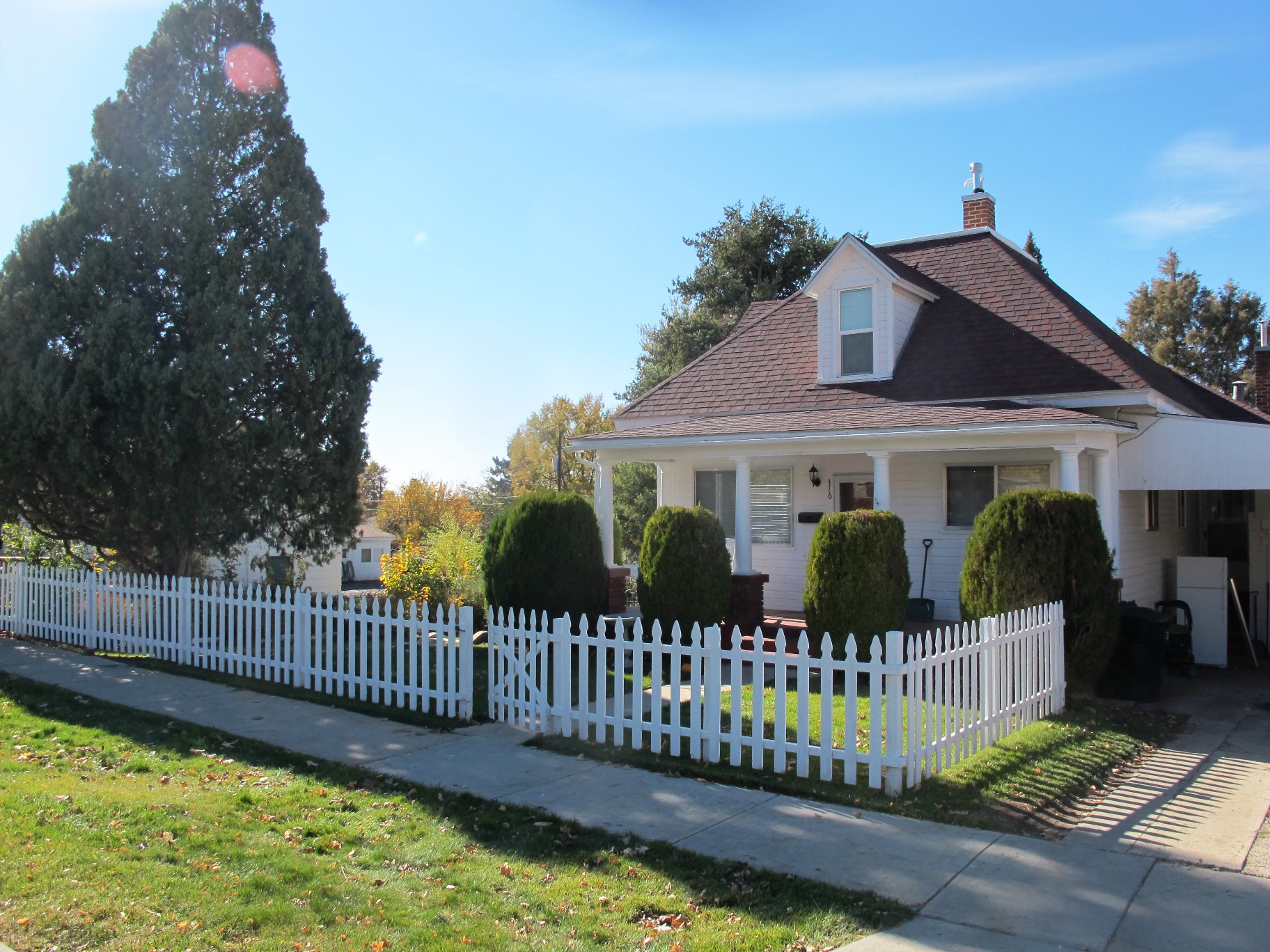
Here’s the new house:

home

And guess what? Two of those awful arborvitae are already gone. And 33 cats from next door.

End of Garden

I got tired of waiting for it to freeze and went and ripped out the garden. Green tomatoes are now ripening more quickly indoors. The kids like the hills created to furrow irrigated the garden and drive bulldozers and dump tracks up and down them.

garden
there

The garden was fun this year, but I was getting a little tired of weeds and cucumbers.

10 Things to Do with Fall Leaves

Whatever you do, don’t leave them out on the curb in big black bags, or put them in your trash can. Fall leaves are free fertilizer and organic matter, and are beautiful.

  1. Give them to a gardening friend (like me)
  2. Shred by going over them with a lawn mower
  3. Leave shredded leaves on lawn
  4. Use shredded leaves as a mulch for planting beds
  5. If they are in a planting area, you can leave them be
  6. Till or dig them into to an annual planting bed
  7. Add to or start a compost pile
  8. Take to local green waste
  9. Let your kids jump in them, or better yet, go jump in them yourself
  10. Make fall crafts featuring leaves

fall

This picture is from a few years ago. In this area, I mowed all the leaves and simply left the leaf mulch there. You can see this area was thickly covered by leaves. Super thick piles might need to be used elsewhere, but I found that by doing it a couple different times over the course of leaf fall meant no raking. Leaving the leaves there without shredding/mowing can result in lawn death. Which might not be a bad thing, I’m a big fan of reducing lawn. 


Dry Plants

Here is my list of plants for dry sites (specifically meant for my sister living in the middle of nowhere Nevada, although my knowledge of growing them comes from northern Utah). All these plants usually survive with little to no additional water after the first year or two. They also need good drainage, and low fertility soils. Most are native.

Shrubs:

Fringed Sagebrush (Artemisia frigida) or Big Sagebrush (A. tridentata): Growing sagebrush in the garden isn’t for everyone. But consider it in the lower maintenance areas that are seldom seen in the garden. It makes an excellent backdrop with fine grey foliage.

Curl-leaf Mountain Mahogany (Cercocarpus ledifolius): An evergreen shrub that can function as a specimen plant or even a hedge.

Rubber or Yellow Rabbitbrush (Chrysothamnus nauseosus or C. viscidiflorus): Yellow blooms in the fall, with fine grey foliage similar to sagebrush.

rabbit brush

Smooth Sumac (Rhus glabra):  These taller shrubs sucker, creating a small grove. Good for covering an area.

rabbit-rhus

Threeleaf Sumac (Rhus trilobata): Good fall color and form. Dwarf cultivars are available. My go-to shrub for massing and low hedges.

Perennials:

Desert 4 o’clock: (Mirablis multiflora) This plant spread out from a single tap-root. It has purple flowers in the summer that open in the evenings. Works well on slopped sites.

Chocolate Flower (Berlandiera lyrata): Yellow blooms all summer than have the scent of cocoa. It is my favorite fragrance plant. Looks better with less care.

chocolate

Sundancer Daisy (Hymenoxys acaulis): Extended summer bloom of cheery little yellow daisies. Can benefit from deadheading, but not required.

apche+daisy

Blue Flax (Linum lewisii): Blue flowers in the spring. The plant tends to die out or look horrible in the summer, so plan accordingly.

Other plants worth trying:

  • Moonshine Yarrow (Achillea millefolium)
  • Crag Aster (Aster scopulorum)
  • Puckered Sundrops (Calylophus lavandulifolius)
  • Mountain BeeBalm (Monodella odoratissima)
  • Palmer’s Pensetmon  (Penstemon palmeri)
  • Globemallow (Sphaeralcea)
  • Prince’s Plum (Stanleya pinnata)
  • Yucca
  • Native grasses
  • Cacti and succulents

Many of these plants and pictures are from the Utah Botanical Center. As always, check with your local extension office for information suited to your region.