Garden Planted

planting

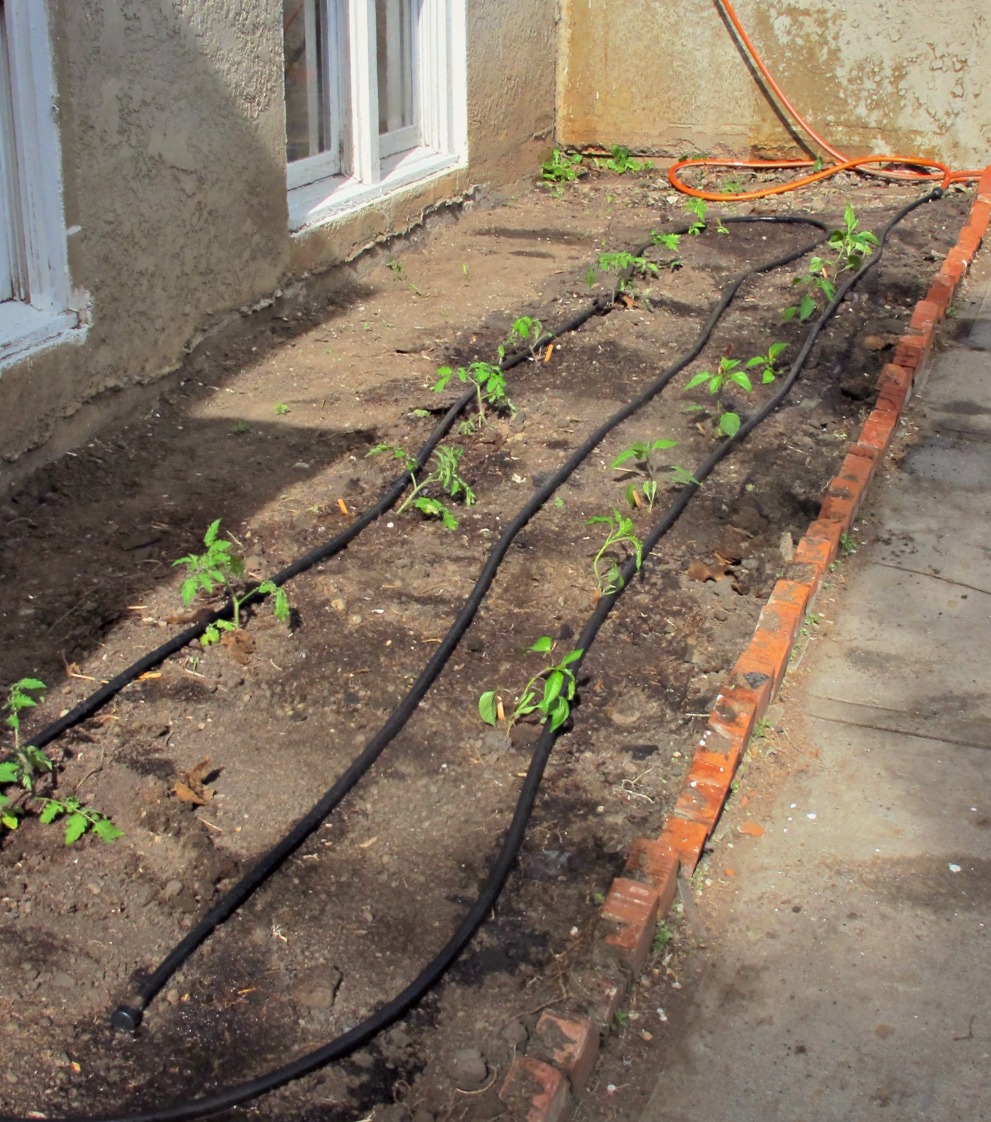
This year was a haphazard garden. I ordered a few seed packets, but mainly just used seeds I already had. I started a couple of flats of transplants, and that’s all I planted–total plant cost was about $10 for new seeds and soils. There wasn’t any real planning on how much or even what I wanted, I just went with what I already had or felt like. We planted most everything in the beds where we ripped out the old shrubs, simply because it was easy. (They also met the requirements of getting enough sun, had decent soil, and were close to the house for easy care.)
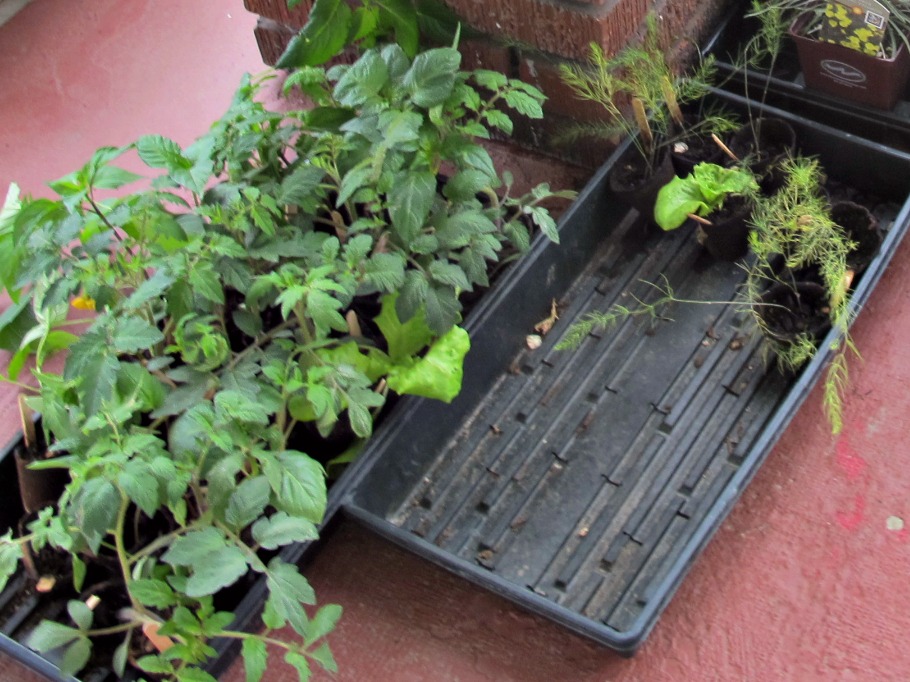
transplants

In our garden we have

  • broccoli raab
  • radishes
  • 8 lettuce
  • 1 cabbage
  • 15 tomatoes
  • 8 peppers
  • 2 eggplant
  • 3 tomatillos
  • 1 melon
  • 1 cucumber
  • 4 zucchini
  • 2 winter squash
  • and a bunch of seeded herbs and some flowers

frontgarden

Provided everything grows and does well, it should be a productive year, even with very little thought put into it. I wouldn’t have necessarily planned it this way–I would have loved more melons and some spinach and onions at least. Four zucchini plants does seem like a lot, but the last two years I’ve grown them I haven’t actually ended up with zucchini. I wouldn’t mind a lot this year.
garden

My four-year old has really enjoyed helping plant everything. I’m a little picky when it come to gardening, so working with him is a good reminder to be more patient and not care so much about everything being just right. He and the toddler were overjoyed to discover that there were radishes underneath all those leaves, and kept picking them and bringing them inside, often before they were fully grown. Hopefully all the excitement about gardens also turns into a desire to actually eat some vegetables, but I’m not holding my breath.

tomato


First Harvest

I bought lettuce a couple of weeks ago and then realized I wouldn’t have to buy lettuce for quite some time. The garden out front is taking off after a week of good rain and then some warmer weather. We have plenty of lettuce, a few radishes, and the wonderful snack of broccoli raab. I’ll go outside and pop off the small broccoli florets on the broccoli raab and eat them as a snack.

salad

This salad was my first real harvest from the garden, combining the crops of lettuce, radishes and brocolli raab. I’ve repeated it a few times this week for a great addition to lunch. Lately, I’ve really enjoyed the taste of fresh produce, so I love being able to eat veggies that came from my garden.


Unknown Plant Suprises

When I moved into our house, there was one small tree I didn’t recognize, and a few other shrubs I wasn’t sure on. Eight years ago when I was taking a class on woody plant identification, I probably would have had no problem. But that was eight years ago, and plant ID is something I lose a bit if I’m not interacting with the plants. I wasn’t too worried about the identity of the plants–I knew they would revel itself later on with some identifying trait.

The first shrub to get a positive ID was a forsythia. Although it has a horrible haircut, it put on a wonderful display of yellow blossoms.

forsythia

Next up was the small tree. This was one of the best surprises, as one afternoon I looked out and saw huge buds on the tree. I had a magnolia! I have always loved the bloom of a magnolia tree. It blooms in early spring, when spring is still very new and exciting. The blossoms are large, and here as a semi-hardy tree, very unique and precious to have. I would have never planted a magnolia tree–deeming it ill suited to to the site and too fussy for my tastes. But I love that I have one and can enjoy its huge blossoms every spring.

blossom

Now the downside about the tree is that somebody let a Siberian elm grow right up the middle. It reached a good eight inches in diameter before it was sawed back, but it still pokes up into the tree, and it still isn’t dead. It’s going to be a process to get it away from the magnolia.

Chicken Coop

The chickens were evicted from the brooder box. They stunk and were creating a huge amount of dust. The landlords were a bit nice and let them stay an extra week while their new home was being constructed.

start

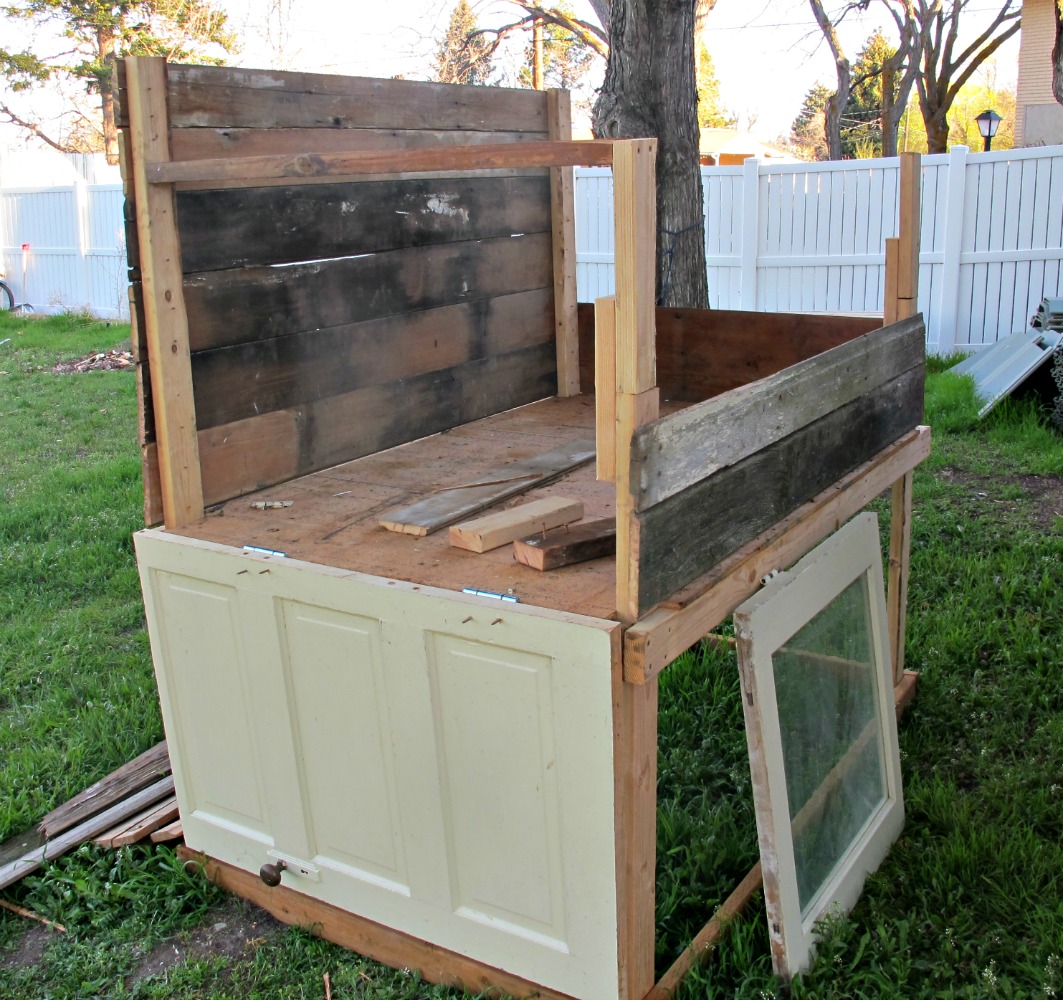
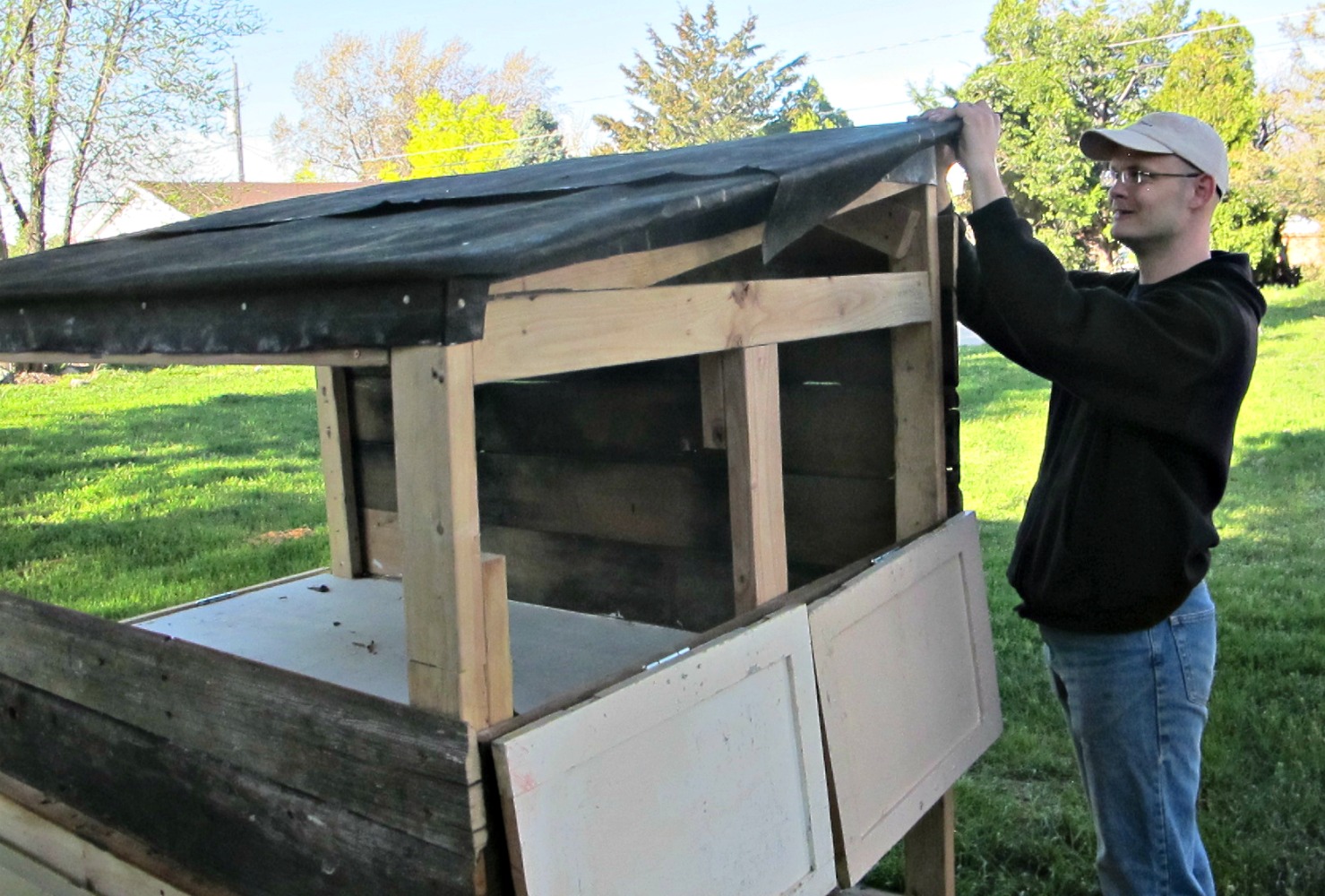
We Joe has been working on the coop a lot trying to get it ready for the quickly growing chickens. Anytime we had any amount of free time, we would be out working on the coop. Because we were using reclaimed wood from the torn down shed, it took longer than it might have otherwise. Using reclaimed wood sounds great from an ecological and budget standpoint, but it also increases the time spent doing wonderful tasks like pulling out nails, discarding yet another board that split, and occasionally playing mini games of tetris to fill in a hole.

roofing

To make our coop we used plywood, a few two by fours, and side planking from the old shed. We also had an old door  two old cupboard doors, tar paper and a few other wood pieces lying around. We did buy all the hardware, extra two by fours, the run fencing, paint and shingles for a total coop price of $175. Not bad for a coop that is six feet by four feet.

front

Both Joe and I designed the coop, a lot of it just as we went. That did means at least one time of pulling off a whole side and re-doing it so it actually functioned. (You can notice the change in the door side in the pictures.) It also meant hastily installing a rain gutter before another rain storm after the freak snow storm revealed that the coop was far from water tight. Now we can collect rain water off of the roof, so the gutter was worth it.

painting

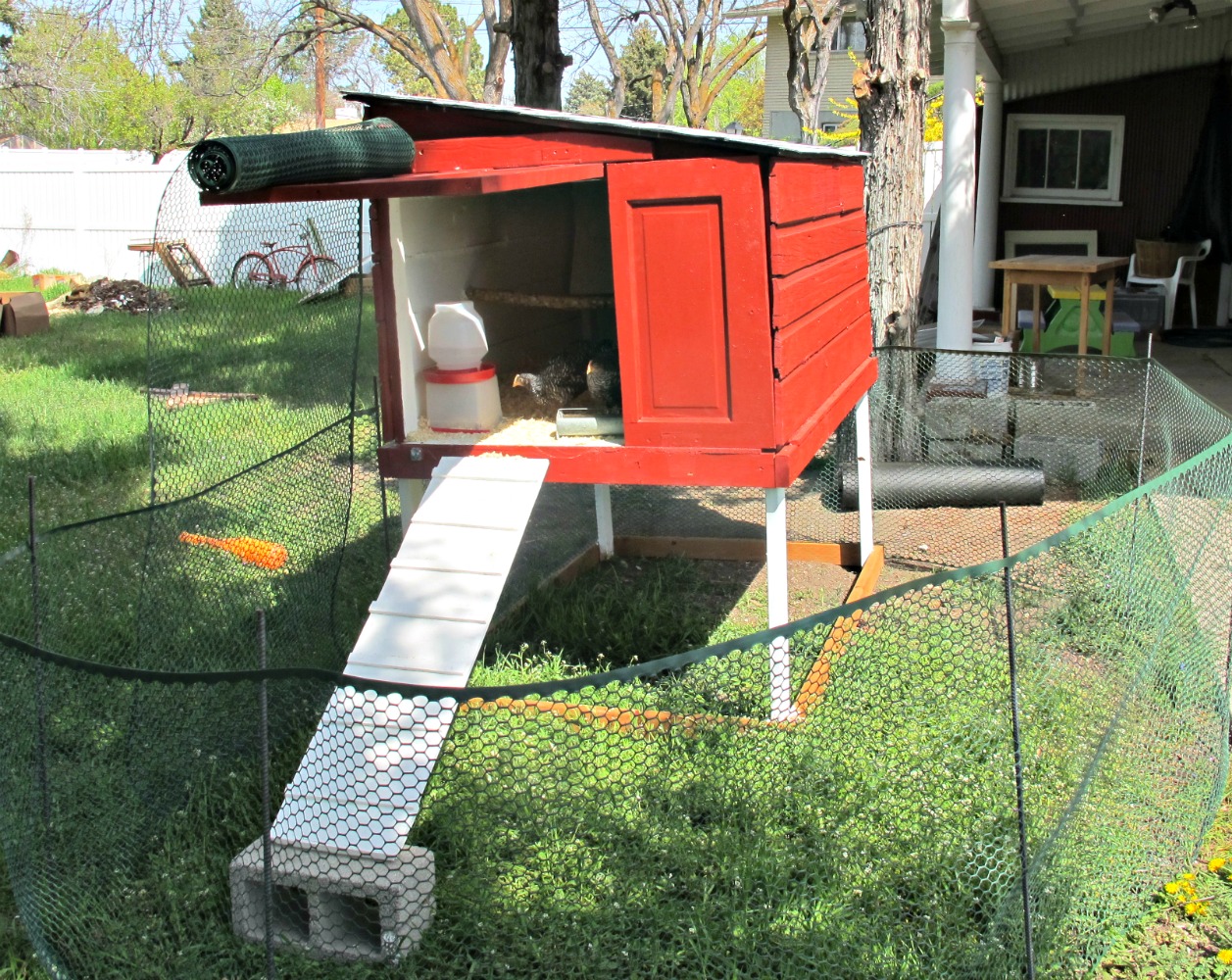
The coop is very roomy for our small flock of four. (And we almost certainly have a rooster. Right now, he is the nicest chicken of the bunch and I wouldn’t mind if one of the hens went broody and I ended up with some free chicks.) We want to get more chickens in the future. I don’t want them so much for the eggs, but for their excellent soil preparation. I have a lot of weeds to get tilled up and I would rather the chickens did it than me.

nest boxes

We still aren’t quite done. We want to make the run more secure, and are almost done with a new feeder and chicken fountain. We also want to make the coop more mobile, which will require wheels. Here’s the chickens enjoying their new home.

coop

Oak Hill Homestead

Laundry Room Floor

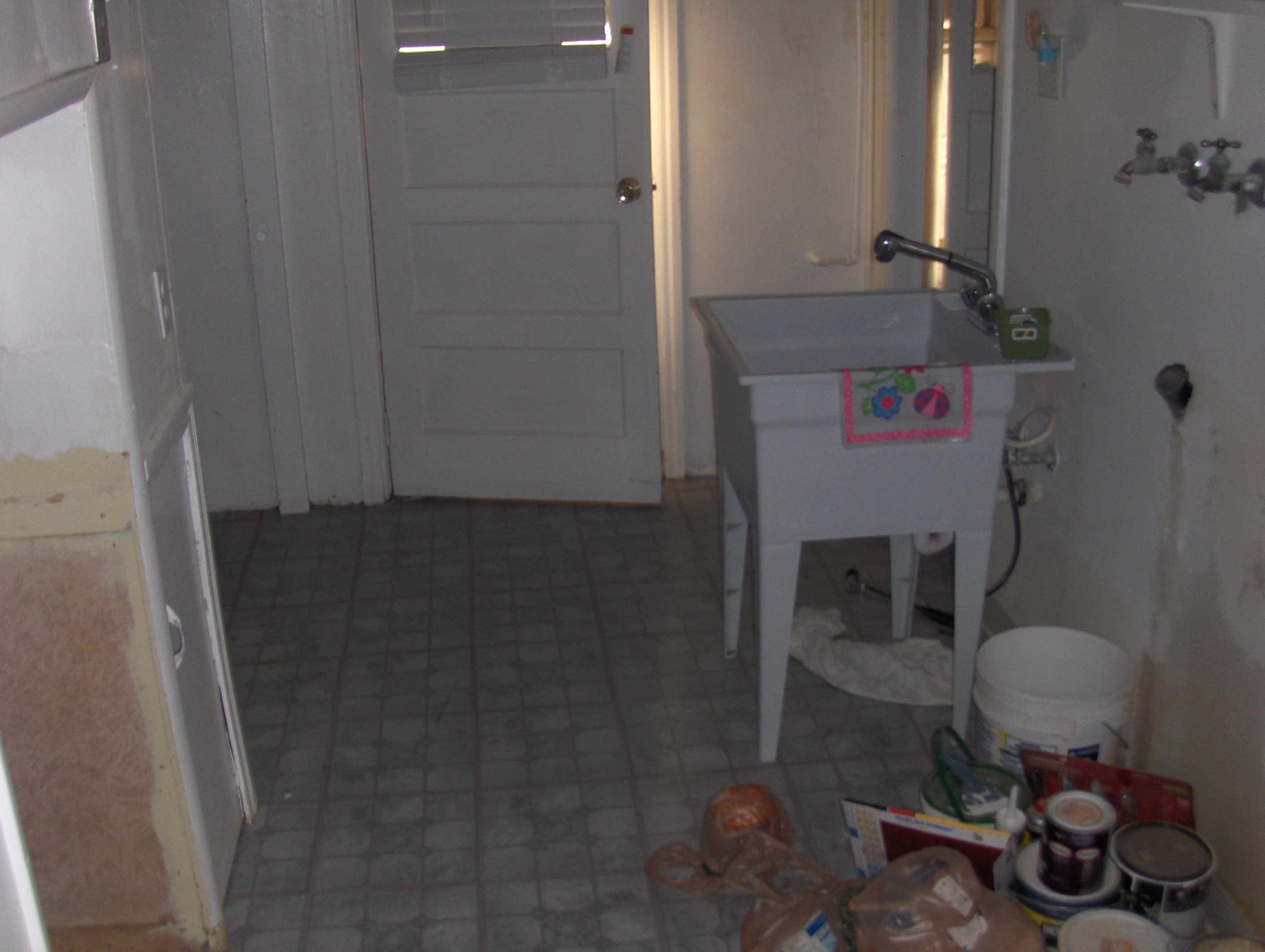
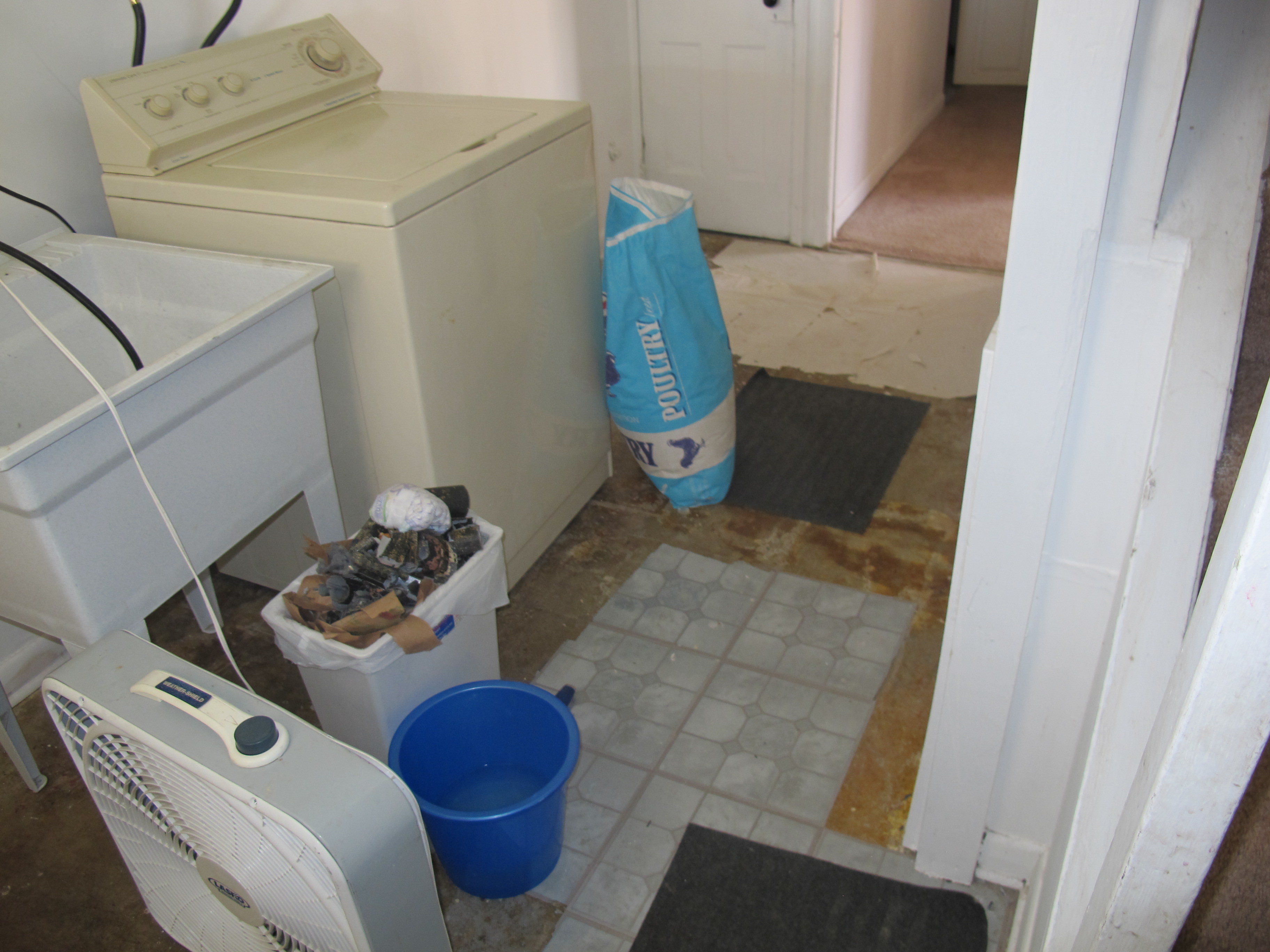
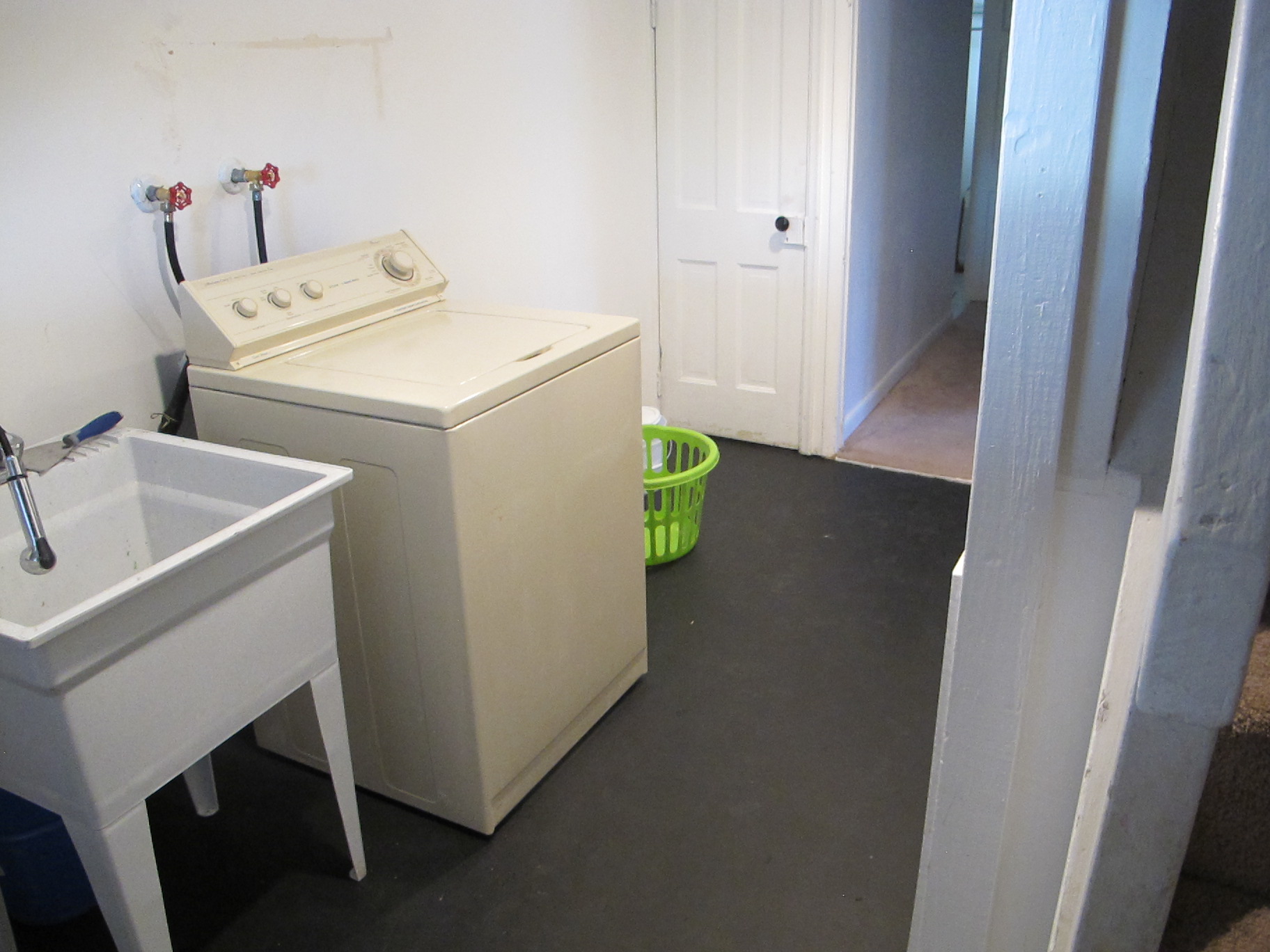
Usually the decorative state of a laundry room doesn’t matter that much, but ours is also the hallway to get into the downstairs. I walked through there all time time. Out of all the room in our house it was the one that bugged me the most. I didn’t like a single thing about it. Boring, ill-painted (and damaged) walls, and awful stick on tiles. I hated the flooring. It was stained and ugly. So one day I started to see if we could get rid of it.

before

That started weeks of scraping off the stupid flooring. My husband got a good system down and did most of it. After a very short time, we had decided it really wasn’t worth all the effort. But when you start a demolition project, it is hard to change your mind. So we just lived like this for a month, and eventually it all got ripped out.

during

There was a good layer of adhesive left behind. I took a small section and scrubbed it off with a bunch of chemical, and then applied a coat of concrete stain. Just a little section to see if it would work out as I hoped. I was surprised and happy when it did. I wasn’t trying to do something that was unattainable!

I exposed myself to far too many chemicals one Saturday and scrubbed the rest of the adhesive off. That part didn’t actually end up taking more time than I imagined, but I would prefer not to ever have to deal with all the chemicals we used again. Final step was a couple of coats of concrete stain.

after

On hindsight, I would have not picked black, it shows dust and everything else far too much. (I bough the stain spur-of the moment on a home improvement store trip, so there wasn’t a lot of thought that went into color choice.) But, I am liking it much better than the stick on tiles. It was an inexpensive project, although it did take far too many labor hours.

A Quick Book Review

I like to still read beginning gardening books and articles, talk to gardeners, go to gardening classes. It is a good way to keep up on my gardening knowledge, and see what people are thinking as well. Not everything I hear and read is accurate. My cousin commented on my previous post, “There is so much misinformation and pseudo science out there. Thanks for making the world a more informed and scientific place.” It is very true, gardening advice is full of pseudo science. I would love to go over a lot of common advice that needs to be re-evaluated…but it’s already been done. There is an excellent book out there, that I believe should be in every gardener’s library.

http://ws-na.amazon-adsystem.com/widgets/q?ServiceVersion=20070822&Operation=GetAdHtml&ID=OneJS&OneJS=1&source=ss&ref=ss_til&ad_type=product_link&tracking_id=garwitpla-20&marketplace=amazon&region=US&placement=B0085BAD1M&asins=B0085BAD1M&show_border=true&link_opens_in_new_window=true&MarketPlace=US
The book is Decoding Gardening Advice: The Science Behind the 100 Most Common Recommendations by Jeff Gillman and Meleah Maynard

I bought this book on a Timber Press monthly special. (By the way, Timber Press specials are the best. Every month they have three e-books that are 3.99 or less. I have bought a load of gardening books all for around $3.50 just by checking up on the specials. It isn’t just old or unwanted books either, I’ve got some newer releases and some bestsellers from there.You can sign up for their mailing list and get notified. Can you really have enough Timber Press books as a gardener? I think not. And I am in no way compensate for this statement, although if they would like to send me free books they are more than welcome too.)

After my last post, I started to look through this book again. It is well organized, so in my case I was skipping through the book instead of reading it straight through. It is divided into chapters that include soils, water, pests, mulch, flowers, trees, vegetables and fruit, and lawn. It is presented simply, sorting advice in each chapter into good advice, advice that’d debatable, and advice that’s just wrong. In a glance you can quickly tell the value of a certain piece of advice, and then go on to read the details.

I did wish they would site specific studies and articles to back up their stance one everything, but that would also make it not as user friendly and is probably not of interest to most people. (An appendix would be nice.)

It Gets Worse Before it Gets Better

Our backyard has never looked great. When we bought the house, I was fully aware the yard was a fixer upper. It has sat unchanged and only minimally maintained for decades. In contrast, the inside of the house was in pretty good shape, and had a lot of improvements done recently. I preferred this. I’m not a big fan or expert in flooring, but I do love a good and personalized garden. I wanted a yard where instead of ripping out decent landscaping to get what I wanted, I could just start from scratch.

One of the eyesores in our yard (besides the meatball shrubs that were promptly removed), was an old shed in the back. It had a bit of rustic charm to it, expect for the fact that it was filled with thirty year old garbage and leaning about twenty degrees to the west. At first, I couldn’t even comfortably get in the shed because the lean prevented the door from opening all the way.

shed

Doors are easily removed, so I popped off the door and started sorting things. There were some cool finds in the shed–the most interesting was a set of vintage bikes. A lot of it was simply old garbage that should have just been taken to the dump rather than stored in a shed for decades. There were blanket and other fabric things covered in cat urine, old motors, air conditioning units, cardboard, jars (and not cool ones), torn up flooring, and even a sink. Everything in the shed was placed outside the shed for eventual disposal, free-cycling. or re-purposing.

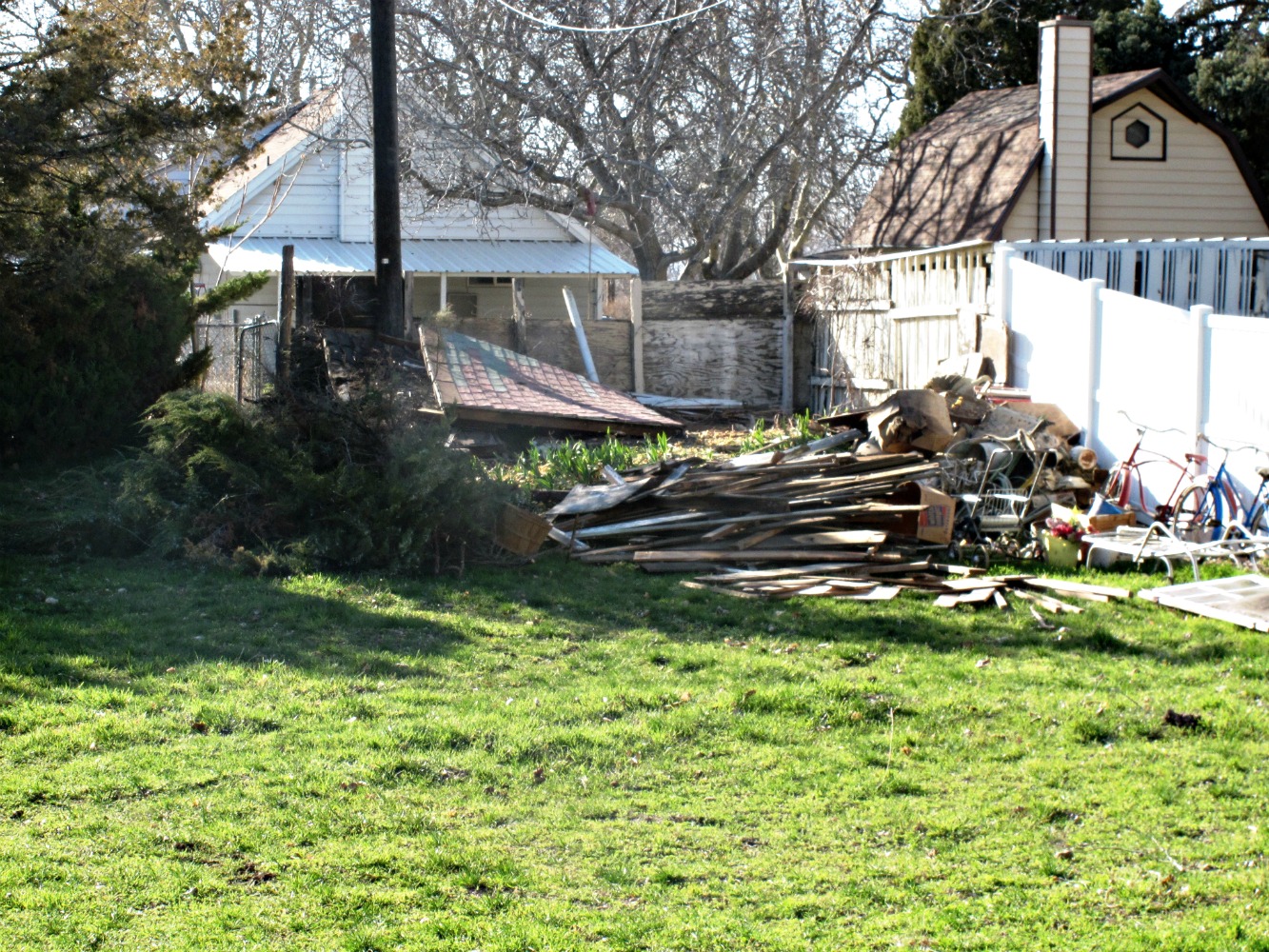
Joe spent a Saturday ripping off old boards, and finally, knocking the shed over. No more shed. Happy day. Except…

We are now living in a junk yard. At least before all the garbage was cheerfully disguised as a rustic shed. Now it just looks like garbage.

junkyard

Our city does spring clean-up with dumpsters and double garbage days in a month, and we are planning to dispose of much of the junk then. We also want to re-use some of the wood for the chicken coop, which is why we torn it down now and not later. I’ve already free-cycled some items (I had about 5 people in a half hour clamoring for an old window and screen door), and we will spend the next month sorting garbage.

I thought I was a gardener not a garbage sorter, but sometimes the jobs just overlap.

Tilling

I was talking with my father-in-law about gardening, and we started talking about the soil. His garden is quite rocky, which is common for the area, and he was frustrated that even with years of tilling the soil had not improved. I think it is a very common practice to till the soil before planting every spring. Many people believe that tilling will help the soil become more fluffy and workable. (And if you want to be fancy about it, you can use the word tilth.) It makes sense, tear up the soil, increase the tilth. But…

TILLING IS BAD FOR THE SOIL.

I know it is done all the time, and modern agriculture and certainly home gardeners religiously till. But I believe home gardeners do this simply because they don’t understand what they are doing. There are many reasons to till, some of which I will discuss below:

1)The primary one and most acceptable is incorporating organic matter. If you are dumping on a load of compost or growing a cover crop, you can go ahead and till or work it in. The benefits of the organic matter will likely be greater than the downside of tilling. Even so, organic matter can be applied to the surface of the soil and will gradually incorporate itself.

2)Tilling is often used for weed control. But on the small scale homeowners have, there are many other better options. Hand pulling and mulch are my favorites. Tilling some weeds can actually help them come back bigger and better.

3)Tilling is used to get rid of compaction. This can work; however it doesn’t address the cause of compaction. It would be far better to have dedicated pathways than to keep tilling year after year.

Here are some reasons not to till:

1)Tilling destroys structure. Structure is what ultimately makes our soil workable, not easily compacted, and allows for the proper flow of air and water. Tilling doesn’t help create structure: worms, critters, and plants do. Tilling will destroy the structure of the soil, and in effect decreases tilth. It might make the soil nice and fluffy for a few days, but it doesn’t last and overtime it starts creating hardpans, and more compaction.

Soi Collage

2)Tilling inhibit soil organisms over time. Would you like someone to come rip through you home with a tiller? Neither do all the organisms that live in the soil. And these organisms are awesome: they enable plants to get water, and nutrients more readily, fight off disease, add nutrients to the soil, and create structure and tilth.


Here is how I think of it. I have my original soil, with a good layer of compost on top. If I till it, it all gets mixed together. If I leave it alone, than I can start increasing my soil depth by continuing adding organic matter and have a nice rich, organic top.

Which would you want?

Seed Starter

The seed starter was reborn this year. The shop lights we had used previously were used to light up the garage/shop. I bought some smaller florescent lights which were hardwired to a light timer.

starter

It only will hold two flats of seedlings, but that is usually plenty for our garden. And I found a great little dome to use to germinate seeds: an old cake tray leftover from a birthday party. You might also notice the tin-foil: I was trying to direct the light to the seedling instead of lighting up the room they were in.

So far, I’ve started asparagus, lettuce, and cabbage that are all doing well and close to transplanting. Just seeded are tomatillos, peppers and more lettuce. More will be seeded later.

Chickens

I expressed my interest in raising chickens this year to a friend of mine. Later on she called to say she had some extra chicks, and would we like some? Why yes, we would. Now we have a small flock of four barred rocks, and everyone is enjoying them. I’m not sure if they are enjoying us yet–they react quite strongly when my toddler comes by for a look. These are our first pets as a family (minus a few fish). We’ve never really wanted a traditional dog or cat, but we have always wanted chickens.

chicks1 chicks2