The Fate of Our Rooster

girls

A while ago, I posted about how we had an unexpected rooster. For a while I really liked him–he was friendly, and I liked the sound of his crow. But he kept up his cook-a-doodle-do at 5:30 am for too long. Normally I”m not opposed to waking up this early–but not so much when I’m pregnant. I wanted to sleep in occasionally. Please. The horrible thing about a rooster for an alarm clock is he doesn’t have a snooze feature. Its just lots of crowing until you get up and let him out, and then he still goes at it.

My desire to sleep in won over any small desire to keep the rooster, and one night my brother in law ripped his head off. I did most of the plucking, butchering and cleaning (badly I might add–it was my first time and I had no clue what I was doing). After resting in the refrigerator for a day and half we ate him for dinner. It was pretty good too.

chicken

Our dinner of homemade bread, homemade strawberry jam, and homegrown chicken.

My toddler liked the rooster a lot. He would copy the crowing sound when he heard it and say, “Mommy, rooooster.” I wondered if we should tell the children exactly what we were doing, and we went ahead and did. They didn’t seen the actual killing of the chicken, but did see me plucking and butchering him, and knew  exactly where the chicken came from when we had it for dinner. They weren’t too bothered by it either. When asked about the rooster now, my toddler will say, “Rooster died,” not sadly but just as something that happened.

I enjoyed the experience of raising and butchering my own meat. But it isn’t an experience I’m going to continue to pursue anytime soon. First of all, it wasn’t cost efficient. The chick cost $2 to begin with and then 3 months of care and feed, plus an hour to butcher and clean. He was probably a three to four pound chicken. Compared to grocery store prices–not a great deal. (Meat birds are a lot bigger in less time, and I’m not factoring in the price of a free range local chicken vs. the factory raised birds in the store, so there is a lot more to think about in the process. But a straight up economical analysis of my bird doesn’t come out that well.) I didn’t particularly enjoy the butchering process. It’s not something I want to repeat in order to get meat every time. Maybe if I actually learned better how to do it, I would be more willing. We also have enough projects and improvements in the yard that raising chickens for meat isn’t a priority. But I’m glad to have had the experience–and also glad that most of my chickens are hens that are now laying eggs, a much easier source of protein to deal with.

Garden Update and the Chicken Run

It’s been hot. I’ve been spending most of my time gardening just trying to keep everything irrigated. Previously, I’ve been hand watering with watering cans during the twice-weekly irrigation turn. I’m discovering this isn’t enough for the plants right now, so I’ve taken advantage of the soaker hoses already in place.

I’m glad my garden isn’t that big right now, that I’m only focusing on a few beds. If I was trying to worry about everything on my overgrown lot, I would get burned out pretty quickly. I’ve been working on an overall landscape plan lately, and it is getting me excited to extend the garden…but I’m not in a hurry to do so.

July marked the start of summer harvest. I haven’t been getting anything out of the garden for a few weeks (unless you count parsley), and just this last week I’ve got my first zucchini, tomato, and pepper. I’m excited to start cooking with more vegetables–our vegetable intake always goes up in the summer and fall.

The chickens also started laying eggs. I ate the first small egg for breakfast this morning. We have been experimenting with their run lately. We want the run to be movable and also roomy. Their current run is a length of chicken fencing with a double strand electric fence on top to prevent them from flying over. It’s not perfect, but works pretty well.

We tried just using an electric fence to give them some more room, but the chickens were not deterred. Then they free ranged for a while. I like having the chickens around the yard. My boys liked to chase them around and just watch them. Only problem is every time they free range I find something in my garden chewed on. A while ago it was the eggplant, and this time it was my fennel. I also want to focus their efforts on a section of the weed patch in the backyard, so eventually I don’t actually have a weed patch back there. (Chickens are excellent cultivators and weeders.) We’ll stick with the current run for now, but I think in the future when the teenage chickens are ready to join them and they need more room, I’ll go with electric net fencing.

Enjoy some pictures from around the garden…more project info on some of the things pictured will be coming.

Parkstrip Bed

This park strip bed is mostly on my neighbor’s yard. My neighbors are getting old, and most of their landscape is taken care of by a variety of relatives and professionals. One such person tilled up the bed, and I knew I had to take immediate action. I went out and talked to them and volunteered to take over the bed, explaining some of what I had envisioned. It was readily agreed to, and I promptly mulched it in wood chips. I then took out my design hat and and brainstormed several directions the bed could take.

design

I took a trip to the garden center and ended up with a currently simple, but effective design. There are three grasses Calamagrostis  ‘Avalanche'(Variegated Feather Reed Grass), Deschampsia ‘Schottland'(Scottish Tufted Hair Grass), and Helictotrichon ‘Sapphaire’ (Blue Oats), and a ground cover Oenothera “Shimmer” (Evening Primrose). I want to plant more in the bed, but decided I would start with a basic foundation and add more later after I see how these plants did. (It’s cheaper that way too.)

parkstripbed

The garden is super easy to maintain–I hand water it twice a week right now, and it will need even less water later on. The only other task is weeding, which I do once a week with a winged weeder. The weeds were coming up pretty good because of all the tilling at first, but now its hardly any work at all. (I wouldn’t have tilled the bed first if I was in charge–I would have just done a light hoeing to get rid of the weeds.)

bloom

I like the bed mostly because it is the only part of my garden that isn’t a tree, something I don’t want, or an annual. Right now it’s a bit underdeveloped, but it’ll just keeping getting better as the plants grow in.

Chickens

We have an unexpected rooster. Legally, we are not allowed to have roosters, nor did we ever plan on keeping one. But now that he’s here…he beautiful, and actually one of the friendliest of the flock. It’s been fun seeing his crow change from what I first thought was my toddler crying to a pretty nice cockle-doodle-do. He actually has great timing to be our alarm clock in the morning. His fate is still undecided: butchering or giving away are both still options. But for now he can stay.

girls

The chickens feeder and water got updated to this homemade version made out of 3″ PVC pipe. It’s been very easy to use and keep clean, and cost us about $20 in supplies.

feeder

Finally in chicken news: we got new chicks. They are are a fun batch that love to eat right out my hand.

chicks


Vegetables

The veggies are doing just fine. At the end of the cool season crops, I had some expected surprises.

bee
yellow
purple

Flowers. The yellow is broccoli raab and the purple is radish. Radish has a surprising pretty flower, and its nearly three feet tall. These particular plants never really bulbed up well, so the flowers were a good consolation prize.

That was a bit over a a week ago, and with increasing temperatures, my front garden is in need of a makeover. The heat is punishing the cool-season crops and aphids have moved in. But I want to get some seeds before I change it to a warm season garden, so it’ll look a bit bad for a while

finished

The tomatoes are doing better than hoped for, and my zucchini was yet to die. The asparagus transplants that were almost dead when I planted them are bouncing back. And I’m now enjoying snap peas. I never pick enough to actually get them inside, they just make a delicious snack out in the garden.

Here are the tomatoes:
veggies
And just a week later:
tomatoes

Tomato Staking

I’ve use the cheap tomato cages before, and I’m always less then impressed. Tomatoes get too big for the cages quickly and I don’t find them extremely easy to use. Other tomato staking devices require too much money or too much work, like having to actually prune a tomato plant.

I grow 15+ tomato plants a year, and it requires an easy inexpensive staking solution. I’ve been doing this system for several years after seeing it on organic farm, and I love it. It’s easy and inexpensive. Here’s a look at my tomatoes, all staked up.

tomato staking

It’s simple. There are six foot tall t-posts on the end, with tape in between. I used two t-post for about 6-8 plants. After pounding in the t-posts, I tied off the tape and weaved it in between the tomatoes. In the past, I used twine but I’m liking the flexibility of the marking tape this year. (It’s not actually sticky tape and is found in the hardware story with other supplies like marking flags.) It does stretch a bit, so when the kiddie pool fell on top of my tomatoes I had to re-tighten the tape but it wasn’t a big deal.

As the season progresses, I’ll continue to add more levels of tape. If any tomato is especially floppy, I can use a small section of tape to tie it directly on to the bigger tape section. Since the tape is stretchy and soft, it’s not going to girdle my plants. I will have to monitor it because if it isn’t kept tight the tomatoes start to flop.

Material cost is very low, and the main materials (t-posts) will last for a long time. This year I had to upgrade/re-do the system, and the entire cost to stake 14 tomatoes was under $20. It’s easy to put in initially. It does take some work during the growing season, but I don’t find it excessive.

Shared in the HomeAcre hop.

Potential

I’ve called this year our demolition year, and it definitely has been. We’ve ripped out enough 50 year old shrubs to make a pile big enough for someone to live in. Good thing about ripping stuff out is it is cheap, even if it is labor intensive. Landscape installation can get quite expensive fast, and we do not have an adequate budget. As a guideline, total landscape installation can cost 10-30% of the value of the house.. It’s not a crazy amount: although doing it yourself and over time will reduce the cost. Hopefully, for a fraction of the cost and a lot of labor we’ll still get some good results.

fence
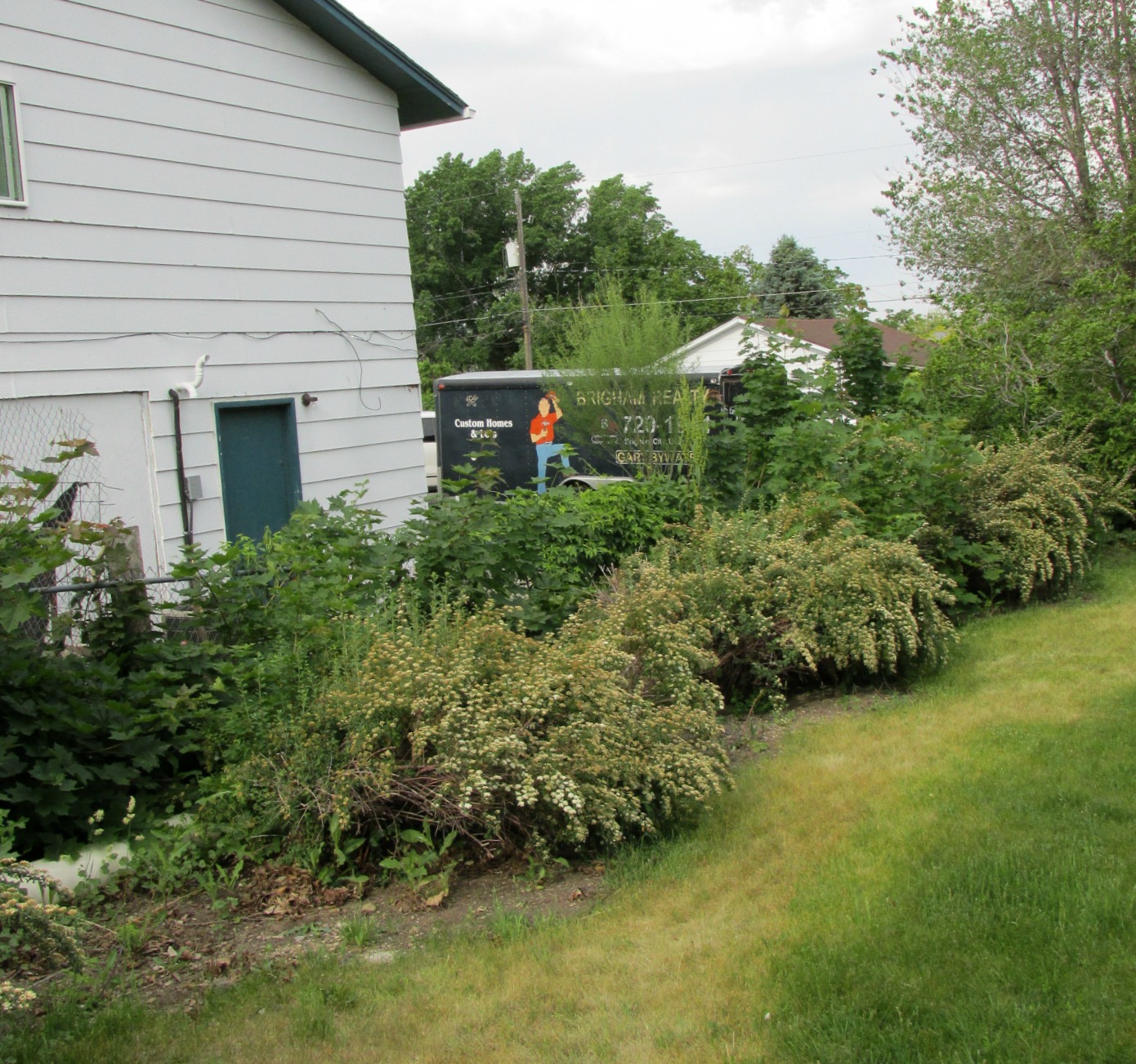
This fence line had a ton of volunteer maples, and half-dead bridal wreath spireas.

fence
After lots of pruning: I wouldn’t mind if some of the spireas came back, but I don’t care if they don’t too.

Right now thought, the landscape is a bundle of hopeful dreams and currently a lot of projects in the making. It looks awful. I’m letting weeds grow and grass die. But I think the difference between what I’m doing and a neglected landscape is that I have a vision for mine, and I’m letting weeds grow and grass die because I’m working toward something that will be better. I understand that weeds are better than bare soil, that I don’t want to waste the valuable resource of water on a non-wanted lawn. The landscape is progressing, even if it is nowhere close to where I want it to be. And we finally got rid of all the garbage that had piling in the backyard.

mowing
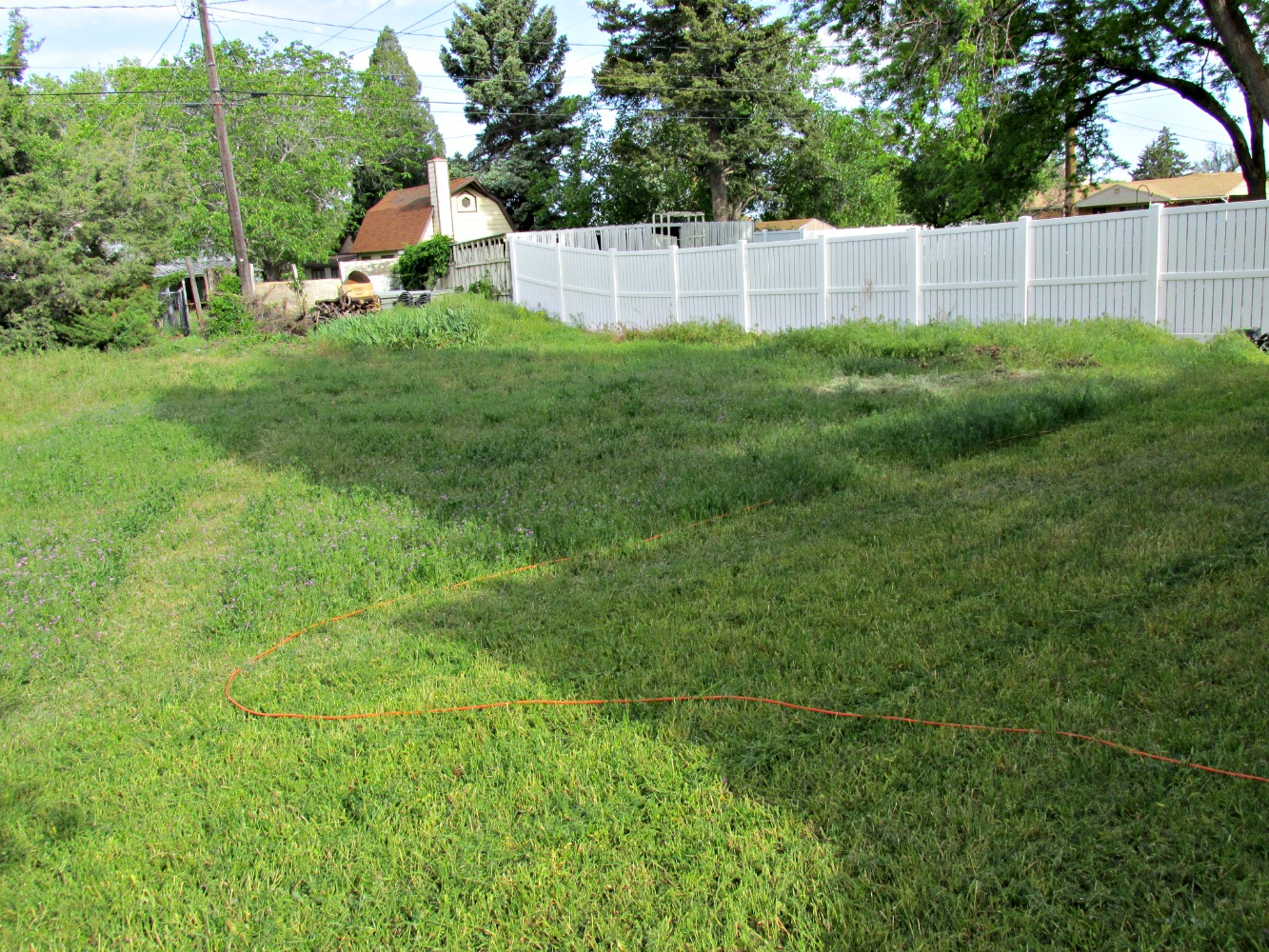
In the middle of mowing the back half of our yard. Everything growing here is weeds.

mowed2
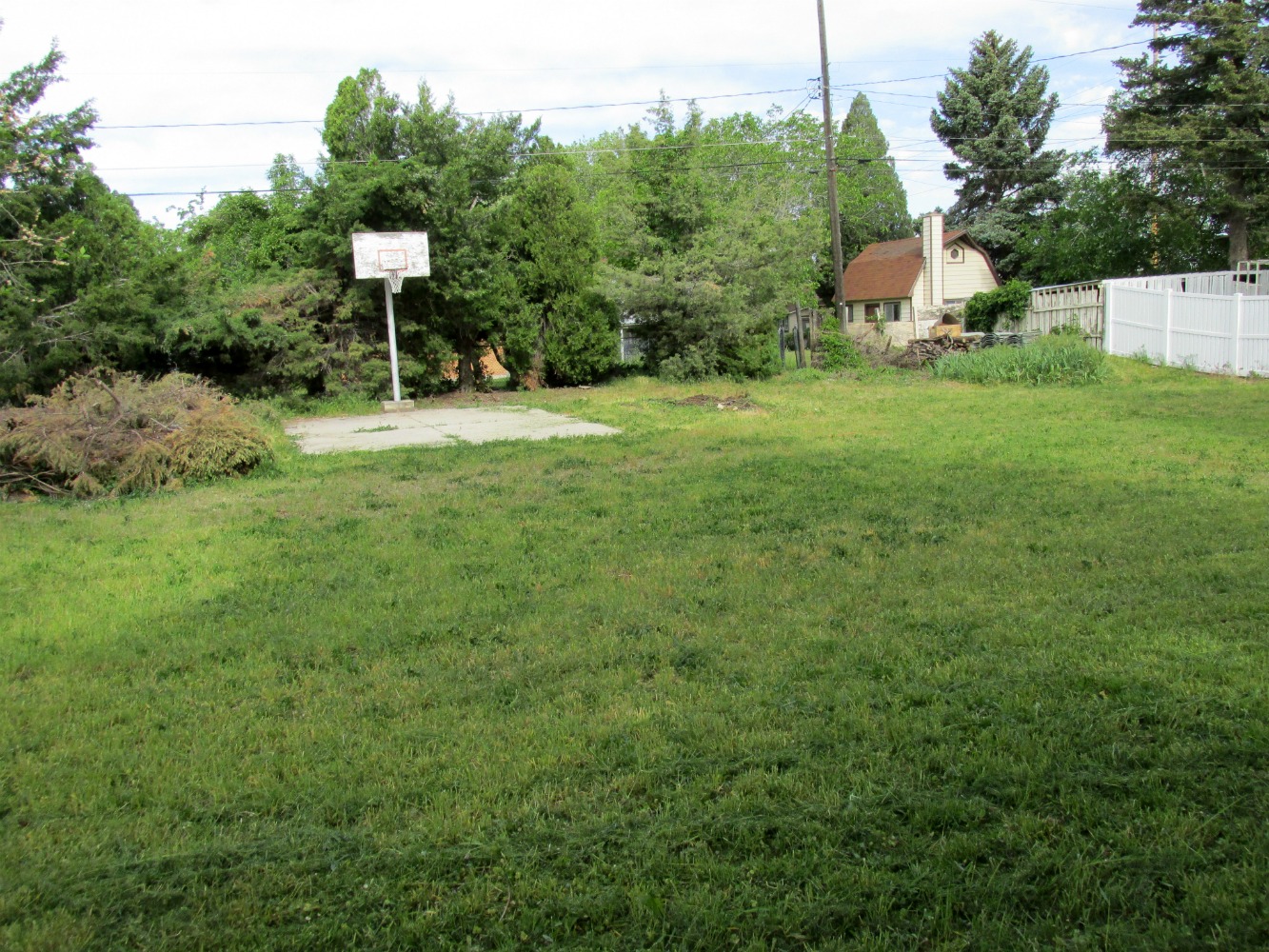
All done. Notice the big pile of shrubs on the left, and the old shed that has transformed into a storage area–now with stuff we want instead of garbage. Much better than before.

Irrigation

In the massive weed patch that makes up our backyard, I did want to grow squash and other large plants. After I mowed, Joe tilled, we laid down a soaker hose and black plastic mulch. Today, I went to go water the squash and discovered that the hose had a hole and wouldn’t work. So I had to pull up the plastic mulch, get a new soaker hose, and then put everything back together. Hopefully the hose doesn’t break again. I do like using soaker hoses and plastic mulch on curcurbits, they do really well and there isn’t a lot of weeding.

squash

Later update:

Turns out I haven’t even been using the soaker hoses. I found it isn’t too hard to just hand water with the water turn, and that’s how I’ve been irrigating everything. The only problem is there is only a small, less important part of my yard that is effectively irrigated by the irrigation turn, and I’m getting tire of having to water so much by hand. The worst is the lawn. I actually don’t mind watering the edibles and flowers. But I hate grass. I feel like it is a status symbol of how your landscape is doing, and mine is dry. I irrigated the park strip yesterday, for the first time this year. Even thought I don’t want grass there, I decided I better not kill it off until I’m ready to put something else out there.

Lawn only needs to be deeply irrigated once a month to not die. It needs a lot more water to stay green, but  I am not yet ready to give my nemesis that pleasure. I have decided to kill the lawn in my front yard though. No irrigation, and because it is a high traffic area, it is decomposing fast. It’ll look a lot better with whatever ends up there.

Water

I read somewhere that Box Elder county has the highest per capita use of water in Utah. I have no idea if this accurate, nor can I quickly find the data again. Box Elder county is very agricultural, which is were a lot of our water goes. I am not living or working on a farm, so this is not about the agricultural use of water. This is about the stupid use of residential culinary and secondary water in Brigham City.

In my previous apartment and in my current home, we had a water turn. This is a very old system of taking turns using ditch water. In a residential area, I think this is becoming almost unheard of. Many cities switch over to a pressurized secondary irrigation system, which make sense. Landscapes are currently designed to work on some sort of already pressurized irrigation.

I think water turns are fine, but the design of our landscape has to follow suit. Wide expanses of lawn aren’t going to fit everywhere, because water will only flow downhill unless it is physically moved or pumped. Currently, I can see based on irrigation water where I would want my lawn, where I want more water-wise mixed beds, where I can grow veggies. I could grow everything I want using only my secondary water turn, with the right design. But not right now. In order to maintain a good state of landscape maintenance (and I’m not, most of my grass is not green), I have to use culinary water.

water


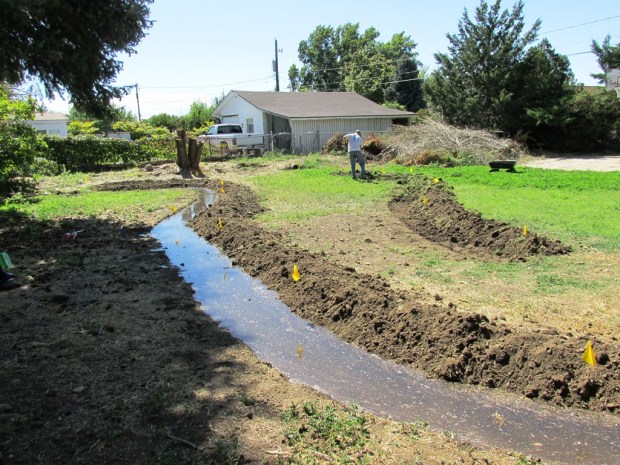
Here’s our current irrigation set-up while running

I think most people have just switched over to using culinary water for the majority or all of their landscape, even if they have access to an irrigation turn. There are a few innovators out there who take a more full advantage of the secondary system.  There are also a lot of people who don’t use the water at all. At both places where I have had an irrigation turn, I was supposed to have a one hour turn. The next person in line for the water will switch off my water to get to their property. When it’s midnight, you got out once to turn on the irrigation water, not to turn it off. I would expect someone down the line coming and getting it, but when I wake up the irrigation is still running on my property. People are clearly not taking their turn.

So right now Brigham City has a secondary irrigation system that isn’t widely used. Because it isn’t widely used a lot of water is wasted going down gutters or over-irrigating areas. Brigham City also has tons of culinary water that is getting drenched onto lawns in order to maintain a certain appearance, not for any sort of production. If there is ever a water shortage in Brigham City, it is not because there is a lack of water. It is because the water is used so poorly.

We live in place with only 18″ of rain a year, and yet we try to maintain these landscapes that would only naturally function in a much more humid environment. It’s madness. So if anyone wants to know why my grass is crunchy right now, it’s because I’m not going to just follow the stupidity out there of wasting water just to maintain a green, never-used lawn. I know I live in a dry environment, and I’m going to act like it, even if no-one else does.

My thoughts now are how do I design my landscape? I can see a huge benefit of Brigham City switching to a pressurized secondary irrigation system. It would help both culinary and secondary water be used much more efficiently. It might happen someday, although I doubt there are immediate plans or funding.

But I would be fine with a water turn. I’m not stuck in wanting wide swaths of green lawn. I can design my landscape to use only secondary water as irrigation, with the present system. But should I pursue that route, or rather look forward and push for a day with pressurized secondary irrigation? I probably will design my landscape around my irrigation turn, if only to show people how to take advantage of that resource. If we did take advantage of the current system, it would be more effective and efficient that switching to a different system.

What I do hope for, if nothing else, is that people start at least wanting to take responsibility for our water use. It is an awesome, valuable resources, and if we waste it, it won’t always be there.