Author: Liz Braithwaite
Baby
Baby at 24 weeks.

Just relaxing
Self-Help
I think the majority of people deal with some type of mental health issue. I still hate that I do, but I have found I am simply not as good a person as I want to be. Most of my problems came or at least intensified with having children. I’ve struggled mostly with depression and anger.
It’s hard for me to get the right help when I am going through a hard time. Part of it is I don’t want to admit that I do have a problem, and also I’m not usually thinking straight. But over the years I’ve dealt with a less than perfect brain, I’ve tried a lot of different options. Here’s what I’ve thought of them.
Medication: Helped a little, but I felt it wasn’t resolving what was really bothering me. I didn’t use it very long.
Self-help: I simply did not have the tools to helps myself, hence why I was having problems in the first place.
Support: It was definitely easier when I was connecting with people around me on a regular basis. And if my husband weren’t wonderful, I would have been so much worse off.
Therapy: Therapy is great, it is wonderful to be able to talk to someone who is also trained to help. But I didn’t love it. I never felt very comfortable completely opening up, and I’m not big on talking to someone I don’t really know.
Staying busy: When I am engaged in meaningful activities that I like to do, I’m far less likely to fall into bad habits. Tends to be more preventative than curative.
Books/reading: I like reading and some of what I read helped, but many books I looked at failed to get at the heart of what I was experiencing or offer suggestions that worked.
Religion: Relying on Christ is the only way I made it through everything. I loved the addiction recovery program offered by my church, and I think many mental health issues function as addictions.
Hypnosis: This has been my latest find, and one that I enjoy a lot. Hypnosis always sounds a little hokey, but it doesn’t have to be. I use the downloads offered here, and it has been the first option that I felt was not only addressing my issues, but giving me the proper tools to get over them.
Ultimately overcoming poor mental health is learning how to retrain my brain. And I’ve discovered that it is very possible, and I am not stuck always being a depressed or angry person, but I can change and be better. Just sometimes it takes more than just my will power to get over things.
Our Life in Pictures
I’ve felt very busy lately, and often wonder if I need to cut back in life. And I sometimes do, to things like YouTube videos and surfing the Internet. But the core of my life is amazing. I love doing fun things with the boys: activities in the house and going on adventures. I like taking care of my home and garden. I get to spend the majority of my time just doing that, and I’m glad it doesn’t have to change. PB misses kindergarten by a month and half, and I don’t really see the point in preschool for him, so I’m excited to continue to have all my kids home. We can keep doing fun things like Legos, watching the chickens, and reading books together.


Our cousins came by for a quick visit, and the chickens were kind enough to allow them to get pretty close. (The scratch helped too.)

We had a Lego week during our school time, and here we painting pictures with Lego prints.

Legos + blacklight + water. It was fun to see what Legos glowed (our orange ones did).

We went to the Ogden Temple open house. C enjoyed himself. PB not so much.
Things That Worked
A new home and yard for me means a lot of new experiences and experiments.
We moved the little chickens in with the big chickens. It involved letting them free range together, moving the brooder box close by the coop, and ultimately just throwing them all together. It was relatively peaceful actually…they still maintain two separate flocks, but they are pretty nice to each other and I never had any injuries. I think I worried more than I needed too.

I also moved the compost pile into the chicken coop. They are excellent compost turners. Although I don’t really enough material to make lots of compost the chickens are great at making branches, chicken scraps, grass clippings and even a dead bird disappear. The chickens have also turned out to be the best puncture vine control. We move our coop around, and when it is over a puncture vine patch they will eat it gone in a couple of days and it stays gone.

In the spring, I bought a bag of clover seed and inoculum. One day as I was turning on the flood irrigation, I thought why not just throw down the seed and inocolum right now, while the water was flowing, and see what happens. So I hand broadcast the clover seed pretty densely and just basically dumped the inoclum into the start of the irrigation water. The area was a pretty bare patch of mown weeds, mostly winter annuals. All I did to help the clover germinate was turn on the flood irrigation when we had our turn, twice a week. Because it was irrigated, plenty of plants grew, and happily much of the clover. After mowing it once, the clover has become even more vigorous and I think by next year it will have completely taken over. Fifteen minutes was all it took to establish a small patch of clover, and I think I will replicated the process over a broader area next year.

In our side area, we had a bunch of Bridal Wreath Spireas. I mentioned before that we had cut them back to the ground. I was unsure if they would come back. But they’ve come back just fine, even without consistent irrigation. They look so much better than they did, I’m glad we went for it and hacked them back.
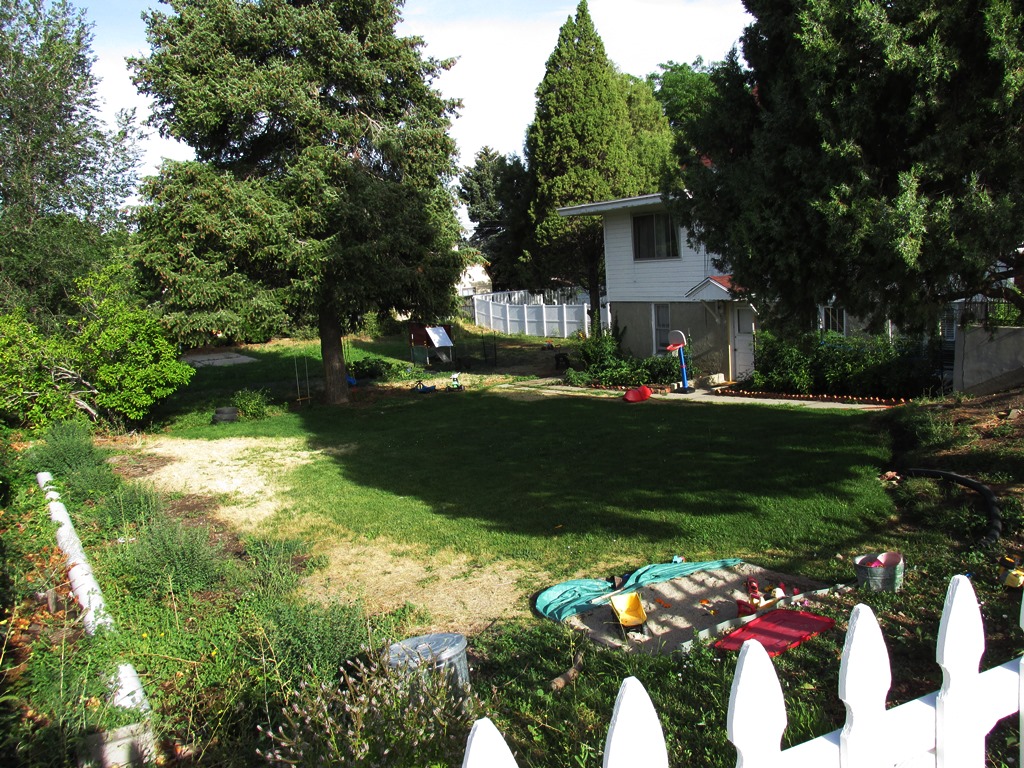

The last little experiment was moving our dryer. It was inside and had a long vent line. The dryer worked horribly, and I was pretty sure it was because of the vent line, even after I cleaned it out. My bright idea was to just move the dryer outside on our back patio. My husband wired up a new plug and we moved it. It now takes about half the time it did to dry clothes. In the winter we plan to move it back inside, but also vent inside.

The unattractive but functional back patio complete with dryer.
We are still in the thick of many projects in our garden, and our front yard might look a bit like a construction zone right now. A few things haven’t worked so well–free ranging the chickens in the evening has meant of decrease of of tomato crop and no melons this year. Most of my squash died from an unknown cause. There are weeds everywhere. But we’ve had plenty of things go right as well.

Drive to Inspiration Point
Last year, we attempted to drive up Willard Basin but ended up with a flat tire only a few miles up. We decided to try again this year. The road is supposed to be only for 4-wheel drive, off-road type vehicles. That doesn’t exactly describe our Ford Freestyle, but we decided to go for it anyways and if it got too rough we would turn back. The road wasn’t horrible, and we made it to the top. It only took a couple hours total, and is well worth the drive if you are in the area.
PB had a lot of fun taking pictures on top, and many of the pictures below are his.


Small Service
Have you ever watched an add or video that shows random acts of service, or people being nice to you? I have. Sometimes I feel like I don’t do anything all that great, I tend to be so focused on myself and the tasks that I need to do that I seldom see what I can do for others. One of my resolutions of this year was this:
I resolve to observe more
I will strive to listen and look at those around me and the promptings of the Holy Spirit. I will not let my thoughts and judgement crowd out truth. I will look out for the interests of others, not my own selfish desires. I will place judgement on myself instead of others, and strive to eliminate those that are unnecessary including comparisons. I will spend less time trying to fill my mind and more time in stillness.
I have had three experiences in the past little while that I was able to get out of my own little world and help someone else in small ways.
We were at a picnic area at Yellowstone. There were multiple picnic tables, but all but two had recently been painted. We were lucky enough to get a picnic table that didn’t have wet paint, and were enjoying out meal when a large family group pulled up. They saw the painted tables and were standing around wondering what to do. I told them that we were almost done and they were welcome to our table in just a few minutes. We then quickly cleaned up and finished our lunch to allow them to use the table. We would have stayed there a lot longer if I hadn’t cared or noticed.
I was at a waterpark, just getting changed back into my clothes and ready to head out. I overheard a conversation where the Dad in the family had forgotten his swimsuit, and they were wondering what to do. I butted in and said I had an extra swimsuit. (My husband has two swimsuits, one of which usually sits in the swim bag unworn.) I gave the man the swimsuit (hoped it fit), and never saw him again.
While at the fruit stand buying some fruit, I was just about to pull away, when an older lady started to walk up to me. I noticed, and rolled down my window to see why. She asked for a ride up the rode a ways, which I gladly gave her.
Noticing people that need help is the first step. Sometimes I notice and don’t end up helping for I feel I have nothing to give or I am concerned about safety. I don’t regret those times. Other times I’ve not helped because of my own worries or feelings of entitlement and selfishness. One of my biggest regrets in life is not helping a couple more when I had the chance, and when I did help a bit I did so reluctantly. At the time, I justified it because I didn’t have a lot and was worried so much about my own well being, and I felt they could take care of themselves. But I could have easily given a little more and I missed an opportunity to help that I do not think I will ever forget.
I am grateful for the experiences God has give me to serve, and I’m finding as I pray for them and try to look beyond myself, there are abundant times that I can do just small things.
Removing Lawn
I recently saw my neighbor up the street removing sod. I enjoy seeing people removing lawn, hopefully to turn into more interesting gardens. We are in the process of removing the lawn in our own front yard.There are several methods to get rid of lawn, and I’ll briefly explain each one.
1)Dig out by hand: Get a good shovel and dig.
Advantages: Can remove lawn from garden and be ready to re-plant in a few hours. Lowers the grade of the soil, which is usually desirable. No special equipment needed.
Disadvantage: Grass can regrow from deeper roots. It is the most labor intensive,. Sod is often hard to dispose of as many green wastes and dumpsters won’t take it. It also take the top few inches of soil away which is often the richest part of the soil, along with the organic matter of the grass.
Best For: Small areas wanted for immediate re-planting
2)Sod cutter: This is the method my neighbor was using. Just rent a sod cutter, which will cut the sod an inch or more below the soil. It can than be rolled and hauled away.
Advantages: Quicker than digging by hand. Other advantages the same as digging by hand.
Disadvantage: Many are the same as digging it out by hand. It is less labor intensive, but has the added the cost and availability of renting a sod cutter.
Best For: Large area wanted for immediate re-planting
3)Tilling: Use a heavy duty tiller to till lawn under.
Advantages: Quick method, retains top layer of soil and the organic matter of the grass.
Disadvantages: Getting the equipment if not available. Least effective method to kill the grass, might see a lot of regrowth.
Best For: Use with other methods (i.e. after sheet mulching)
4)Herbicide: Spray lawn with a non-selective herbicide like glyphosate.
Advantages: Least labor involved. Maintains top layer of soil. Can result in the least amount of lawn regrowth.
Disadvantages: Use of chemicals might not be desirable. Lawn will often need be sprayed multiple times, and will take up to a month to die out if using glyphosate (Round-up). Also glyphosate will not be effective unless the lawn is actively growing, so often ineffective in the summer months on cool season grass, and the fall/spring months on warm seasons grass when the grass tends to go dormant. Can be unattractive.
Best For: Effective die back without lots of effort
5)Sheet mulching: Layer a layer of corrugated cardboard or thick newspaper and top with compost, wood chips, or other mulch.
Advantages: Maintains top layer of soil and will add additional organic matter. Not labor intensive. Can look attractive immediately.
Disadvantages: Will take three or more months until grass is dead and area is ready for planting. The use of cardboard is controversial and will not help with soil health.
Best For: Large or small areas that are do not need to be immediately replanting.
6)Neglect: Do not water or otherwise care of lawn, and mow to very short height.
Advantage: No labor required. Can be effective in areas with little rainfall and high maintenance lawn.
Disadvantages: Takes time for grass to die, and in the meanwhile looks awful. Often not very effective.
I often use a combination of methods, for instance I’ve sprayed followed by sheet mulching followed by tilling. My favorite method is sheet mulching, because not only does it get rid of the lawn but it also can improve the soil at the same time.
In our front yard, I started out by neglecting it. We didn’t water it and it went brown pretty quickly. Where we walked frequently, the grass died back rather quickly. It didn’t look that great though, nor was it killing off all the lawn. We put down some sheet mulch. First I mowed it at my lowest mower height. We dug out a small strip on the edges so the bark mulch wouldn’t spill over onto the surrounding pathways. It was sheet mulched with a layer of cardboard and wood chips. Looked pretty good as soon as we were done, and it’s been there a little over a month. The cardboard is taking a while to break down because it is summer: it needs more moisture to disintegrate. I don’t think we’ll be planting too heavily until the spring, and by then I expect the cardboard to be gone (along with the lawn). It is also possible to cut holes in the cardboard to plant, although grass can also re-grow through the holes if it isn’t dead yet.

Right before we started sheet mulching

Cardboard first

Then add the mulch

All finished
Yellowstone
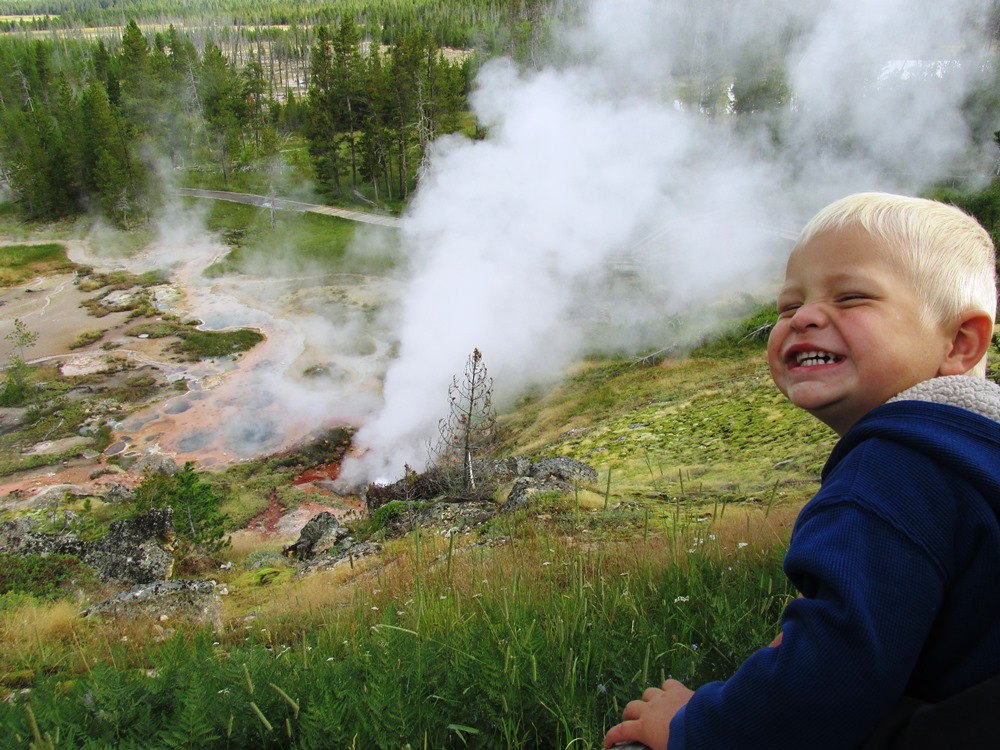
When I considered vacations this year, I realized my children hadn’t been to Yellowstone yet, and it would make a nice quick vacation. PB already love geography and volcanoes and just the right kind of subjects to make Yellowstone interesting to him. We camped for three nights and spent two full days and a little more exploring the park. I’ve been there quite a bit, it was fun to go back to places that I remember and show them to my kids. We also were able to take my sister with me. She was a lot of fun, and a great help in the car.
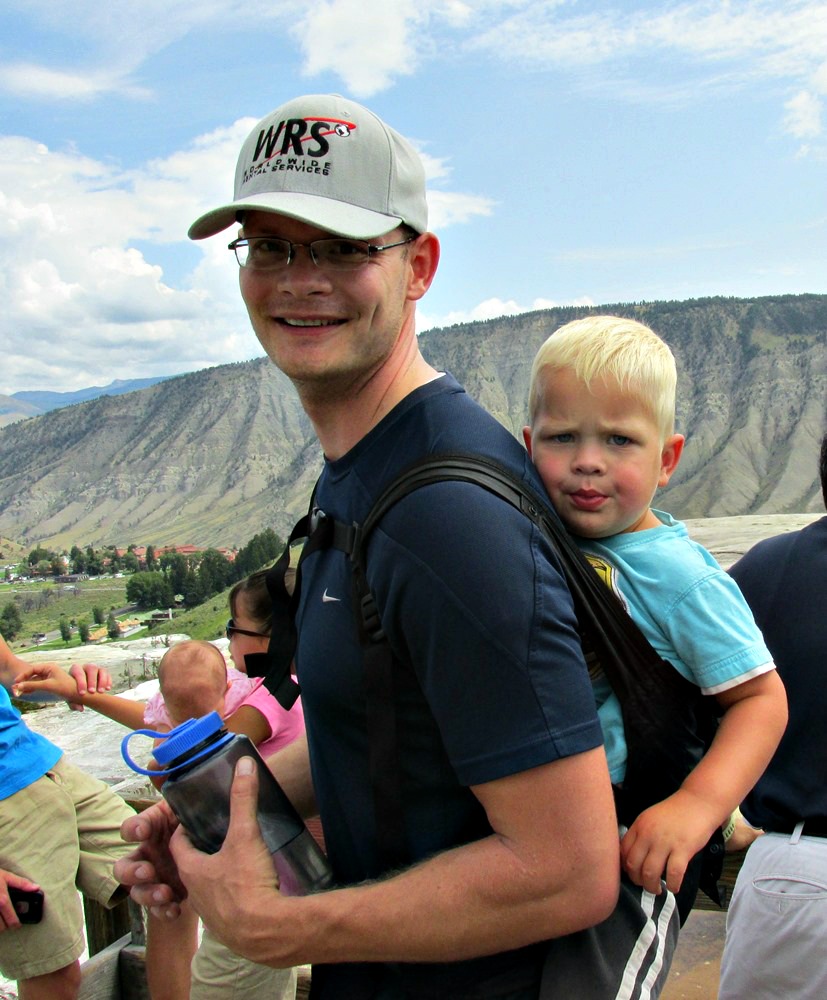
In Yellowstone you spend a lot of time driving and walking. My kids actually do pretty well in the car, and thank goodness I could occasionally had them a device when tempers were short. Sometimes the hiking/walking part was a bit hard, but luckily there are plenty of short hikes to do. If PB puts his mind to it and wants to keep going he can hike for over a mile and did quite cheerfully on at least one occasion. But if he doesn’t quite see the point or he is a little tired or it is raining…that kid can complain a bunch too. C is still young enough just to carry, and luckily Joe is willing enough to do so.
It did rain, but luckily only in the afternoon although not timed up well enough to match our trips to the visitors centers and nap time in the car. We brought rain ponchos and jackets and used them to keep exploring. The kids looked cute in them.
Before, and often during the vacation I was stressed a lot. Vacations aren’t as relaxing when you are camping with little kids and you happen to be the one in charge. But everything worked out well, and now I can remember the trip with much more joy than leading up to or even during it.


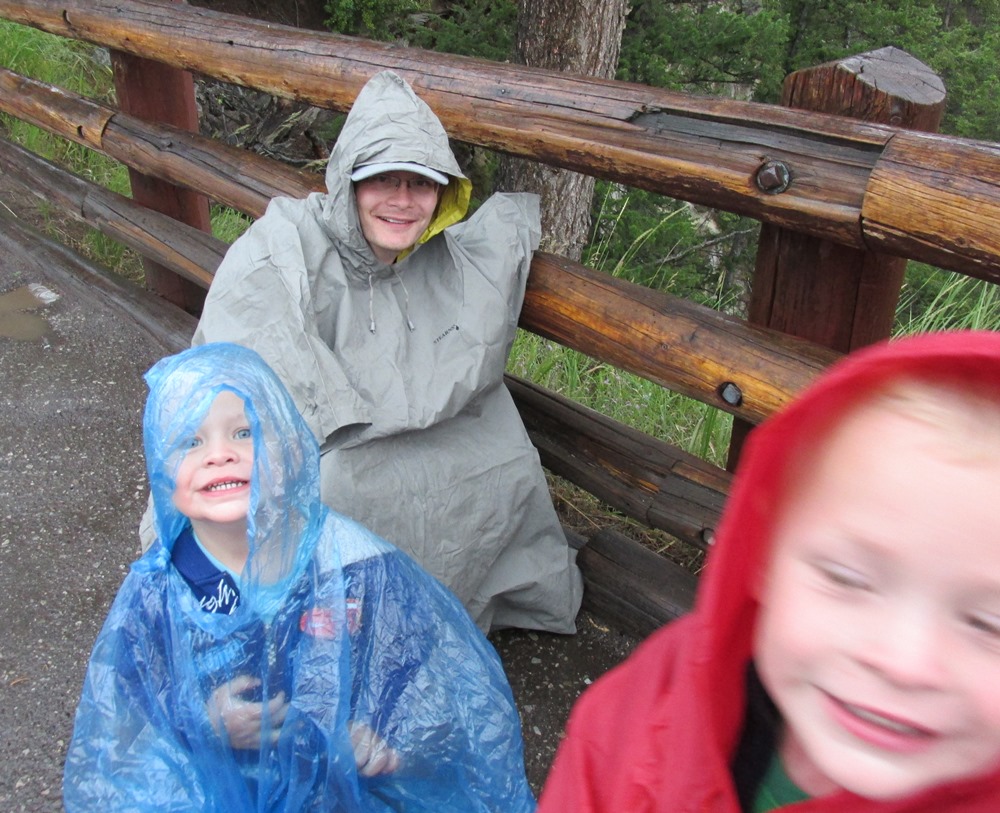
Having fun not getting wet in the rain.
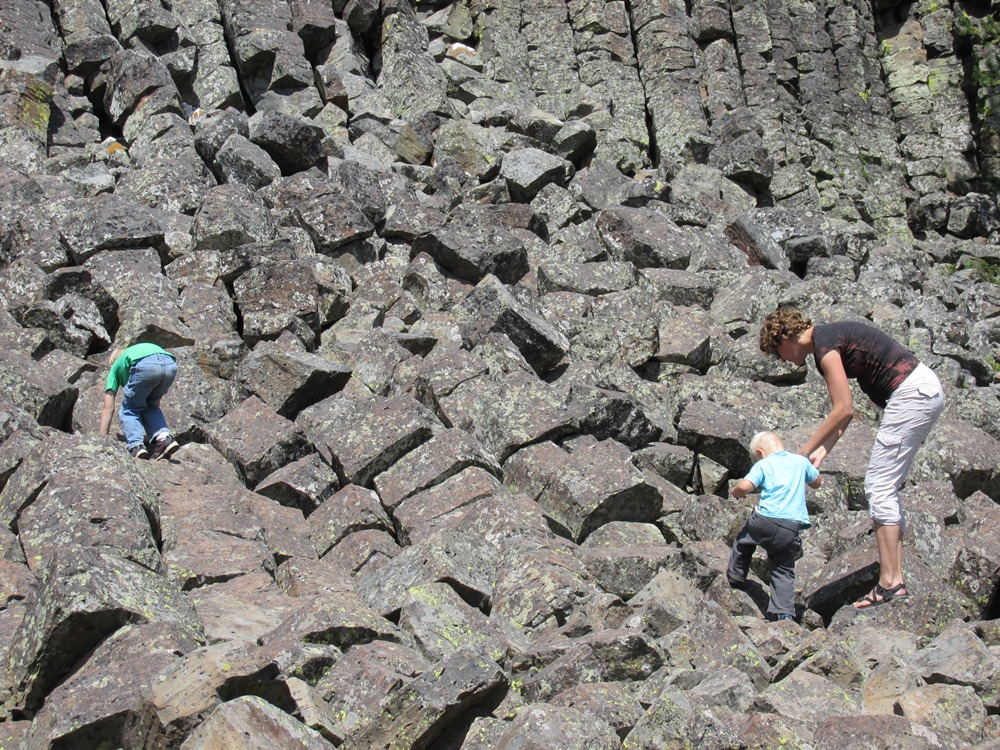
At Sheepeater Picnic area. I love this place, and we also missed it due to a non existent sign.
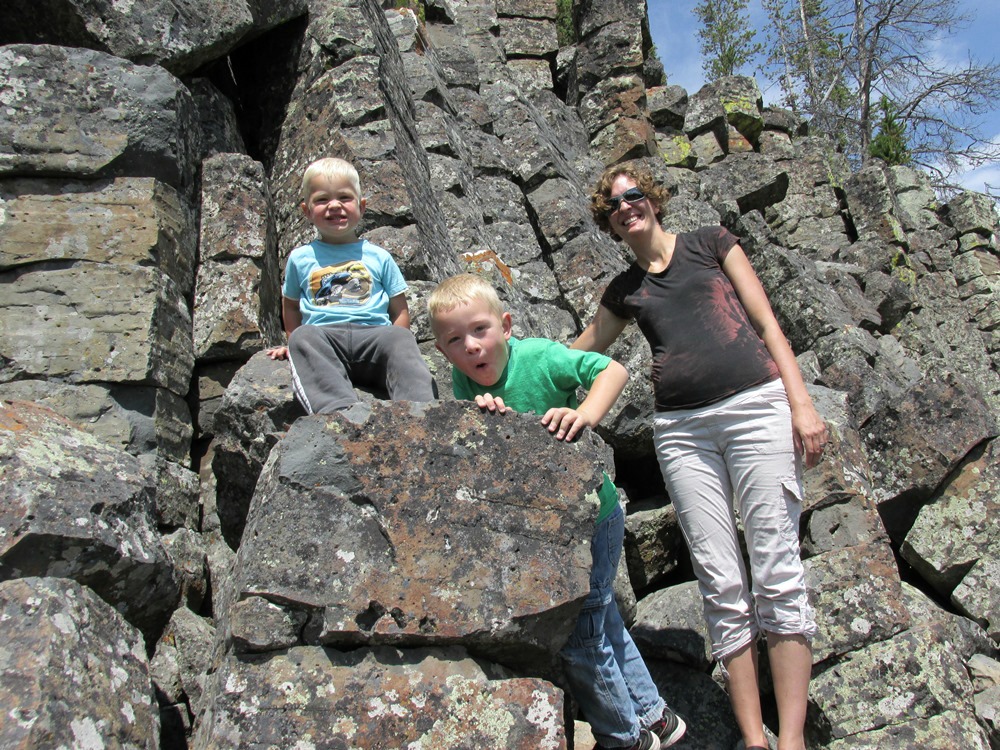
Made it to the top of the pile of rocks, although not up cliff.
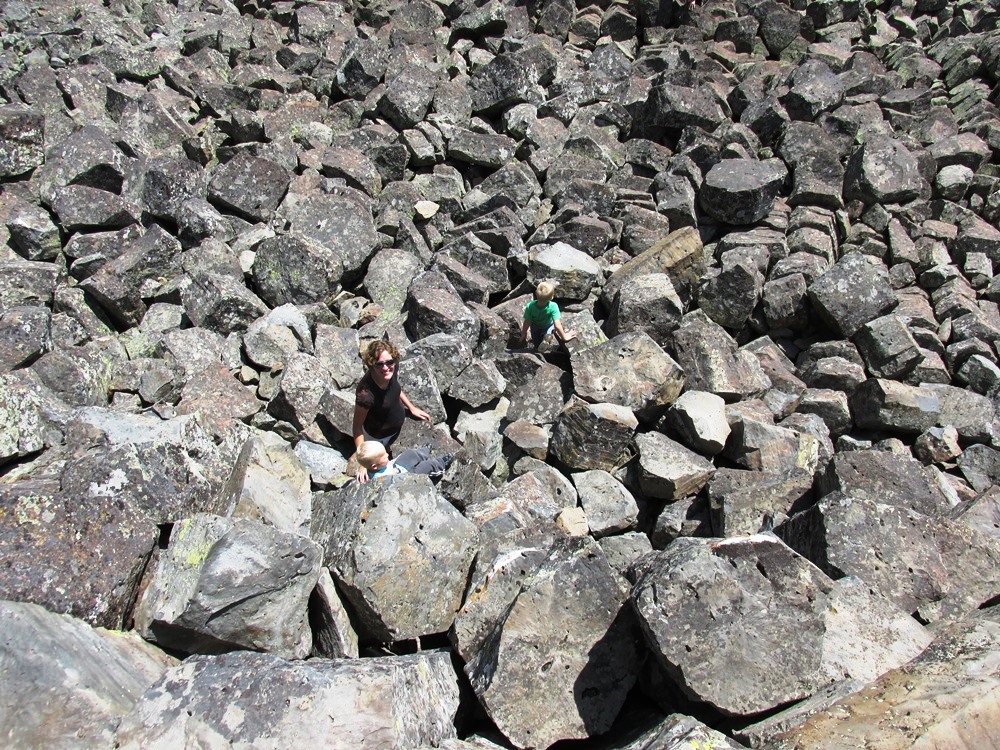
Joe climbed all the way to the top of the cliff.
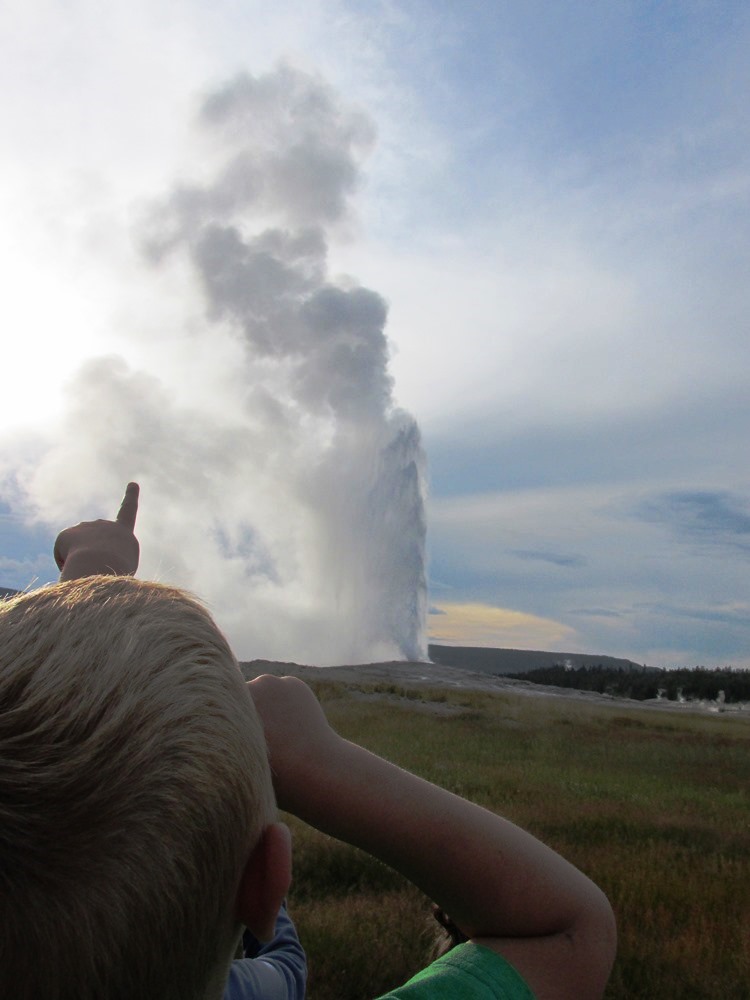
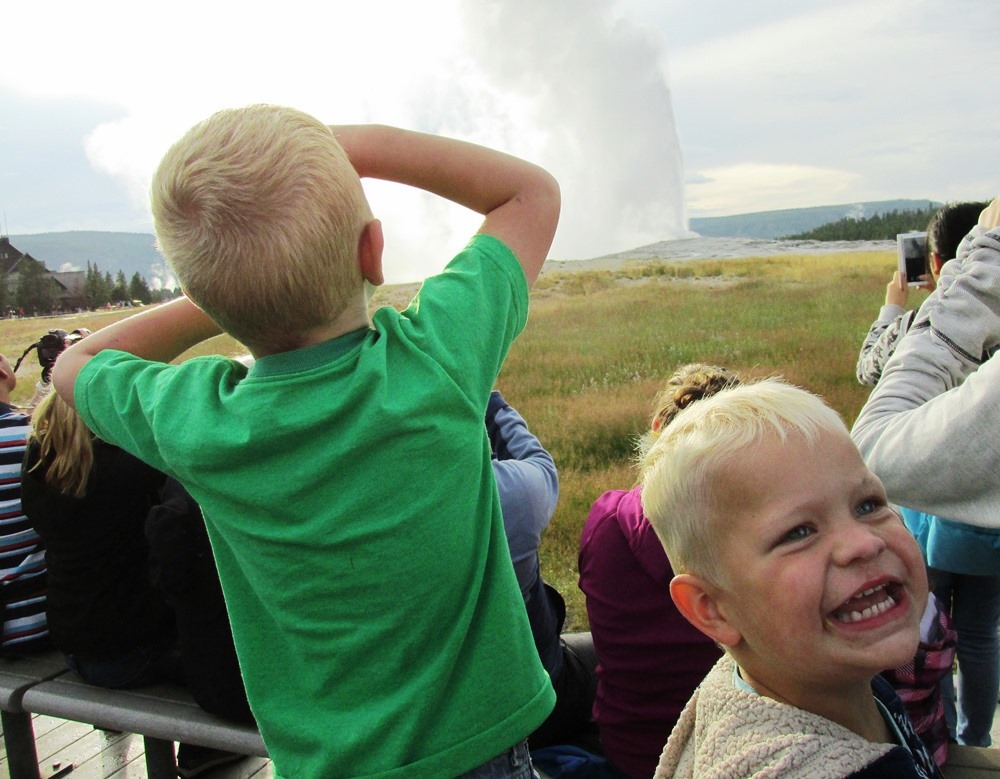
C called this a volcano at first.
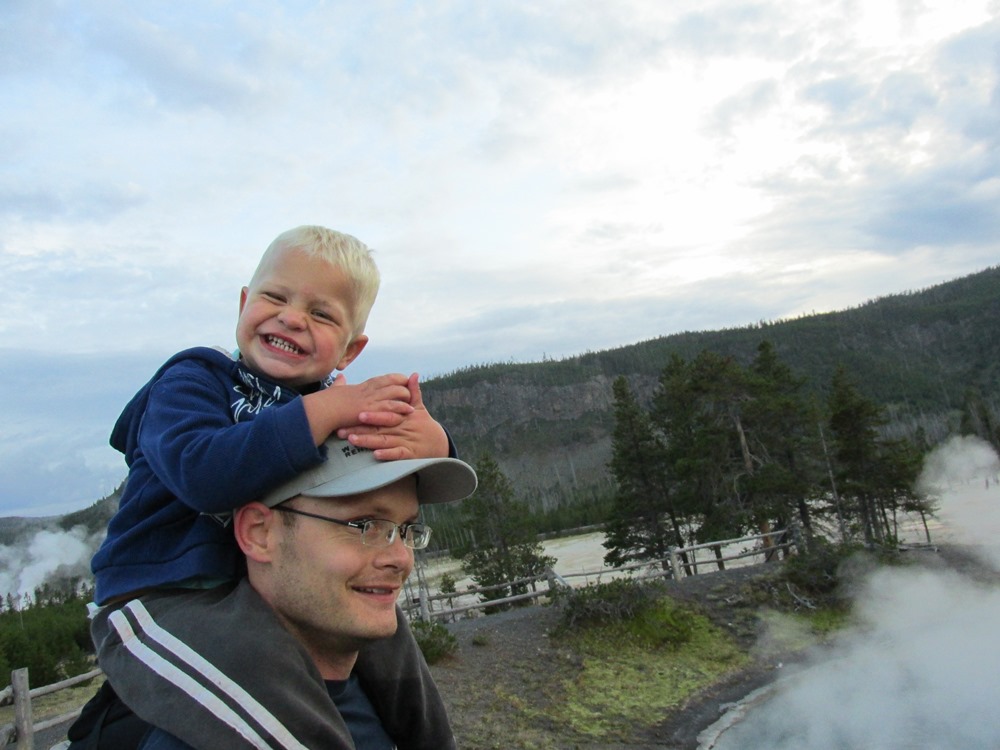
Joe’s neck was a bit sore after the trip.
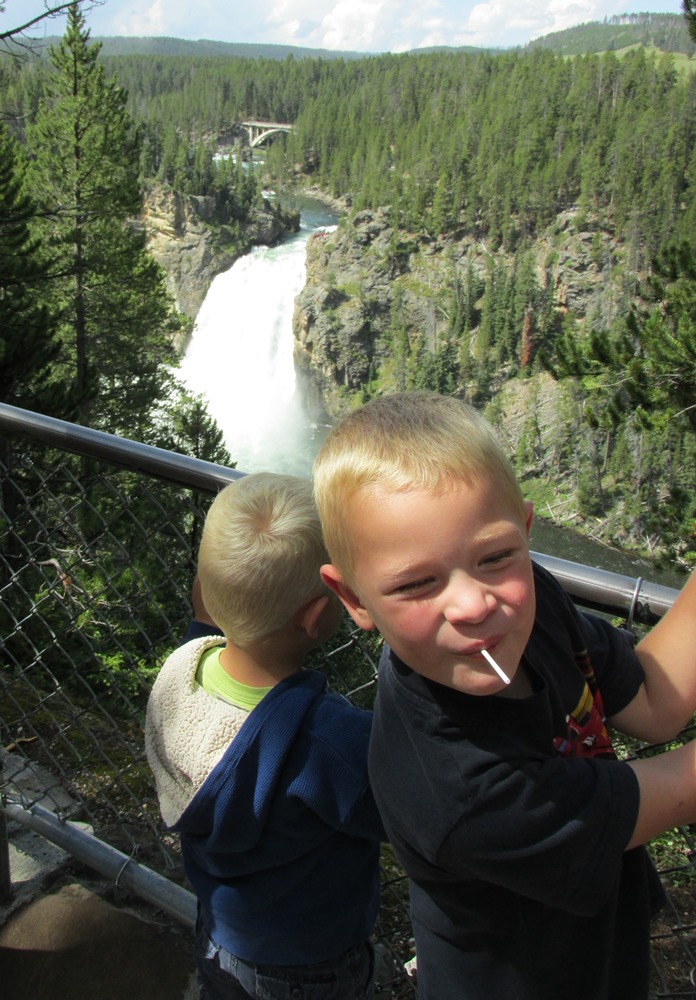

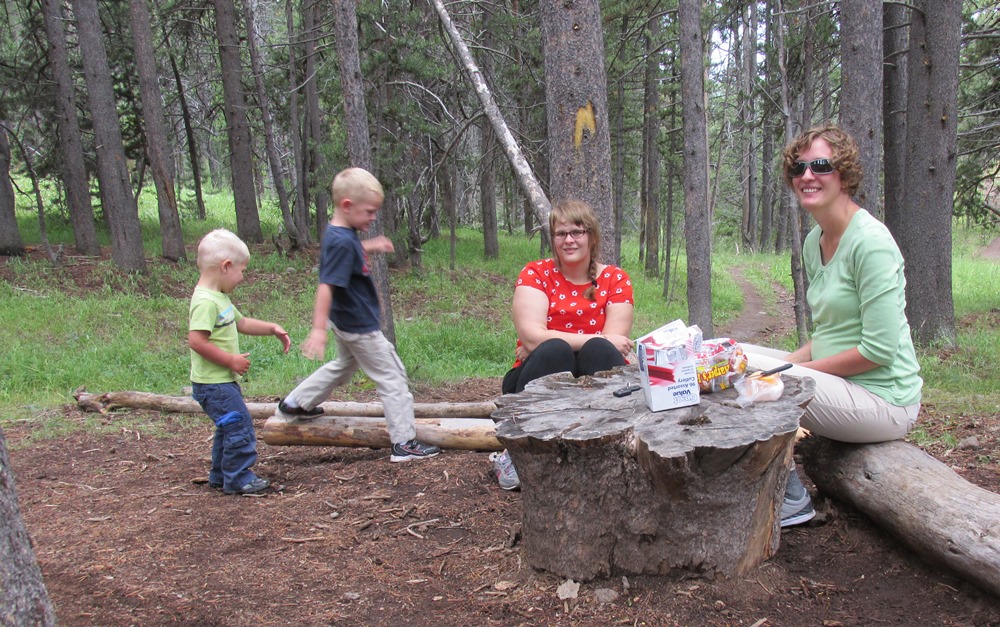
The good tables were taken…but this spot was more fun anyways.
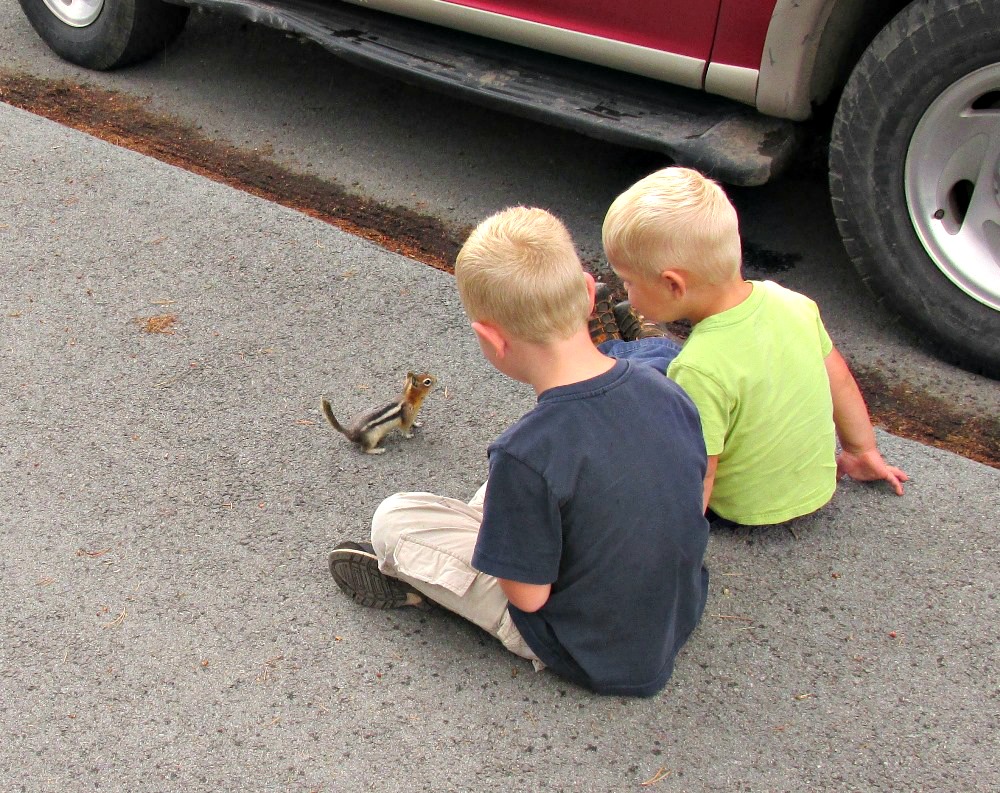
This squirrel actually climbed up on PB’s lap.
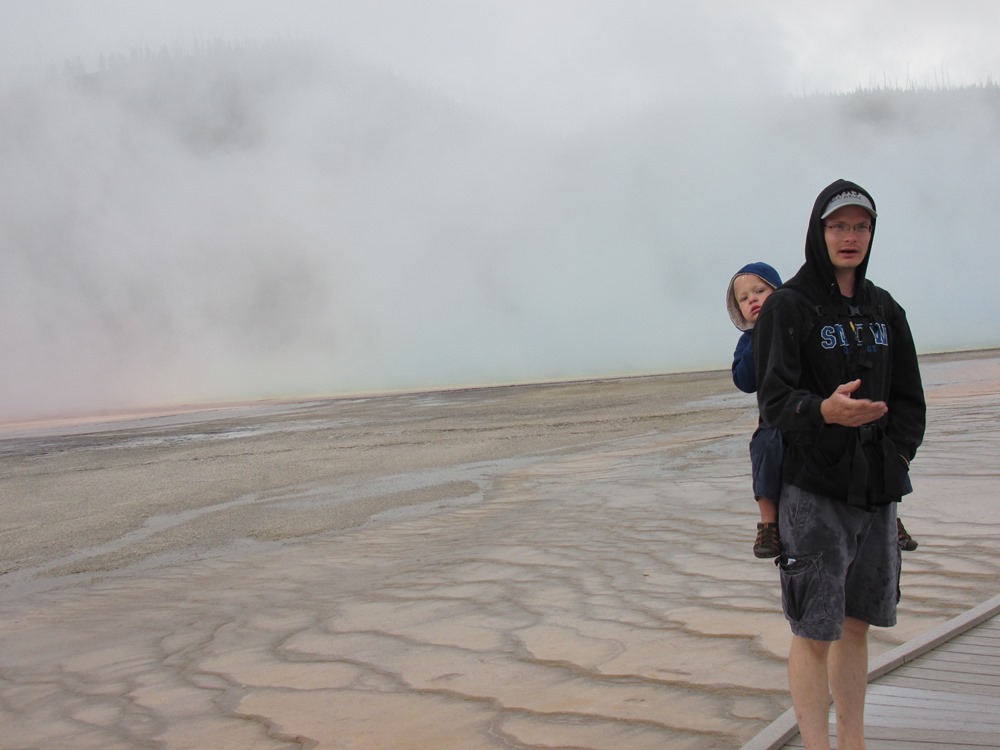
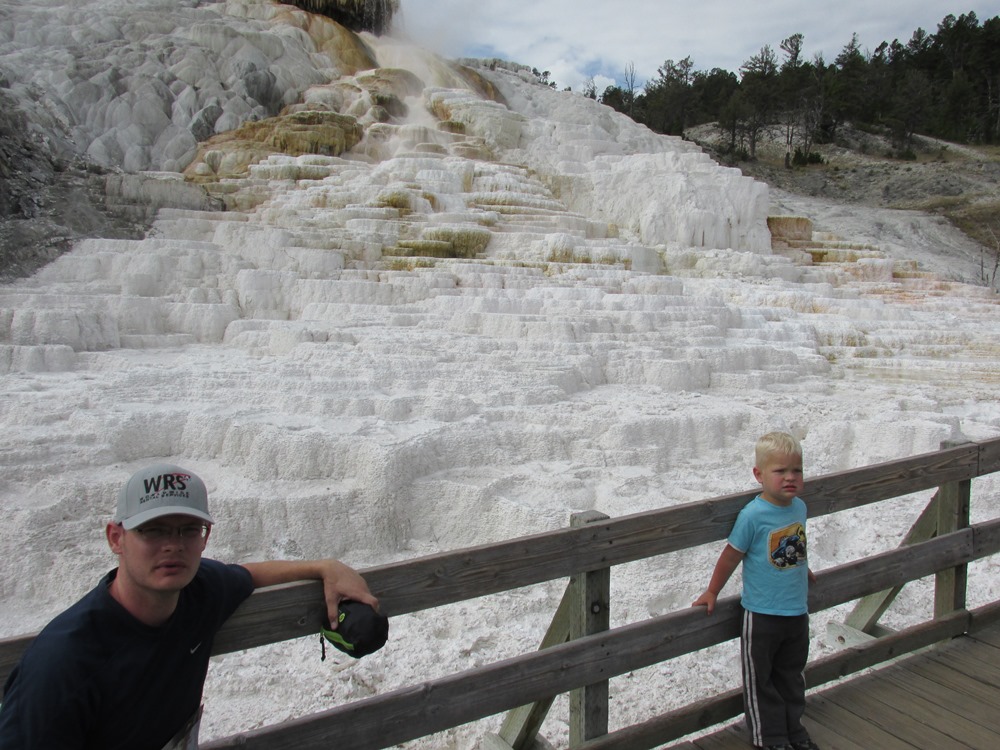
This is Grand Prismatic Spring during a rain shower.
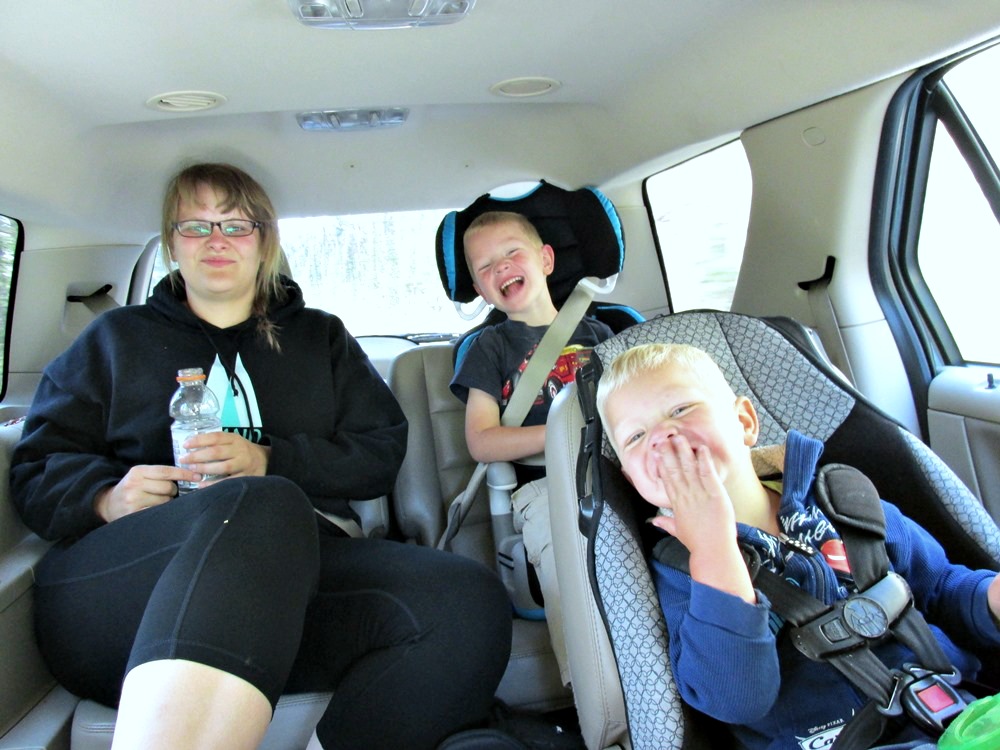
Joe took this picture, explaining that this is how we spent most of the trip.
Swale
So if you haven’t studied permaculture, and even if you have a little bit, you probably don’t know what a swale is. And what I’m about to describe isn’t necessarily a true swale, it’s more like a ditch mixed with a swale. If you want to learn more about swales, go ahead a follow this link. If you just care about how I dealt with the flood irrigation problem in my landscape, keep reading.
Our side yard grass is flood irrigated with a water turn. We turned it on this year and noticed that with all the dips and hills in area, the flood irrigation would only water a portion of the grass. Water doesn’t move uphill. If the area was almost flat and the water came from the high point, it would have worked out a lot better. That’s how rice patties work–perfectly flat land, and then it all gets irrigated the same way. Our grass was on a downhill slope with plenty of dips and low spots that meant that originally only 1/3 of the grass was irrigated.
We noticed that at some point there was probably a ditch going to a downhill portion of grass that wasn’t getting any water, so we re-dug the ditch. But then all the water simply went down the ditch and wasn’t watering the uphill part of the grass where it started. We tried putting up little rock dams, and it helped a little but not a lot. I had been in my permaculture class and knew that we needed to build a swale: or in other words, we needed to level the ditch so that the middle and both sides were neither uphill or downhill from each other.

We marked it out with an A-frame and re-dug the ditch.

We were not quite successful at actually making it level, but with only one little rock dam, it finally worked. The swale would fill up with water, and because it was relatively level, it would spill over across the length of the swale instead of at just the low point. We ended up watering about 3/4 of the grass. The other quarter is simply being converted to planting beds.

Because landscaping is moving toward automated irrigation sprinklers, and we use big machinery to level everything, very few people care about contours, or level lines across a slope. But after studying permaculture, I’m learning the benefit of using contours: they create beautiful and highly functional curves. Because I’m still using flood irrigation, it is essential that I know about the contours in my landscape, because if I understand them, I also understand how the water is going to travel. And I can fix things like the flood irrigation of my lawn so I don’t have to start using culinary water.
*I realize that portions of this post might not make a whole lot of sense. If you are interested leave a comment and I can either respond and clarify, or add a video.

